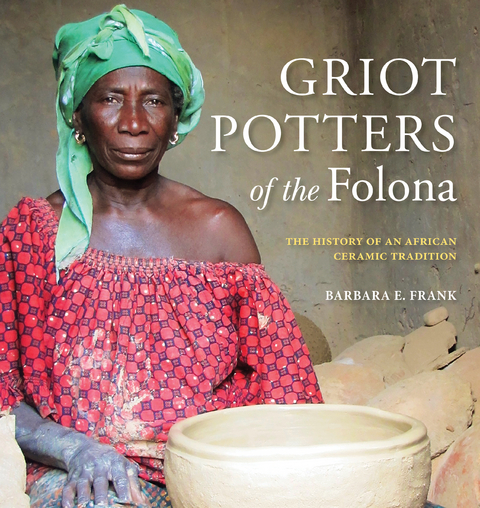
Griot Potters of the Folona (eBook)
526 Seiten
Indiana University Press (Verlag)
978-0-253-05897-3 (ISBN)
Griot Potters of the Folona reconstructs the past of a particular group of West African women potters using evidence found in their artistry and techniques.
The potters of the Folona region of southeastern Mali serve a diverse clientele and firing thousands of pots weekly during the height of the dry season. Although they identify themselves as Mande, the unique styles and types of objects the Folona women make, and more importantly, the way they form and fire them, are fundamentally different from Mande potters to the north and west.
Through a brilliant comparative analysis of pottery production methods across the region, especially how the pots are formed and the way the techniques are taught by mothers to daughters, Barbara Frank concludes that the mothers of the potters of the Folona very likely came from the south and east, marrying Mande griots (West African leatherworkers who are better known as storytellers or musicians), as they made their way south in search of clientele as early as the 14th or 15th century CE. While the women may have nominally given up their mothers' identities through marriage, over the generations the potters preserved their maternal heritage through their technological style, passing this knowledge on to their daughters, and thus transforming the very nature of what it means to be a Mande griot. This is a story of resilience and the continuity of cultural heritage in the hands of women.
Barbara E. Frank is Associate Professor in the Department of Art at Stony Brook University. She is editor of Status and Identity in West Africa: Nyamakalaw of Mande, and author of Mande Potters and Leatherworkers. Art and Heritage in West Africa.
Acknowledgments
Note on Orthography
1. Marks of Identity
2. Identity Matters
3. Mapping Identities
4. Technology Matters
5. Mapping Technological Styles
6. Objects Matter
7. Mapping Pots
Conclusion
Bibliography
Index
| Erscheint lt. Verlag | 2.2.2022 |
|---|---|
| Zusatzinfo | 391 color illus., 12 maps, 8 b&w tables |
| Verlagsort | Bloomington |
| Sprache | englisch |
| Maße | 220 x 220 mm |
| Themenwelt | Kunst / Musik / Theater |
| Sachbuch/Ratgeber ► Freizeit / Hobby ► Kreatives Gestalten | |
| Geisteswissenschaften ► Archäologie | |
| Geisteswissenschaften ► Geschichte ► Regional- / Ländergeschichte | |
| Geschichte ► Teilgebiete der Geschichte ► Kulturgeschichte | |
| Sozialwissenschaften ► Soziologie ► Gender Studies | |
| Schlagworte | African ceramicists • Art History • ceramic traditions • Griots • Mali • maternal lineage • Pottery • West African traditions |
| ISBN-10 | 0-253-05897-X / 025305897X |
| ISBN-13 | 978-0-253-05897-3 / 9780253058973 |
| Informationen gemäß Produktsicherheitsverordnung (GPSR) | |
| Haben Sie eine Frage zum Produkt? |
 EPUB (Adobe DRM)
Kopierschutz: Adobe-DRM
Adobe-DRM ist ein Kopierschutz, der das eBook vor Mißbrauch schützen soll. Dabei wird das eBook bereits beim Download auf Ihre persönliche Adobe-ID autorisiert. Lesen können Sie das eBook dann nur auf den Geräten, welche ebenfalls auf Ihre Adobe-ID registriert sind.
Details zum Adobe-DRM
Dateiformat: EPUB (Electronic Publication)
EPUB ist ein offener Standard für eBooks und eignet sich besonders zur Darstellung von Belletristik und Sachbüchern. Der Fließtext wird dynamisch an die Display- und Schriftgröße angepasst. Auch für mobile Lesegeräte ist EPUB daher gut geeignet.
Systemvoraussetzungen:
PC/Mac: Mit einem PC oder Mac können Sie dieses eBook lesen. Sie benötigen eine
eReader: Dieses eBook kann mit (fast) allen eBook-Readern gelesen werden. Mit dem amazon-Kindle ist es aber nicht kompatibel.
Smartphone/Tablet: Egal ob Apple oder Android, dieses eBook können Sie lesen. Sie benötigen eine
Geräteliste und zusätzliche Hinweise
Buying eBooks from abroad
For tax law reasons we can sell eBooks just within Germany and Switzerland. Regrettably we cannot fulfill eBook-orders from other countries.
aus dem Bereich