


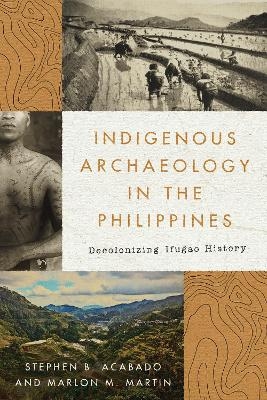
Indigenous Archaeology in the Philippines
Decolonizing Ifugao History
Seiten
2022
University of Arizona Press (Verlag)
978-0-8165-4502-5 (ISBN)
University of Arizona Press (Verlag)
978-0-8165-4502-5 (ISBN)
Highlights how collaborative archaeology and knowledge co-production among the Ifugao, an Indigenous group in the Philippines, contested (and continue to contest) enduring colonial tropes. The archaeological record shows that the Ifugao successfully resisted the Spanish conquest and later accommodated American empire building.
Dominant historical narratives among cultures with long and enduring colonial experiences often ignore Indigenous histories. This erasure is a response to the colonial experiences. With diverse cultures like those in the Philippines, dominant groups may become assimilationists themselves. Collaborative archaeology is an important tool in correcting the historical record. In the northern Philippines, archaeological investigations in Ifugao have established more recent origins of the Cordillera Rice Terraces, which were once understood to be at least two thousand years old. This new research not only sheds light on this UNESCO World Heritage site but also illuminates how collaboration with Indigenous communities is critical to understanding their history and heritage.
Indigenous Archaeology in the Philippines highlights how collaborative archaeology and knowledge co-production among the Ifugao, an Indigenous group in the Philippines, contested (and continue to contest) enduring colonial tropes. Stephen B. Acabado and Marlon M. Martin explain how the Ifugao made decisions that benefited them, including formulating strategies by which they took part in the colonial enterprise, exploiting the colonial economic opportunities to strengthen their sociopolitical organization, and co-opting the new economic system. The archaeological record shows that the Ifugao successfully resisted the Spanish conquest and later accommodated American empire building.
This book illustrates how descendant communities can take control of their history and heritage through active collaboration with archaeologists. Drawing on the Philippine Cordilleran experiences, the authors demonstrate how changing historical narratives help empower peoples who are traditionally ignored in national histories.
Dominant historical narratives among cultures with long and enduring colonial experiences often ignore Indigenous histories. This erasure is a response to the colonial experiences. With diverse cultures like those in the Philippines, dominant groups may become assimilationists themselves. Collaborative archaeology is an important tool in correcting the historical record. In the northern Philippines, archaeological investigations in Ifugao have established more recent origins of the Cordillera Rice Terraces, which were once understood to be at least two thousand years old. This new research not only sheds light on this UNESCO World Heritage site but also illuminates how collaboration with Indigenous communities is critical to understanding their history and heritage.
Indigenous Archaeology in the Philippines highlights how collaborative archaeology and knowledge co-production among the Ifugao, an Indigenous group in the Philippines, contested (and continue to contest) enduring colonial tropes. Stephen B. Acabado and Marlon M. Martin explain how the Ifugao made decisions that benefited them, including formulating strategies by which they took part in the colonial enterprise, exploiting the colonial economic opportunities to strengthen their sociopolitical organization, and co-opting the new economic system. The archaeological record shows that the Ifugao successfully resisted the Spanish conquest and later accommodated American empire building.
This book illustrates how descendant communities can take control of their history and heritage through active collaboration with archaeologists. Drawing on the Philippine Cordilleran experiences, the authors demonstrate how changing historical narratives help empower peoples who are traditionally ignored in national histories.
| Erscheinungsdatum | 10.03.2022 |
|---|---|
| Zusatzinfo | 23 b&w illustrations, 14 tables |
| Verlagsort | Tucson |
| Sprache | englisch |
| Maße | 153 x 230 mm |
| Gewicht | 456 g |
| Themenwelt | Geisteswissenschaften ► Archäologie |
| Sozialwissenschaften ► Ethnologie | |
| Sozialwissenschaften ► Soziologie | |
| ISBN-10 | 0-8165-4502-2 / 0816545022 |
| ISBN-13 | 978-0-8165-4502-5 / 9780816545025 |
| Zustand | Neuware |
| Informationen gemäß Produktsicherheitsverordnung (GPSR) | |
| Haben Sie eine Frage zum Produkt? |
Mehr entdecken
aus dem Bereich


aus dem Bereich
maternal health science and the reproduction of harm
Buch | Softcover (2024)
University of California Press (Verlag)
CHF 52,35
long-lasting legacies of colonialism and nationalism in Israel, …
Buch | Softcover (2025)
Vernon Press (Verlag)
CHF 109,95


