


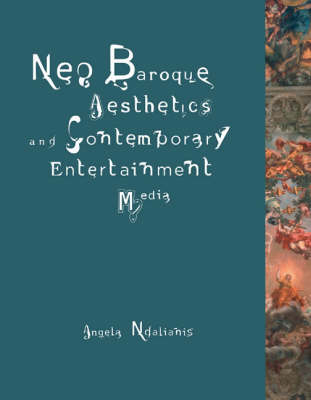
Neo-Baroque Aesthetics and Contemporary Entertainment
Seiten
2004
MIT Press (Verlag)
978-0-262-14084-3 (ISBN)
MIT Press (Verlag)
978-0-262-14084-3 (ISBN)
- Titel ist leider vergriffen;
keine Neuauflage - Artikel merken
Tracing the logic of media history, from the baroque to the neo-baroque, from magic lanterns and automata to film and computer games.
The artists of the seventeenth-century baroque period used spectacle to delight and astonish; contemporary entertainment media, according to Angela Ndalianis, are imbued with a neo-baroque aesthetic that is similarly spectacular. In Neo-Baroque Aesthetics and Contemporary Entertainment, she situates today's film, computer games, comic books, and theme-park attractions within an aesthetic-historical context and uses the baroque as a framework to enrich our understanding of contemporary entertainment media.
The neo-baroque aesthetics that Ndalianis analyzes are not, she argues, a case of art history repeating or imitating itself; these forms have emerged as a result of recent technological and economic transformations. The neo-baroque forms combine sight and sound and text in ways that parallel such seventeenth-century baroque forms as magic lanterns, automata, painting, sculpture, and theater but use new technology to express the concerns of the late twentieth and early twenty-first century. Moving smoothly from century to century, comparing ceiling paintings to the computer game Doom, a Spiderman theme park adventure to the baroque version of multimedia known as the Bel Composto, and a Medici wedding to T erminator 2:3D, the book demonstrates the logic of media histories. Ndalianis focuses on the complex interrelationships among entertainment media and presents a rigorous cross-genre, cross-historical analysis of media aesthetics.
The artists of the seventeenth-century baroque period used spectacle to delight and astonish; contemporary entertainment media, according to Angela Ndalianis, are imbued with a neo-baroque aesthetic that is similarly spectacular. In Neo-Baroque Aesthetics and Contemporary Entertainment, she situates today's film, computer games, comic books, and theme-park attractions within an aesthetic-historical context and uses the baroque as a framework to enrich our understanding of contemporary entertainment media.
The neo-baroque aesthetics that Ndalianis analyzes are not, she argues, a case of art history repeating or imitating itself; these forms have emerged as a result of recent technological and economic transformations. The neo-baroque forms combine sight and sound and text in ways that parallel such seventeenth-century baroque forms as magic lanterns, automata, painting, sculpture, and theater but use new technology to express the concerns of the late twentieth and early twenty-first century. Moving smoothly from century to century, comparing ceiling paintings to the computer game Doom, a Spiderman theme park adventure to the baroque version of multimedia known as the Bel Composto, and a Medici wedding to T erminator 2:3D, the book demonstrates the logic of media histories. Ndalianis focuses on the complex interrelationships among entertainment media and presents a rigorous cross-genre, cross-historical analysis of media aesthetics.
Angela Ndalianis is Associate Professor and Head of the Cinema Studies Program at the University of Melbourne, Australia.
| Reihe/Serie | Media in Transition |
|---|---|
| Zusatzinfo | 54 illus. |
| Verlagsort | Cambridge, Mass. |
| Sprache | englisch |
| Maße | 178 x 229 mm |
| Gewicht | 685 g |
| Themenwelt | Sozialwissenschaften ► Kommunikation / Medien ► Medienwissenschaft |
| ISBN-10 | 0-262-14084-5 / 0262140845 |
| ISBN-13 | 978-0-262-14084-3 / 9780262140843 |
| Zustand | Neuware |
| Informationen gemäß Produktsicherheitsverordnung (GPSR) | |
| Haben Sie eine Frage zum Produkt? |
Mehr entdecken
aus dem Bereich


aus dem Bereich


