


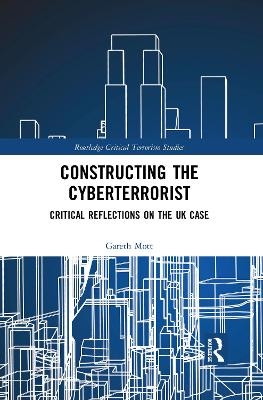
Constructing the Cyberterrorist
Critical Reflections on the UK Case
Seiten
2021
Routledge (Verlag)
978-1-032-08628-6 (ISBN)
Routledge (Verlag)
978-1-032-08628-6 (ISBN)
This book maps and analyses the official British construction of the threat of cyberterrorism.
By using interpretive discourse analysis, this book identifies ‘strands’ from a corpus of policy documents, statements, and speeches from UK Ministers, MPs, and Peers between 12 May 2010 and 24 June 2016. The book examines how the threat of cyberterrorism was constructed in the UK, and what this securitisation has made possible. The author makes novel contributions to the Copenhagen School’s ‘securitisation theory’ framework by outlining a ‘tiered’ rather than monolithic audience system; refining the ‘temporal’ and ‘spatial’ conditioning of a securitisation with reference to the distinctive characteristics of cyberterrorism; and, lastly, by detailing the way in which popular fiction can be ascribed agency to ‘fill in’ an absence of ‘cyberterrorism’ case studies. He also argues that the UK government’s classification of cyberterrorism as a ‘Tier One’ threat created a central strand upon which a discursive securitisation was established.
This book will be of interest to students of Critical Security Studies, terrorism studies, UK politics, and international relations.
By using interpretive discourse analysis, this book identifies ‘strands’ from a corpus of policy documents, statements, and speeches from UK Ministers, MPs, and Peers between 12 May 2010 and 24 June 2016. The book examines how the threat of cyberterrorism was constructed in the UK, and what this securitisation has made possible. The author makes novel contributions to the Copenhagen School’s ‘securitisation theory’ framework by outlining a ‘tiered’ rather than monolithic audience system; refining the ‘temporal’ and ‘spatial’ conditioning of a securitisation with reference to the distinctive characteristics of cyberterrorism; and, lastly, by detailing the way in which popular fiction can be ascribed agency to ‘fill in’ an absence of ‘cyberterrorism’ case studies. He also argues that the UK government’s classification of cyberterrorism as a ‘Tier One’ threat created a central strand upon which a discursive securitisation was established.
This book will be of interest to students of Critical Security Studies, terrorism studies, UK politics, and international relations.
Gareth Mott is a lecturer in security and intelligence at the University of Kent, UK.
Introduction: locating the ‘cyberterrorist’ within cyberspace and academia 1. Interpreting the construction of hypothetical threatening actors in cyberspace 2. The discursive construction of the threat of cyberterrorism to the UK 3. Running out of time: cyberterrorism as a temporally distinct threat 4. Locating the cyberterrorist: cyberterrorism as a spatially unique threat 5. Narrating the cyberterrorist: from fiction to reality Conclusion
| Erscheinungsdatum | 01.07.2021 |
|---|---|
| Reihe/Serie | Routledge Critical Terrorism Studies |
| Verlagsort | London |
| Sprache | englisch |
| Maße | 156 x 234 mm |
| Gewicht | 235 g |
| Themenwelt | Sozialwissenschaften ► Politik / Verwaltung ► Europäische / Internationale Politik |
| ISBN-10 | 1-032-08628-9 / 1032086289 |
| ISBN-13 | 978-1-032-08628-6 / 9781032086286 |
| Zustand | Neuware |
| Informationen gemäß Produktsicherheitsverordnung (GPSR) | |
| Haben Sie eine Frage zum Produkt? |
Mehr entdecken
aus dem Bereich



aus dem Bereich
kurze Geschichte einer langen Beziehung
Buch | Hardcover (2025)
Suhrkamp (Verlag)
CHF 36,40
Amerikas Strategie der Vorherrschaft und der Kampf um Eurasien
Buch | Softcover (2024)
NOMEN Verlag
CHF 27,95
erfolgreiche Interessenvertretung durch Prozesskompetenz im komplexen …
Buch | Hardcover (2023)
Wiley-VCH (Verlag)
CHF 58,75


