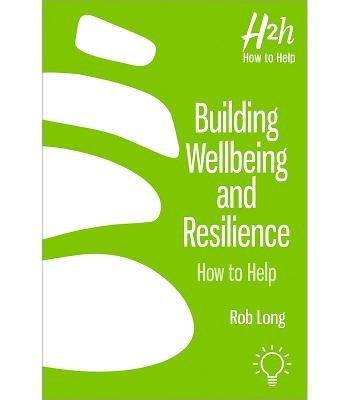
Building Wellbeing and Resilience
Pavilion Publishing and Media Ltd (Verlag)
9781912755967 (ISBN)
Part of the How to Help series of books exploring issues commonly faced by children and young people at home and at school, Building Wellbeing and Resilience offers a complete introduction to these critical yet frequently misunderstood topics. Often confused with mental health or physical wellness, wellbeing fuses aspects of both and wider elements into a general sense of 'how we are'. Resilience, meanwhile, is the ability to deal with adversity and move forward. High wellbeing fosters resilience and, in a virtuous circle, resilience is linked to high levels of wellbeing. Exploring these topics along with related issues such as measuring wellbeing, using positive psychology approaches to boost strengths and the impact of neurodiversity, Rob Long considers the importance and impact of wellbeing and resilience at home and in the classroom - and how parents, carers, teachers and schools can help.
ROB LONG is a Chartered Psychologist who provides independent training to teachers and other professionals. He has previously lectured in Psychology and Sociology and worked as an Educational Psychologist for Wolverhampton and Devon Education Authorities. During this time he managed a Behaviour Support Team and supported schools in reviewing their behaviour management policies and practice. Rob's main interest is supporting children who face emotional and behavioural difficulties. He is committed to developing an understanding of these children through training and project work, and to providing solutions and practical help to school staff involved with them. He teaches on a distance learning course in Social, Emotional and Mental Health issues run by Oxford Brookes University and the Social, Emotional, Behavioural Difficulties Association (SEBDA). He is also an active member of SEBDA.
Series Preface; About the Author;
Author's Preface; How to Use This Book
Part 1: Introduction
1. What are wellbeing and resilience?; 2. Wellbeing in context; 3. Wellbeing and development; 4. Issues, evidence and definitions; Ten key things to know about wellbeing and resilience
Part 2: The science of wellbeing
5. Evidence-based practice; 6. Measuring wellbeing; 7. Wellbeing and positive psychology; 8. How can positive psychology improve wellbeing?; 9. Signature strengths
Part 3: Wellbeing and development
10. Child and adolescent development; 11. Wellbeing and physical development; 12. Wellbeing and emotional development; 13. Wellbeing and cognitive development; 14. Adolescence and social development
Part 4: Wellbeing at home and in school
15. Wellbeing and the family; 16. Wellbeing in school; 17. Wellbeing in the classroom; 18. Behaviour and school policies; 19. School transitions and wellbeing
Part 5: Resilience and mental health
20. Wellbeing for troubled children; 21. Understanding resilience; 22. What can be done to increase resilience?; 23. Building the skills for school success
Part 6: Complex difficulties and disadvantage
24. Children with complex difficulties; 25. The disability paradox; 26. Abilities and capabilities; 27. Poverty
Part 7: Conclusion and resources
29. Summary; 30. Advice for parents and carers; 31. Advice for teachers; Appendices
| Erscheinungsdatum | 21.06.2021 |
|---|---|
| Sprache | englisch |
| Maße | 159 x 220 mm |
| Themenwelt | Sachbuch/Ratgeber ► Gesundheit / Leben / Psychologie ► Familie / Erziehung |
| Geisteswissenschaften ► Psychologie ► Pädagogische Psychologie | |
| Sozialwissenschaften ► Pädagogik ► Didaktik | |
| ISBN-13 | 9781912755967 / 9781912755967 |
| Zustand | Neuware |
| Informationen gemäß Produktsicherheitsverordnung (GPSR) | |
| Haben Sie eine Frage zum Produkt? |
aus dem Bereich