Other Abyssinians (eBook)
246 Seiten
Boydell & Brewer (Verlag)
978-1-78744-952-7 (ISBN)
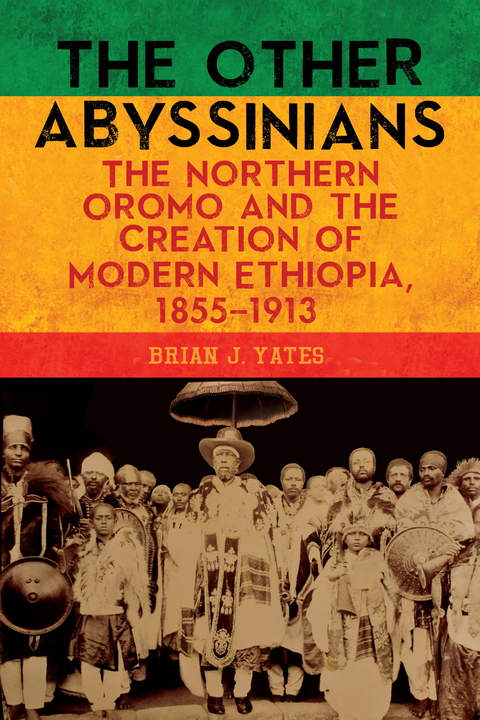
Although the Oromo are the largest ethnic group in Ethiopia, their history has been distorted in order to buttress twentieth-century notions of a homogeneous Ethiopian state. The Other Abyssinians tells the story of the Oromo people's contribution to modern Ethiopia, tracing their experiences from the early nineteenth century onward and detailing the varied interactions of Oromo groups throughout the Ethiopian highlands. Focusing on the historic provinces of Wallo and Shawa, this well-researched work elucidates the importance of these territories in the creation of Ethiopia and the history of the Oromo. It casts the Oromo as Abyssinians and central in all aspects of modernEthiopian life, while making a case for Ethiopia, a nation without a colonial legacy, as an example of indigenous African identity formation that challenges notions of "e;tribal"e; or ethnic identities. Author Brian J. Yates details the cultural practices that integrated the populations of the highlands into the Abyssinian group; in addition, he analyzes the political structures that evolved concurrently. The book, notably, utilizes a community-based framework to underscore the fluidity of modern national identity. All in all, the work offers a close study of Ethiopian modernization policies and illuminates how Africans might have crafted their nations without the legaciesof colonialism. BRIAN J. YATES is an Associate Professor of History at Saint Joseph's University.
Introduction: What about the Oromo Habäsha? Liberating Northern Oromo Experience from Competing Nationalisms
Cultural Backgrounds and the Häbäsha State
In but not of: The (Re)Integration of the Wällo Oromo into the Häbäsha Community
Menilek, Gobäna and the Creation of Häbäsha Shäwa, 1855-1888
Recreating the Autonomy of Wällo: The Unions of Mikaél and Menilek
From Personal Relationships to a Centralizing State: Shäwan Ethiopia (1889-1913)
Conclusion: The Oromo Häbasha Post-Menilek
Appendix A: Guide To The Transliteration of the Ethiopic Script To the Latin Script
Appendix B: Glossary of Ethiopian Terms
Appendix C: Sample Interview Questions for Shäwa and Wällo
Bibliography
| Erscheint lt. Verlag | 2.1.2020 |
|---|---|
| Reihe/Serie | Rochester Studies in African History and the Diaspora | Rochester Studies in African History and the Diaspora |
| Zusatzinfo | 4 b/w. 7 line. |
| Verlagsort | Rochester |
| Sprache | englisch |
| Maße | 160 x 160 mm |
| Themenwelt | Geschichte ► Allgemeine Geschichte ► Neuzeit (bis 1918) |
| Geisteswissenschaften ► Geschichte ► Regional- / Ländergeschichte | |
| Sozialwissenschaften ► Soziologie ► Makrosoziologie | |
| Schlagworte | African nation-building • cultural contribution • Cultural diversity • ethiopian history • Indigenous Identity • modern Ethiopia • Northern Oromo • Other Abyssinians • Political Integration |
| ISBN-10 | 1-78744-952-1 / 1787449521 |
| ISBN-13 | 978-1-78744-952-7 / 9781787449527 |
| Informationen gemäß Produktsicherheitsverordnung (GPSR) | |
| Haben Sie eine Frage zum Produkt? |
 EPUB (Adobe DRM)
Kopierschutz: Adobe-DRM
Adobe-DRM ist ein Kopierschutz, der das eBook vor Mißbrauch schützen soll. Dabei wird das eBook bereits beim Download auf Ihre persönliche Adobe-ID autorisiert. Lesen können Sie das eBook dann nur auf den Geräten, welche ebenfalls auf Ihre Adobe-ID registriert sind.
Details zum Adobe-DRM
Dateiformat: EPUB (Electronic Publication)
EPUB ist ein offener Standard für eBooks und eignet sich besonders zur Darstellung von Belletristik und Sachbüchern. Der Fließtext wird dynamisch an die Display- und Schriftgröße angepasst. Auch für mobile Lesegeräte ist EPUB daher gut geeignet.
Systemvoraussetzungen:
PC/Mac: Mit einem PC oder Mac können Sie dieses eBook lesen. Sie benötigen eine
eReader: Dieses eBook kann mit (fast) allen eBook-Readern gelesen werden. Mit dem amazon-Kindle ist es aber nicht kompatibel.
Smartphone/Tablet: Egal ob Apple oder Android, dieses eBook können Sie lesen. Sie benötigen eine
Geräteliste und zusätzliche Hinweise
Buying eBooks from abroad
For tax law reasons we can sell eBooks just within Germany and Switzerland. Regrettably we cannot fulfill eBook-orders from other countries.
aus dem Bereich