



Losing Asia
Modernization and the Culture of Development
Seiten
1996
Johns Hopkins University Press (Verlag)
978-0-8018-5170-4 (ISBN)
Johns Hopkins University Press (Verlag)
978-0-8018-5170-4 (ISBN)
- Titel ist leider vergriffen;
keine Neuauflage - Artikel merken
In this account of the aesthetic cost of modernizing the Asian countryside, the author presents a dark side of Third World development. He shows where and how so much of the beauty in these rural landscapes has been lost, nevertheless concluding that there is still much left to protect.
"Village landscapes," writes Bret Wallach, "are among the most perfect places on the planet." In this account of the aesthetic cost of modernizing the Asian countryside, Wallach presents a dark side of Third World development. Showing through descriptive travelogue where and how so much of the beauty in these rural landscapes has been lost, he nevertheless concludes that there is still much left to protect. Writing both from his own personal experience and research, Wallach takes readers on an adventure into Asia that begins in Yunnan in southern China. He then visits five progressively more pristine places until finally, in the Ganges delta, he arrives at one of the last places in Asia virtually untouched by Western development. Wallach describes Chinese officials who, in the pursuit of more efficient production, do not hesitate to sacrifice traditional and beautiful agricultural landscapes. But it is in India, among the lingering vestiges of British colonialism, where he finds the roots of the "culture of development".
Wallach warns of the danger not only of foreign experts but also of well-meaning natives returning home from the West, armed with advanced degrees and "full of technical tricks". Just as these specialists have - however grudgingly - found room in their development plans for ecological considerations, so too, Wallach contends, they should now find room for the preservation of beauty. Throughout, Wallach relates the history of rural development in South Asia along with his own observation of the contemporary rural landscape. He provides examples of how new methods of agriculture, irrigation and community development have brought dramatic transformations to Asia as a whole. In the final chapter, he describes grassroot conservation movements already working throughout Asia and discusses ways in which these places might be saved.
"Village landscapes," writes Bret Wallach, "are among the most perfect places on the planet." In this account of the aesthetic cost of modernizing the Asian countryside, Wallach presents a dark side of Third World development. Showing through descriptive travelogue where and how so much of the beauty in these rural landscapes has been lost, he nevertheless concludes that there is still much left to protect. Writing both from his own personal experience and research, Wallach takes readers on an adventure into Asia that begins in Yunnan in southern China. He then visits five progressively more pristine places until finally, in the Ganges delta, he arrives at one of the last places in Asia virtually untouched by Western development. Wallach describes Chinese officials who, in the pursuit of more efficient production, do not hesitate to sacrifice traditional and beautiful agricultural landscapes. But it is in India, among the lingering vestiges of British colonialism, where he finds the roots of the "culture of development".
Wallach warns of the danger not only of foreign experts but also of well-meaning natives returning home from the West, armed with advanced degrees and "full of technical tricks". Just as these specialists have - however grudgingly - found room in their development plans for ecological considerations, so too, Wallach contends, they should now find room for the preservation of beauty. Throughout, Wallach relates the history of rural development in South Asia along with his own observation of the contemporary rural landscape. He provides examples of how new methods of agriculture, irrigation and community development have brought dramatic transformations to Asia as a whole. In the final chapter, he describes grassroot conservation movements already working throughout Asia and discusses ways in which these places might be saved.
| Erscheint lt. Verlag | 11.1.1996 |
|---|---|
| Illustrationen | Susan Trammell |
| Zusatzinfo | 12 illustrations |
| Verlagsort | Baltimore, MD |
| Sprache | englisch |
| Maße | 152 x 229 mm |
| Gewicht | 500 g |
| Themenwelt | Reisen ► Reiseführer ► Asien |
| Naturwissenschaften ► Biologie ► Ökologie / Naturschutz | |
| Sozialwissenschaften ► Soziologie ► Spezielle Soziologien | |
| ISBN-10 | 0-8018-5170-X / 080185170X |
| ISBN-13 | 978-0-8018-5170-4 / 9780801851704 |
| Zustand | Neuware |
| Informationen gemäß Produktsicherheitsverordnung (GPSR) | |
| Haben Sie eine Frage zum Produkt? |
Mehr entdecken
aus dem Bereich

aus dem Bereich
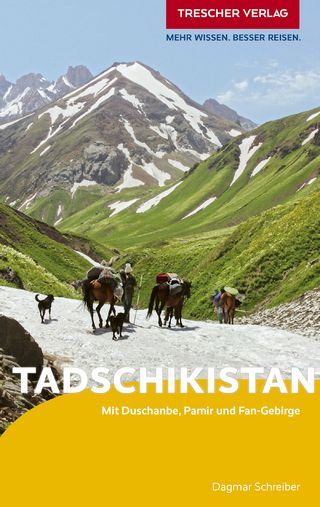
mit Duschanbe, Pamir und Fan-Gebirge
Buch | Softcover (2025)
TRESCHER (Verlag)
CHF 37,90
auf der Seidenstraße durch Kasachstan, Kirgistan, Usbekistan, …
Buch | Softcover (2025)
TRESCHER (Verlag)
CHF 37,90


