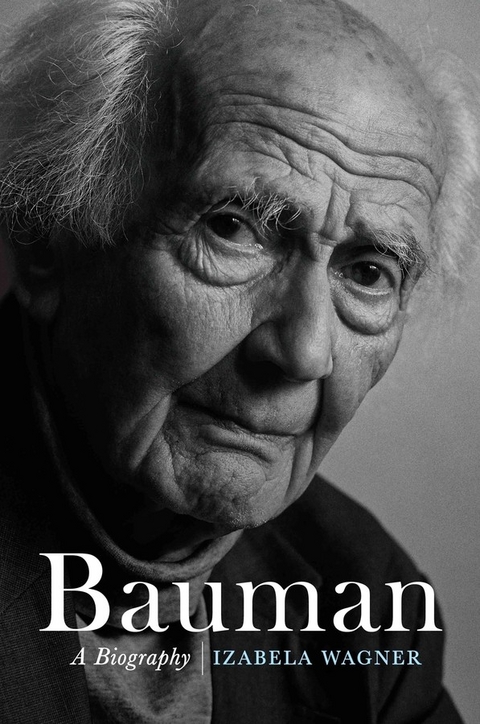
Bauman (eBook)
John Wiley & Sons (Verlag)
978-1-5095-2689-5 (ISBN)
This is the first comprehensive biography of Bauman's life and work. Izabela Wagner returns to Bauman's native Poland and recounts his childhood in an assimilated Polish Jewish family and the school experiences shaped by anti-Semitism. Bauman's life trajectory is typical of his generation and social group: the escape from Nazi occupation and Soviet secondary education, communist engagement, enrolment in the Polish Army as a political officer, participation in the WW II and the support for the new political regime in the post-war Poland. Wagner sheds new light on the post-war period and Bauman's activity as a KBW political officer. His eviction in 1953 from the military ranks and his academic career reflect the dynamic context of Poland in 1950s and 1960s. His professional career in Poland was abruptly halted in 1968 by the anti-Semitic purges. Bauman became a refugee again - leaving Poland for Israel, and then settling down in Leeds in the UK in 1971. His work would flourish in Leeds, and after his retirement in 1991 he entered a period of enormous productivity which propelled him onto the international stage as one of the most widely read and influential social thinkers of our time.
Wagner's biography brings out the complex connections between Bauman's life experiences and his work, showing how his trajectory as an 'outsider' forced into exile by the anti-Semitic purges in Poland has shaped his thinking over time. Her careful and thorough account will be the standard biography of Bauman's life and work for years to come.
Izabela Wagner is Associate Professor of Sociology at Collegium Civitas in Warsaw, Associate Researcher at DynamE (Dynamiques Europeennes) at Strasbourg University/CNRS, and a fellow of the Institut Convergence Migrations in Paris.
Global thinker, public intellectual and world-famous theorist of liquid modernity , Zygmunt Bauman (1925-2017) was a scholar who, despite forced migration, built a very successful academic career and, after retirement, became a prolific and popular writer and an intellectual talisman for young people everywhere. He was one of those rare scholars who, grey-haired and in his eighties, had his finger on the pulse of the youth. This is the first comprehensive biography of Bauman s life and work. Izabela Wagner returns to Bauman s native Poland and recounts his childhood in an assimilated Polish Jewish family and the school experiences shaped by anti-Semitism. Bauman s life trajectory is typical of his generation and social group: the escape from Nazi occupation and Soviet secondary education, communist engagement, enrolment in the Polish Army as a political officer, participation in the WW II and the support for the new political regime in the post-war Poland. Wagner sheds new light on the post-war period and Bauman s activity as a KBW political officer. His eviction in 1953 from the military ranks and his academic career reflect the dynamic context of Poland in 1950s and 1960s. His professional career in Poland was abruptly halted in 1968 by the anti-Semitic purges. Bauman became a refugee again - leaving Poland for Israel, and then settling down in Leeds in the UK in 1971. His work would flourish in Leeds, and after his retirement in 1991 he entered a period of enormous productivity which propelled him onto the international stage as one of the most widely read and influential social thinkers of our time. Wagner s biography brings out the complex connections between Bauman s life experiences and his work, showing how his trajectory as an outsider forced into exile by the anti-Semitic purges in Poland has shaped his thinking over time. Her careful and thorough account will be the standard biography of Bauman s life and work for years to come.
Izabela Wagner is Professor of Sociology at the Collegium Civitas in Warsaw and the author of Bauman: A Biography.
Acknowledgments
Introduction
Chapter 1 A happy childhood "under such circumstances" -Pozna (1925-1932)
Chapter 2 A pupil like no other - Pozna (1932-1939)
Chapter 3 The fate of a war refugee (1939 -1944): Poznan - Molodeczna
Chapter 4 Russian Exodus-- 1941-1943 : Gorki and the forest
Chapter 5 "Holy War"- 1943-1945
Chapter 6 Officer of the Internal Security Corps, 1945-1953
Chapter 7 "A man in a socialist society." Warsaw 1947-1953
Chapter 8 Young Scholar's Life - 1953-1957
Chapter 9 Years of hope - (1957-1967)
Chapter 10 Bad romance with the Security Police
Chapter 11 The "Year 1968"
Chapter 12 Holy Land
Chapter 13 British Professor
Chapter 14 An Intellectual at Work
Chapter 15 Global Thinker
Conclusion Legacy
Appendix Working on Bauman
Notes
Bibliography
"Who was Zygmunt Bauman? The late sociologist, known throughout the world for his path-breaking work on liquid modernity, had a biography. He was a Polish Jew, a soldier, a refugee. He had a whole life before Leeds. Izabela Wagner's great achievement is to recover this other Bauman. This book will change the way we see Bauman, forever."
Peter Beilharz, La Trobe University
"This is a brilliant biography of an extraordinary intellectual. Izabela Wagner, a distinguished sociologist and intellectual historian, has found her subject. Zygmunt Bauman's life embodies a paradigmatic 20th century East-European trajectory. Framed by Hitler's and Stalin's totalitarianisms, it is a story of an attempted assimilation by a bourgeois Jewish family, engagement with Communism by the children's generation, disillusionment and exile. In Bauman's case, of course, this has been accompanied by a lifetime of influential reflection on the conditions and characteristics of modern society. A fascinating read."
Jan T. Gross, Princeton University
"Izabela Wagner's biography of Bauman is impressively erudite, exquisitely researched, and brings its subject vividly to life... an indispensable book."
Australian Book Review
"The lives of sociologists, for the most part, tend not to be wildly eventful. But this was not the case with Bauman. [...] Izabela Wagner's biography of Bauman is impressively erudite, exquisitely researched, and brings its subject vividly to life. [...I]n it, you will find a painstakingly comprehensive account of Bauman's intellectual formation and his daring originality, a kind of voyage around the nature of his sociological enterprise, and a celebration of a truly global public intellectual."
Anthony Elliott, Australian Book Review
"excellent... It is rare that one says of an academic book that it is a page-turner, but this book is such a case. Partly, this is due to Bauman's life, which, despite his protestations, was incredibly interesting, but it is also due to Wagner. She brings these events to life not just through her prose, but her skilful deployment of archival resources to enrich this story."
European Journal of Social Theory
"Wagner succeeds in vividly unfolding the multi-layered and conflict-ridden constellations that characterised Bauman's biography. Her book offers a sociological perspective on the history of a man and his family that provides deep insight into the life of a Polish Jew growing up in the 1920s and 1930s, into his political socialization in Poland and in the Soviet Union, and above all into the dynamic intellectual scene in Warsaw during the thaw. Anyone who has an interest in the social and historical characteristics of these periods will be richly rewarded by this biography."
H-Soz-Kult
"impressive"
Antisemitism Studies
"Deep, interesting and enjoyable to read. The author masterfully weaves documents, stories, interviews and photographs to piece together with many voices the life of a man far beyond the ordinary."
Rassegna Italiana di Sociologia
Acknowledgements
Contrary to popular belief, even single-author book projects aren’t the product of a solitary worker (Becker, 1982), and many people formed links in the long chain of collaboration that led to this finished book.
I am deeply grateful to Arthur Allen, my friend of eight years and my closest collaborator, without whom I would not have been able to give English-speakers the pleasure of reading this book. Arthur is a successful writer, and author of Vaccine: The Controversial Story of Medicine’s Greatest Lifesaver. As a writer and editor in the health and science section at Politico in Washington, DC, he is a very busy journalist, but found time for Bauman’s biography because he is also an enthusiastic historian. Since the beginning of our friendship, we have helped complete each other’s expertise, skills and knowledge. When we met in 2011, Arthur was working on his book The Fantastic Laboratory of Dr. Weigl (2014), and I became his research assistant for Polish documents and his consultant on parts of Polish history. Thanks to my contribution to Arthur’s project, I learned a lot about World War II, postwar documents, the Institute of Remembrance (IPN) and other archives in Poland. This knowledge was critical to much of the documentation of the present book.
I am not an English native speaker, having taught myself the language after a formal Polish–French education. Arthur not only corrected my mistakes, detected false French cognates and polished my English, but also challenged my purposes and pushed me to be more accurate, sceptical and clear. He perfectly understood my jokes, personal style and emotional way of writing, which was crucial for maintaining my specific form of expression – the biggest challenge in ‘cultural translation’. Through his corrections, Arthur obtained an expression of what I wanted to say, but did not know yet know how to say!
His contribution was not only editorial but also historical. Arthur’s remarks, questions, advice and formal suggestions (such as separating chapters or reformulating titles) helped me shape my narration in clearer, yet scientifically pertinent, ways. I am deeply grateful for the hours, days and months Arthur devoted to correcting this manuscript (he also edited my previous book, Producing Excellence, Rutgers University Press, 2015), and for his enthusiastic feedback and tips. We worked on these three books together while exchanging only mutual trust and fascination in our work; if the latter is not rare, the former is exceptional. Our friendship and collaboration made the writing a less lonely and more pleasant activity.
I am grateful to the many people who trusted me and spent time recalling their experiences of Bauman as a teacher, colleague, friend or relation. This long list starts with Aleksandra Jasińska-Kania, who made possible my two interviews with Zygmunt Bauman; she prepared our meetings, which were extremely rich in new data. I am also grateful for our interviews and discussions that took place after Zygmunt Bauman passed away. Aleksandra Jasińska-Kania also introduced me to Bauman’s daughters.
I am deeply grateful to Anna Sfard, Lydia Bauman and Irena Bauman for their trust, the enormous boost they gave my research, and the fascinating conversations we shared. They not only accorded me their time and responded to all the questions I asked, but also gave me free access to two unpublished manuscripts by their father. These unique texts (which I obtained in December 2017) confirmed my previous hypothesis and filled out the picture I drew from my interviews with Bauman. I wish also to thank the Bauman family for the rights to publish family pictures. I am particularly grateful to Lydia Bauman for her trust, and access to her private journal that described the family’s travel to Israel in 1968. She also agreed to the use of the portrait of her father that she painted.
I am immensely grateful to the thirty-nine other people living in different parts of the world whom I interviewed for the book. In Warsaw (in chronological order of our interviews), I met Karol Modzelewski, Barbara and Jerzy Szacki, Andrzej Werblan, Józef Hen, Aleksandra Jasińska-Kania, Michał Komar, Stanisław Obirek, Marian Turski, Adam Michnik, Jerzy Wiatr, Tomasz Kitliński and his parents, and Adam Ostolski; in Pozna, Roman Kubicki and Tomasz Kowalski; in Geneva, Bronisław Baczko; in New York, Irena Grudzińska-Gross, Krystyna Fischer and Jan T. Gross; in Israel, Emmanuel Marx, Shalva Weil and Uri Ram; in the UK, Griselda Pollock, Tony Bryant, Janet Wolff, Keith Tester, John Thompson, Alan Warde and Monika Kostera. This last interview was conducted by Skype. I would also like to thank three individuals who did not want their names to be mentioned. I also spoke on the phone and/or exchanged letters with Adam Chmielewski, Leszek Kwiatkowski, Joanna Tokarska-Bakir, Włodek Goldkorn, Aleksander Perski, Elżbieta Kossewska, Barbara Toruńczyk and Peter Beilharz.
I wish to thank particularly Włodzimierz Holsztyński, for our correspondence and his lengthy and detailed account of the opposition activity at the University of Warsaw in the lead-up to March 1968. I am also deeply grateful to him for the permission to cite his poems. Holsztyński’s talent completed my narrative in moments when academic language was inadequate in comparison to poetic aesthetics. I would like to thank Barbara Netrepko-Herbert for her translations of Holsztyński’s pieces, as well as for the translation of Janina Bauman’s poems. I am thankful to Łukasz Gos for his translation of the Antoni Słonimski poem.
This book benefitted also from the talents of other artists – photographers Agata Szczypińska, Michele Monasta, Łukasz Cynalewski and Tomasz Kowalski. I wish also to thank art historian Dariusz Konstantynow for our discussion, and for allowing me to publish one piece from his collection of anti-Semitic caricatures.
I thank the Bauman family for permission to reproduce Zygmunt Bauman’s photographs and Janina Bauman’s poems, which I found in secret-service files at the IPN. I wish to acknowledge Beata Kowalczyk and Mariusz Finkielsztein for their help in my data collection and their work in the archives of the IPN, the University of Warsaw, the Polish Academy of Science and the New Archives (Archiwum Akt Nowych). Jarosław Kilias helped me with the Polish Sociological Society archives and Wanda Lacrampe assisted in scouring the PZPR Party Archives in Milanówek. I would also like to thank the writer Anna Kłys, who spontaneously offered her help with research in the Poznań City Archives. I wish also to thank Patryk Pleskot from the IPN for his help in studying former secret-service archives. In the final stage of my work, Dariusz Brzeziński from the Polish Academy of Science introduced me to colleagues from the Bauman Institute – Marc Davis and Tony Campbell. They invited me to give a lecture at Leeds University, where Griselda Pollock enabled me to consult documents at the Archives and the Special Collection’s Janina and Zygmunt Bauman Archive (hereafter the Bauman Archive). My research there would not have been successful (many documents were not yet catalogued) without the help of Jack Palmer, Timothy Procter and Carolyne Bolton. Jack also helped me with expert information about Leeds University and the British sociological milieu, and helped me access articles and books. Mariusz Finkielsztein, Andrzej Nowak, Pietro Ingalina and Katarzyna Kwiatkowska-Moskalewicz also did a great deal to help me find sources in Polish, English and French.
I drew constantly on the help and support of Beata Chmiel in several different ways. First, she helped me collect most of the press articles and Polish books cited in this volume, obtaining these materials quickly and efficiently. Moreover, for the last five years she has sent me everything she detected online about Zygmunt Bauman. (My home has limited access to the internet.) Beata showed me overwhelming support and enthusiasm for my work and opened numerous doors for me – interviews, exchanges of letters and discussions. She was an excellent guide and adviser in the process of book delivery. Other people gave me strong support through inspiring talks and discussions. I am indebted to my friends Alicja Badowska-Wójcik and Ryszard Wójcik, as well as to Claire Bernard and Paul Gradvohl, who advised me wisely when I needed it. I warmly acknowledge Lucyna Gebert for her support, connections and precious information.
One of the last and most crucial phases of book production is obtaining comment on the manuscript. I wish to thank deeply everyone who read and commented on my drafts and gave me encouragement. My first reader, Mariusz Finkielsztein, never hesitated to indicate my mistakes, such as overly long passages or confusing explanations. As a specialist in academic boredom, he was particularly attentive to the rhythm and speed of the narration. I wish to thank also Jean-Michel Chapoulie, Stanisław Obirek, Michał Komar, Beata Kowalczyk, Anna Rosińska, Beata Chmiel, Maciej Gdula, Adam Ostolski, Natalia Aleksiun, Włodek Goldkorn, Andrzej Nowak, Agata Czarnacka and Monika Kostera for their comments and questions on the manuscript.
I am particularly grateful for the very careful and expert reading of the whole manuscript by Jan Tomasz Gross, Agnieszka Wiercholska and Aleksander Perski – the summer of 2019 was animated by our discussions, joined also by Danuta and...
| Erscheint lt. Verlag | 30.6.2020 |
|---|---|
| Sprache | englisch |
| Themenwelt | Sozialwissenschaften ► Soziologie ► Allgemeines / Lexika |
| Schlagworte | 20th Century & Contemporary European History • 20th century history • Bauman • Bauman, Zygmunt • European History • Geschichte • Gesellschaftstheorie • History • Israel • Leeds • Liquid life • Liquid Modernity • Poland • Social Theory • Sociology • Soziologie • Zeitgeschichte Europas im 20./21. Jhd. • Zygmunt Bauman |
| ISBN-10 | 1-5095-2689-7 / 1509526897 |
| ISBN-13 | 978-1-5095-2689-5 / 9781509526895 |
| Informationen gemäß Produktsicherheitsverordnung (GPSR) | |
| Haben Sie eine Frage zum Produkt? |
 EPUB (Adobe DRM)
Kopierschutz: Adobe-DRM
Adobe-DRM ist ein Kopierschutz, der das eBook vor Mißbrauch schützen soll. Dabei wird das eBook bereits beim Download auf Ihre persönliche Adobe-ID autorisiert. Lesen können Sie das eBook dann nur auf den Geräten, welche ebenfalls auf Ihre Adobe-ID registriert sind.
Details zum Adobe-DRM
Dateiformat: EPUB (Electronic Publication)
EPUB ist ein offener Standard für eBooks und eignet sich besonders zur Darstellung von Belletristik und Sachbüchern. Der Fließtext wird dynamisch an die Display- und Schriftgröße angepasst. Auch für mobile Lesegeräte ist EPUB daher gut geeignet.
Systemvoraussetzungen:
PC/Mac: Mit einem PC oder Mac können Sie dieses eBook lesen. Sie benötigen eine
eReader: Dieses eBook kann mit (fast) allen eBook-Readern gelesen werden. Mit dem amazon-Kindle ist es aber nicht kompatibel.
Smartphone/Tablet: Egal ob Apple oder Android, dieses eBook können Sie lesen. Sie benötigen eine
Geräteliste und zusätzliche Hinweise
Buying eBooks from abroad
For tax law reasons we can sell eBooks just within Germany and Switzerland. Regrettably we cannot fulfill eBook-orders from other countries.
aus dem Bereich