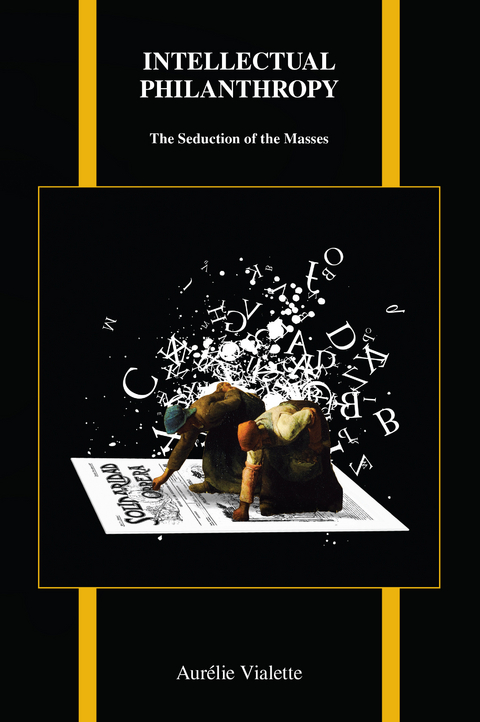
Intellectual Philanthropy (eBook)
289 Seiten
Purdue University Press (Verlag)
978-1-61249-546-0 (ISBN)
What's in a nineteenth-century philanthropist? Fear of an
uprising. But the frightened philanthropist has a remedy. Aware that the urban
surge of the working-class masses in Spain would create a state of emergency,
he or she devises a means to seduce the masses away from rebellion by taking on
himself or herself the role of the seducer: the capitalist intellectual hero
invested in the caretaking of the unpredictable working class. Intellectual
Philanthropy examines cultural practices used by philanthropists in modern
Iberia. It explains the meaning and role of intellectual philanthropy by
focusing on the devices and apparatuses philanthropists devised to realize
their projects. Intellectual philanthropists considered themselves activists in
that they aimed to impact social structures and deployed a rhetoric of the
affect to convince the workers to join their philanthropic enterprise.
Philanthropy, in the nineteenth century, was not necessarily
linked to money. Motivations could be moral or political; they could arise from
a desire to enhance social status or to acquire influence. To explicitly
designate this conceptualization of the philanthropic act, the author proposes
its own name: intellectual philanthropy. Intellectual philanthropy is
the use of philanthropic platforms by intellectuals to deploy cultural and
educational structures in which workers could acquire a cultural capital
constructed and organized by the philanthropists. Vialette argues that
intellectual philanthropy appeared as a reaction to the feared political and
cultural organization of the working class, rather than as a process of worker
emancipation.
These philanthropic processes aimed at organizing the
workers emotionally and rationally into what she calls micro-societies. Philanthropists
used the technique of seduction and expressed love to and for a targeted class.
However, this seduction prevented real communication, and created a moral and
symbolic indebtedness. This process was perverse in that, through its cultural
and educational structures, philanthropy would give workers cultural capital
that was not just emancipatory, but also a way to restrict their agency.
Acknowledgments
Introduction: Intellectual Philanthropists and their Weapons of Mass Seduction
PART ONE: Staging Philanthropy
Chapter One: Musical Philanthropy: The Working-Class Spectacle
Chapter Two: Archiving Philanthropy
Chapter Three: Performing Los filántropos: The Theater as the Medium for a Theorization of Philanthropy
PART TWO: Bibliophilanthropy
Chapter Four: The Library Is the City: The Enactment of Democratization Processes in the Centros de Lectura
Chapter Five: Catechism of Industry
PART THREE: Philanthropy and the Female Working Class
Chapter Six: The Potential Not to Be: Domesticity, Economy, and Reading Practices of Women Workers
Chapter Seven: The Art of Dying Well: Philanthropy and the Imitation of Christ as Social Deactivation
Conclusion
Notes
Works Cited
Index
| Erscheint lt. Verlag | 15.8.2018 |
|---|---|
| Reihe/Serie | Purdue Studies in Romance Literatures | Purdue Studies in Romance Literatures |
| Verlagsort | West Lafayette |
| Sprache | englisch |
| Themenwelt | Sozialwissenschaften ► Pädagogik ► Sozialpädagogik |
| Sozialwissenschaften ► Soziologie ► Allgemeines / Lexika | |
| Schlagworte | philanthropy, working class culture, social movements, 19th century Spain, Modern Spain, Catalonia, Iberian Studies, gender studies |
| ISBN-10 | 1-61249-546-X / 161249546X |
| ISBN-13 | 978-1-61249-546-0 / 9781612495460 |
| Informationen gemäß Produktsicherheitsverordnung (GPSR) | |
| Haben Sie eine Frage zum Produkt? |
 EPUB (Adobe DRM)
Kopierschutz: Adobe-DRM
Adobe-DRM ist ein Kopierschutz, der das eBook vor Mißbrauch schützen soll. Dabei wird das eBook bereits beim Download auf Ihre persönliche Adobe-ID autorisiert. Lesen können Sie das eBook dann nur auf den Geräten, welche ebenfalls auf Ihre Adobe-ID registriert sind.
Details zum Adobe-DRM
Dateiformat: EPUB (Electronic Publication)
EPUB ist ein offener Standard für eBooks und eignet sich besonders zur Darstellung von Belletristik und Sachbüchern. Der Fließtext wird dynamisch an die Display- und Schriftgröße angepasst. Auch für mobile Lesegeräte ist EPUB daher gut geeignet.
Systemvoraussetzungen:
PC/Mac: Mit einem PC oder Mac können Sie dieses eBook lesen. Sie benötigen eine
eReader: Dieses eBook kann mit (fast) allen eBook-Readern gelesen werden. Mit dem amazon-Kindle ist es aber nicht kompatibel.
Smartphone/Tablet: Egal ob Apple oder Android, dieses eBook können Sie lesen. Sie benötigen eine
Geräteliste und zusätzliche Hinweise
Buying eBooks from abroad
For tax law reasons we can sell eBooks just within Germany and Switzerland. Regrettably we cannot fulfill eBook-orders from other countries.
aus dem Bereich