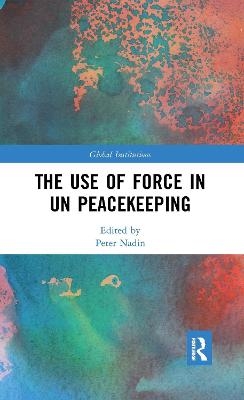
The Use of Force in UN Peacekeeping
Routledge (Verlag)
978-0-367-59273-8 (ISBN)
Recently, with the deployment of the Force Intervention Brigade in the DRC, the UN has gone beyond peacekeeping and into the realm of peace-enforcement. These developments have brought to the fore questions regarding the use of force in the context of peacekeeping. The key questions addressed in this book examine not only the utility of force, but also the dilemmas and constraints inherent to the purposive use of force at a strategic, operational and tactical level.
Should UN peacekeepers exercise military initiative?
Is UN peacekeeping capable of undertaking offensive military operations?
If so, then under what circumstances should peacekeepers use force?
How should force be wielded? And against whom?
With chapters written by experts in the field, this comprehensive volume will be of great use and interest to postgraduate students, academics and experts in international security, the UN, peacekeeping and diplomacy.
Peter Nadin is an independent researcher based in Sydney, Australia. He has worked previously as a research assistant at the United Nations University, and interned with the UNU Institute for Sustainability and Peace and the UN Department of Peacekeeping Operations. His research interests include the politics of the UN Security Council and UN Peacekeeping Operations.
Introduction, Part 1: Questions of Doctrine, 1. The case of East Timor: Ancient history or the shape of things to come? 2. Action adapted to circumstance: Peacekeeping doctrine and the use of force, 3. Between absolute war and absolute peacekeeping, 4. Implications of stabilisation mandates for the use of force in UN peace operations, 5. Understanding the utility of the UN military component to protect civilians in different scenarios, 6. Protecting civilians with force: Lessons and dilemmas from the UN Stabilisation Mission in Haiti, 7. The ‘All necessary means’, to what ends? The unintended consequences of the use of force by UN Peacekeepers, 8. The logic of force in UN peacekeeping: A policy primer, Part 2: Questions of Practice, 9. Leadership in UN Missions, 10. The use of force and the civil-military dimension, 11. Generating the ability: The challenges of force generation, 12. UN peacekeeping and international law, Conclusion.
| Erscheinungsdatum | 01.07.2020 |
|---|---|
| Reihe/Serie | Global Institutions |
| Verlagsort | London |
| Sprache | englisch |
| Maße | 138 x 216 mm |
| Gewicht | 630 g |
| Themenwelt | Sozialwissenschaften ► Politik / Verwaltung ► Europäische / Internationale Politik |
| Sozialwissenschaften ► Politik / Verwaltung ► Staat / Verwaltung | |
| ISBN-10 | 0-367-59273-8 / 0367592738 |
| ISBN-13 | 978-0-367-59273-8 / 9780367592738 |
| Zustand | Neuware |
| Informationen gemäß Produktsicherheitsverordnung (GPSR) | |
| Haben Sie eine Frage zum Produkt? |
aus dem Bereich