Divided Tokyo (eBook)
XI, 174 Seiten
Springer Singapore (Verlag)
978-981-15-4202-2 (ISBN)
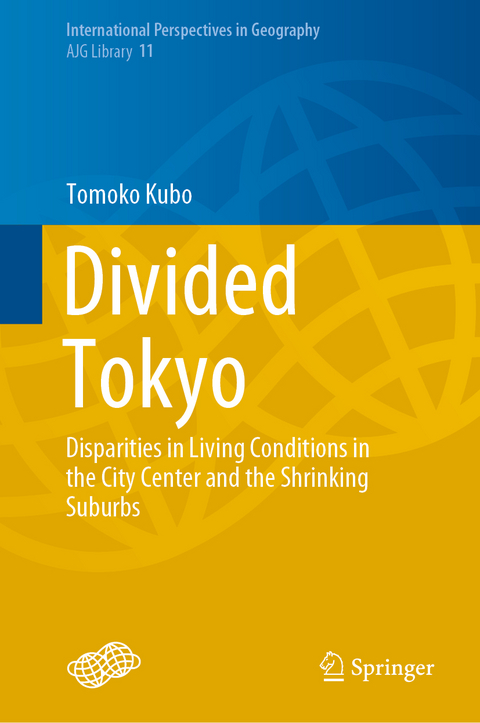
This book explores how and why Tokyo has been divided over time in terms of living conditions. First, recent urban discourses that explain the transformation of Tokyo's urban structure are examined, along with social changes and the expansion of unequal residential conditions within the metropolitan area. Chapter 1 reviews: 1) discussions on globalization, neo-liberalization, and changes in housing policies; 2) debates on the divided city; 3) debates on the shrinking city and the urban lifecycle; 4) discussion of the urban residential environment from a social justice perspective; and 5) family-housing relationships in the post-growth society. Based on the literature review, the rest of the book is structured as follows. Chapter 2 explains the changes in urban and housing policies, demography, and socio-economic conditions. In Chapters 3 to 5, the background and characteristics of the growth of condominium living in the city center are examined. The next three chapters analyze the reality of shrinking suburbs, using case studies to demonstrate the increase in vacant housing and local responses toward shrinkage. In Chapter 9, possible solutions are proposed for dealing with problems related to urban shrinkage and the expanding gap in terms of the availability of investments to stimulate urban development, the residential environment, and the population age structure in Japanese cities by comparing the author's findings and the literature review. This book provides deep insights for urban and housing scholars, urban planners, policy decision-makers, and local communities that struggle with aging populations and urban shrinkage.
Tomoko Kubo is an assistant professor in the Faculty of Life and Environmental Sciences of the University of Tsukuba, Japan. She is an urban geographer working closely with housing studies. She is the former chair of the Urban Geography Commission's Young Scholar (YS) Committee of the International Geographical Union (IGU) after winning its 2012 YS Paper competition, and a board member of the Research Committee on Housing and the Built Environment (RC43) of the International Sociological Association (ISA). Her research interests include urbanization and the housing market, urban and housing policy, residential choices under socioeconomic changes, single women's homeownership, shrinking cities and their revitalization, and aging suburbs in Japan.
This book explores how and why Tokyo has been divided over time in terms of living conditions. First, recent urban discourses that explain the transformation of Tokyo's urban structure are examined, along with social changes and the expansion of unequal residential conditions within the metropolitan area. Chapter 1 reviews: 1) discussions on globalization, neo-liberalization, and changes in housing policies; 2) debates on the divided city; 3) debates on the shrinking city and the urban lifecycle; 4) discussion of the urban residential environment from a social justice perspective; and 5) family-housing relationships in the post-growth society. Based on the literature review, the rest of the book is structured as follows. Chapter 2 explains the changes in urban and housing policies, demography, and socio-economic conditions. In Chapters 3 to 5, the background and characteristics of the growth of condominium living in the city center are examined. The next three chapters analyze the reality of shrinking suburbs, using case studies to demonstrate the increase in vacant housing and local responses toward shrinkage. In Chapter 9, possible solutions are proposed for dealing with problems related to urban shrinkage and the expanding gap in terms of the availability of investments to stimulate urban development, the residential environment, and the population age structure in Japanese cities by comparing the author's findings and the literature review. This book provides deep insights for urban and housing scholars, urban planners, policy decision-makers, and local communities that struggle with aging populations and urban shrinkage.
| Erscheint lt. Verlag | 9.4.2020 |
|---|---|
| Reihe/Serie | International Perspectives in Geography | International Perspectives in Geography |
| Zusatzinfo | XI, 174 p. 193 illus., 4 illus. in color. |
| Sprache | englisch |
| Themenwelt | Naturwissenschaften ► Biologie ► Ökologie / Naturschutz |
| Naturwissenschaften ► Geowissenschaften ► Geografie / Kartografie | |
| Sozialwissenschaften ► Soziologie ► Spezielle Soziologien | |
| Schlagworte | Aging Population • Globalization • Living Conditions • Spatial restructuring • sustainable city • urban geography and urbanism • Urban Shrinkage |
| ISBN-10 | 981-15-4202-3 / 9811542023 |
| ISBN-13 | 978-981-15-4202-2 / 9789811542022 |
| Informationen gemäß Produktsicherheitsverordnung (GPSR) | |
| Haben Sie eine Frage zum Produkt? |
 PDF (Wasserzeichen)
DRM: Digitales Wasserzeichen
Dieses eBook enthält ein digitales Wasserzeichen und ist damit für Sie personalisiert. Bei einer missbräuchlichen Weitergabe des eBooks an Dritte ist eine Rückverfolgung an die Quelle möglich.
Dateiformat: PDF (Portable Document Format)
Mit einem festen Seitenlayout eignet sich die PDF besonders für Fachbücher mit Spalten, Tabellen und Abbildungen. Eine PDF kann auf fast allen Geräten angezeigt werden, ist aber für kleine Displays (Smartphone, eReader) nur eingeschränkt geeignet.
Systemvoraussetzungen:
PC/Mac: Mit einem PC oder Mac können Sie dieses eBook lesen. Sie benötigen dafür einen PDF-Viewer - z.B. den Adobe Reader oder Adobe Digital Editions.
eReader: Dieses eBook kann mit (fast) allen eBook-Readern gelesen werden. Mit dem amazon-Kindle ist es aber nicht kompatibel.
Smartphone/Tablet: Egal ob Apple oder Android, dieses eBook können Sie lesen. Sie benötigen dafür einen PDF-Viewer - z.B. die kostenlose Adobe Digital Editions-App.
Buying eBooks from abroad
For tax law reasons we can sell eBooks just within Germany and Switzerland. Regrettably we cannot fulfill eBook-orders from other countries.
aus dem Bereich