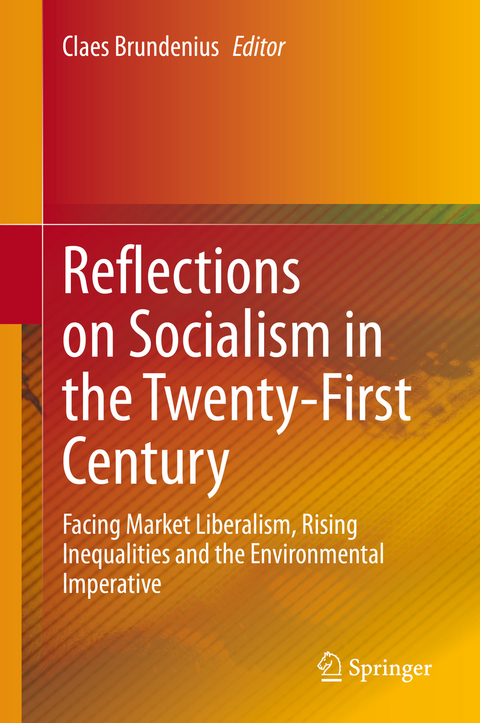
Reflections on Socialism in the Twenty-First Century (eBook)
IX, 248 Seiten
Springer International Publishing (Verlag)
978-3-030-33920-3 (ISBN)

In this volume, the authors reflect on the question 'what is socialism' as it pertains to today's economy. There is particular emphasis on democratic socialism models as a potential alternative to classic authoritarian socialism. A number of topical questions are addressed such as: What is democratic socialism and is it feasible, or even viable? What can be learnt from existing democratic socialist experiences? What would an ideal democratic socialist society look like today? Under what circumstances, and where, could such a model emerge today? In exploring these questions, several themes arise within these chapters such as the role of socialist values and inspirations in capitalist societies; and how capitalism and socialism relate to the knowledge economy.
The contemporary world is showing many contradictions with uncertain future scenarios that preoccupy mankind. The global capitalist system as we know it is in deep crisis-and some even predict its slow death, because of its inability to handle the environmental imperative. At the same time, classic socialism as experienced in the Soviet Union and its proxies is a stone dead alternative to capitalism today. So what options remain? The book considers this question as it examines a range of countries where socialism (in one form or another) has arisen, or where democratic socialism could be possible, including Brazil, Chile, Cuba, Sweden and the United States.Claes Brundenius is Professor Emeritus at the Lund School of Economics and Management, Lund University, Lund, Sweden. He is also Professorial Fellow at UNU-MERIT, Maastricht, the Netherlands. His research field is economic development and the political economy of science and technology. He has worked at the Organisation for Economic Co-operation and Development (OECD) in Paris, France and also for international agencies in Latin America, Africa and Asia. He has written extensively on economic and social development in Latin America, Africa and Asia, especially on the role of science, technology and innovation.
Acknowledgements 5
Contents 6
Contributors 8
Chapter 1: Introduction 9
Widening Income and Wealth Gaps 10
Sustainable Development and the Environmental Imperative 11
Neoliberalism: From Casino Capitalism to Voodoo Economics 11
Is There a Nordic Model? 13
The Nordic Countries in Comparison with other OECD Countries - 2018 14
So Why Socialism? 16
The Book Project 17
Democratic Socialism and Karl Polanyi 18
What This Volume Is About 19
References 23
Chapter 2: Possible Socialisms and the Challenges of the Globalizing Learning Economy in the Anthropocene Age 25
Introduction 25
Why Socialism? Classical Arguments 26
Ending the Exploitation of the Working Class 26
Socializing the Means of Production 26
Preventing Economic Crises and Unemployment 27
Planning for the Future 28
Building Science-Based Societies 28
Are the Classical Arguments Still Valid in the Globalizing Learning Economy? 29
Why Socialism? Contemporary Reasons 30
Ending Exploitation (in and) Between Countries 30
Inclusive Political and Socioeconomic Systems 31
Social Democracy in One Country? 31
Constructive Answers to Global Challenges 32
Planning in the Anthropocene 33
Democracy and Planning 36
On the Role of Innovation, Knowledge, and Learning in Socialist Planning 38
What Kind of Socialism? 39
China: A Flexible Autarchy? 40
China’s Attempts to Build a Knowledge-Based Economy 41
China Engages in Developing Green Technologies 43
Lessons to Be Learned from the China Case 44
China and the Outside World 44
How to Get There 45
Revolution and Reform 45
Can Socialism Grow Within and Behind The Back of Capitalism? 46
The UN Sustainable Development Goals 48
Conclusion 49
References 51
Chapter 3: Social Democracy and the Fate of the Swedish Model 54
Introduction 54
Seeds of the Early Century 56
1917: On the Brink of a Swedish Revolution? 57
October 1917: Coalition Government with the Liberal Party 58
The 1920 Party Congress: A Radicalized Social Democratic Party 58
Incipient Struggle for Industrial and Economic Democracy 59
The Birth of a Swedish Model 60
Family Policy 61
The Beginning of a Housing Policy 61
“The Saltsjöbaden Spirit”: A Historical Compromise 62
The Postwar Program and the Debate on “the Planned Economy” 63
The Debate on “the Planned Economy” 64
Did Social Democracy Change Ideology at This Point: Or a Tactical Retreat? 65
Lewin’s Dissenting View on SAP’s Ideological Development 66
“Harvest Time”: The Golden Welfare Years (1945–1975) 68
The Rehn-Meidner Model: Equality and Full Employment with Low Inflation 69
ATP: A General but Targeted Pension System 70
The “Guest Workers” 71
Wage Earner Funds and the End of Social Democratic Hegemony 73
The Wage Earner Funds: The Quest for Economic Democracy 74
The 1971 LO Congress 75
The Report to the LO Congress in 1976 76
A Government Committee to Study the “The Viability of Wage Earner Funds in Sweden” 77
The SAP-LO Joint Proposals in 1978 and in 1981 79
The Fate of the Wage Earner Funds 79
Why Did the Original Wage Earner Fund Idea Fail? 80
What Was Palme’s Position? 81
Historical Precedents of Collective Wage Earner Funds 82
Debates on the Law on Wage Earner Funds Outside Sweden 82
The 1980s: “The Market” Takes Over 83
From Public Expenditure to Household Debt 84
Deregulation of Credit Markets 84
The End of the Rehn-Meidner Model 85
Overhaul of the Tax System 86
Systemic Change 86
SAP’s Return to Power 87
Decentralizing School Management and the Beginning of Privatization of Education 88
An Unexpected Inspirer 89
Retrenchment of Entitlements 90
The Stop Law 91
The Freedom of Choice Law 91
A New Pension System 92
From Housing as an Entitlement to Housing as a Market 93
Increasing Income and Wealth Concentration 94
Privatization and the Reduction of the Public Sector 97
The Transformation of the Health Sector 98
A New Labor Market 99
Whither Swedish Social Democracy? 100
How Could It End Up Like This? 100
The New Reformists 101
Annex Tables 103
References 105
Chapter 4: The Rise of Socialism in the United States: American “Exceptionalism” and the Left After 2016 110
A New Socialist Movement? 110
Origins of the Socialist Revival 111
Why Was There No Socialism in America? 118
Labor and the Welfare State in Postwar America 120
Social Democratic Decline and the Future of the Left 123
Challenges for an Emerging Left 127
Conclusion 130
Annex: What Is Democratic Socialism? 130
Doesn’t Socialism Mean that the Government Will Own and Run Everything? 130
Hasn’t Socialism Been Discredited by the Collapse of Communism in the USSR and Eastern Europe? 131
Private Corporations Seem to Be a Permanent Fixture in the USA, So Why Work Toward Socialism? 132
Won’t Socialism Be Impractical Because People Will Lose Their Incentive to Work? 132
Why Are There No Models of Democratic Socialism? 132
But Hasn’t the European Social Democratic Experiment Failed? 133
Aren’t You a Party That’s in Competition with the Democratic Party for Votes and Support? 133
If I Am Going to Devote Time to Politics, Why Shouldn’t I Focus on Something More Immediate? 134
What Can Young People Do to Move the USA Toward Socialism? 134
If So Many People Misunderstand Socialism, Why Continue to Use the Word? 135
Bibliography 135
Chapter 5: The Allende Government’s Attempt to Achieve Major Transformations in Chile: Lessons from Hope and Failure 138
What Does This Experience Teach Us? 140
Valuing Memory 140
From Where Does One Observe History? 140
Three Main Questions 141
Yes, Allende’s Program Was Viable 142
Why the Program Became Unviable 143
Five Factors That Deviated the Course from Originally Planned 143
Main Lessons from a Unique Historical Event 147
History and the Future 148
Annex 1 149
Extracts from the Popular Unity Government Program 149
What Has Failed in Chile Is the System 149
The Strengthening of Democracy and Working Class Progress 149
The Construction of the New Economy 150
Intensification and Extension of the Agrarian Reform 150
The Popular Unity Government Foreign Policy 151
Annex 2 151
First 40 Measures of the Popular Unity Program 151
Further Reading 154
Chapter 6: Reflections on Socialism 156
The Utopia 156
The Pathways to Socialism 157
Chapter 7: Tribute to Paul Singer (1932–2018): A Socialist Activist 161
Lula’s Government and PT Socialism (“Socialismo Petista”) 163
Comments on Paul Singer’s Socialism 166
Chapter 8: Cuban Socialism at 60: Old Aspirations and New Realities 172
Introduction 172
The Transition Phase 1959–1961 172
Utopian Phase 1962–1970 174
1970–1985 Growth with Equity 176
Cuba a New Taiwan? 177
Stagnation 1986–1989 177
1990–1993: A Disastrous Collapse of the Economy 178
1994–2010: “The Special Period” and Erratic “Wait and See” Reforms 179
2011–2018: “Updating” the Cuban Economic Model 179
A Thaw in the US–Cuban Relations: A New Opportunity? 181
From Sugar Dependency to Dependency on Tourism and Medical Services 184
Impact of the Venezuelan Crisis on Cuba 185
A New Great Debate? 186
The New Constitution in 2019—A Step in the Right Direction? 187
Some Reflections on Cuban Socialism and Its Future 190
References 192
Chapter 9: Who Can Save Us from Ourselves? 194
References 201
Chapter 10: Ecosocialism: A Radical Alternative 203
Introduction 203
Democratic Ecological Planning 204
The Growth Question 206
Intellectual Roots 208
Why Environmentalists Need to Be Socialists 210
Why Socialists Need to Be Environmentalists 212
Ecosocialism and a Great Transition 213
References 214
Chapter 11: Towards a Socialist Technology 215
Introduction 215
On the Difficulties of Thinking on Technology of Socialist Inspiration 218
Technology of Socialist Inspiration in the Making: Technology and Work 220
Technology of Socialist Inspiration in the Making: Technology and Everyday Life 226
Looking Ahead: Promising Trends and Fields of Action 229
References 231
Chapter 12: The Socialism of Yesterday, Today, and Tomorrow 233
What Was Socialism About? 233
What Is Left? 235
A Point of Entry: Values Come First 236
From Values to Struggles: And Back 237
Some Elements for a Factual Approach 238
About Trends and Challenges 242
On Democracy 244
A Look at Ideological Power 247
Some Elements for Proposals 248
A New Opportunity? 250
References 251
| Erscheint lt. Verlag | 27.2.2020 |
|---|---|
| Zusatzinfo | IX, 248 p. 4 illus., 3 illus. in color. |
| Sprache | englisch |
| Themenwelt | Sozialwissenschaften ► Politik / Verwaltung |
| Sozialwissenschaften ► Soziologie | |
| Wirtschaft ► Betriebswirtschaft / Management ► Unternehmensführung / Management | |
| Wirtschaft ► Volkswirtschaftslehre | |
| Schlagworte | Capitalism • communism • Democratic Socialism • feasible socialism • Knowledge Economy • Marxism • possible socialism • real socialism • Social Democracy • Social Inequality • Socialism • socialism and the knowledge society • socialist experiences • socialist models • Swedish Welfare Model • viable socialism |
| ISBN-10 | 3-030-33920-3 / 3030339203 |
| ISBN-13 | 978-3-030-33920-3 / 9783030339203 |
| Informationen gemäß Produktsicherheitsverordnung (GPSR) | |
| Haben Sie eine Frage zum Produkt? |
 PDF (Wasserzeichen)
DRM: Digitales Wasserzeichen
Dieses eBook enthält ein digitales Wasserzeichen und ist damit für Sie personalisiert. Bei einer missbräuchlichen Weitergabe des eBooks an Dritte ist eine Rückverfolgung an die Quelle möglich.
Dateiformat: PDF (Portable Document Format)
Mit einem festen Seitenlayout eignet sich die PDF besonders für Fachbücher mit Spalten, Tabellen und Abbildungen. Eine PDF kann auf fast allen Geräten angezeigt werden, ist aber für kleine Displays (Smartphone, eReader) nur eingeschränkt geeignet.
Systemvoraussetzungen:
PC/Mac: Mit einem PC oder Mac können Sie dieses eBook lesen. Sie benötigen dafür einen PDF-Viewer - z.B. den Adobe Reader oder Adobe Digital Editions.
eReader: Dieses eBook kann mit (fast) allen eBook-Readern gelesen werden. Mit dem amazon-Kindle ist es aber nicht kompatibel.
Smartphone/Tablet: Egal ob Apple oder Android, dieses eBook können Sie lesen. Sie benötigen dafür einen PDF-Viewer - z.B. die kostenlose Adobe Digital Editions-App.
Buying eBooks from abroad
For tax law reasons we can sell eBooks just within Germany and Switzerland. Regrettably we cannot fulfill eBook-orders from other countries.
aus dem Bereich