



Storing Complex Words in the Mental Lexicon
Seiten
2020
|
20001 A. 1. Auflage
GRIN Verlag
978-3-346-10828-9 (ISBN)
GRIN Verlag
978-3-346-10828-9 (ISBN)
- Titel nicht im Sortiment
- Artikel merken
Seminar paper from the year 2016 in the subject Didactics for the subject English - Pedagogy, Literature Studies, grade: 2,0, University of Cologne (Englisches Seminar I), course: The Mental Lexicon, language: English, abstract: The question of what is stored in the mental lexicon might seem unnecessary at first. "Words, of course.", one might answer, but: what exactly are "words"? If looked at a little closer, a solution to the problem seems a little more difficult than that. In general, one could differentiate between simple words and complex words. Simple words consisting of only one constituent and complex words having more than one. Sometimes even more than two or three. Furthermore - what are constituents? Linguists all over the world talk about roots and morphemes, differentiating between bound and free morphemes, between prefixes, infixes and affixes and between inflection and derivation. This paper will evaluate how exactly complex words are stored in the mental lexicon and how humans access them. With the help of three major theories, the morpheme lexicon, the strict word-form lexicon and the moderate word-form lexicon, and studies for evidence, this paper finds that one theory, namely the one of the moderate word-form lexicon, might rather apply than any other and that dual-route access is more likely than single-route access. First, this paper estimates how one could understand the mental lexicon in general by then explaining different theories of how complex words are stored in there and how lexical access works. In chapter three, several studies will be listed and explained to be interpreted and combined with the introduced theories in chapter four in order to see which theory goes well with another and which applies more likely. Several examples will be shown to explain certain phenomena, such as regular and irregular past-tense forms. Moreover, this paper will take a look at not just the English language, but also Hebrew, German or Latin to show advantages and disadvantages of the theories.
| Erscheinungsdatum | 13.02.2020 |
|---|---|
| Sprache | englisch |
| Maße | 148 x 210 mm |
| Gewicht | 45 g |
| Themenwelt | Sozialwissenschaften ► Pädagogik ► Schulpädagogik / Grundschule |
| Sozialwissenschaften ► Pädagogik ► Schulpädagogik / Sekundarstufe I+II | |
| Schlagworte | complex words • complexwords • dual route • dualroute • Lexicon • Linguistics • Mental • mental lexicon • mentallexicon • Morphology • Storing words • Storingwords • word access • wordaccess • word form lexicon • wordformlexicon |
| ISBN-10 | 3-346-10828-7 / 3346108287 |
| ISBN-13 | 978-3-346-10828-9 / 9783346108289 |
| Zustand | Neuware |
| Informationen gemäß Produktsicherheitsverordnung (GPSR) | |
| Haben Sie eine Frage zum Produkt? |
Mehr entdecken
aus dem Bereich


aus dem Bereich
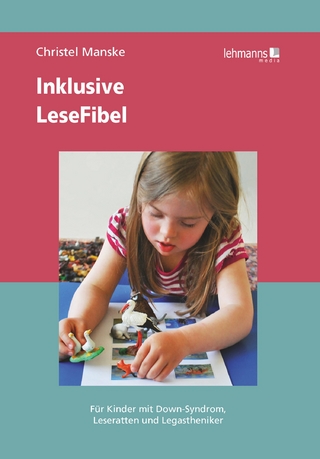
für Kinder mit Down-Syndrom, Leseratten und Legastheniker
Buch | Softcover (2023)
Lehmanns Media (Verlag)
CHF 27,90
wie Lehrer, Eltern und Schüler guten Unterricht gestalten
Buch | Softcover (2024)
Klett-Cotta (Verlag)
CHF 33,55
der Leitfaden für einen besseren Unterricht
Buch | Softcover (2025)
Klett-Cotta (Verlag)
CHF 23,80


