


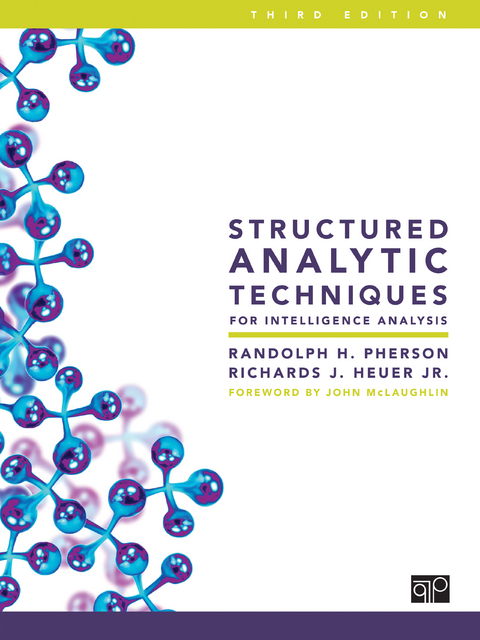
Structured Analytic Techniques for Intelligence Analysis (eBook)
384 Seiten
Sage Publications (Verlag)
978-1-5063-6894-8 (ISBN)

Figures
Foreword by John McLaughlin
Preface
Chapter 1 • Introduction and Overview
1.1 Our Vision
1.2 Role of Structured Analytic Techniques
1.3 History of Structured Analytic Techniques
1.4 The Expanding Use of Structured Analytic Techniques
1.5 Selection of Techniques for This Book
1.6 Quick Overview of Chapters
Chapter 2 • The Role of Structured Techniques
2.1 Two Types of Thinking
2.2 Developing a Taxonomy of Structured Analytic Techniques
2.3 Dealing with Cognitive Limitations
2.4 Matching Cognitive Limitations to Structured Techniques
2.5 Combating Digital Disinformation
Chapter 3 • Choosing the Right Technique
3.1 The Six Families
3.2 Core Techniques
3.3 Selecting the Right Technique
3.4 Projects Using Multiple Techniques
3.5 Common Errors in Selecting Techniques
3.6 Making a Habit of Using Structured Techniques
Chapter 4 • Practitioner’s Guide to Collaboration
4.1 Social Networks and Analytic Teams
4.2 Dividing the Work
4.3 Value of Collaborative Processes
4.4 Common Pitfalls with Small Groups
4.5 Benefiting from Diversity
4.6 Advocacy versus Objective Inquiry
4.7 Leadership and Training
Chapter 5 • Getting Organized
5.1 Sorting
5.2 Ranking, Scoring, and Prioritizing
5.3 Matrices
5.4 Process Maps
5.5 Gantt Charts
Chapter 6 • Exploration Techniques
6.1 Simple Brainstorming
6.2 Cluster Brainstorming
6.3 Nominal Group Technique
6.4 Circleboarding™
6.5 Starbursting
6.6 Mind Maps and Concept Maps
6.7 Venn Analysis
6.8 Network Analysis
Chapter 7 • Diagnostic Techniques
7.1 Key Assumptions Check
7.2 Chronologies and Timelines
7.3 Cross-Impact Matrix
7.4 Multiple Hypothesis Generation
7.5 Diagnostic Reasoning
7.6 Analysis of Competing Hypotheses
7.7 Inconsistencies Finder™
7.8 Deception Detection
7.9 Argument Mapping
Chapter 8 • Reframing Techniques
8.1 Cause and Effect Techniques
8.2 Challenge Analysis Techniques
8.3 Conflict Management Techniques
Chapter 9 • Foresight Techniques
9.1 Key Drivers Generation™
9.2 Key Uncertainties Finder™
9.3 Reversing Assumptions
9.4 Simple Scenarios
9.5 Cone of Plausibility
9.6 Alternative Futures Analysis
9.7 Multiple Scenarios Generation
9.8 Morphological Analysis
9.9 Counterfactual Reasoning
9.10 Analysis by Contrasting Narratives
9.11 Indicators Generation, Validation, and Evaluation
Chapter 10 • Decision Support Techniques
10.1 Opportunities Incubator™
10.2 Bowtie Analysis
10.3 Impact Matrix
10.4 SWOT Analysis
10.5 Critical Path Analysis
10.6 Decision Trees
10.7 Decision Matrix
10.8 Force Field Analysis
10.9 Pros-Cons-Faults-and-Fixes
10.10 Complexity Manager
Chapter 11 • The Future of Structured Analytic Techniques
11.1 Limits of Empirical Analysis
11.2 Purpose of Structured Techniques
11.3 Projecting the Trajectory of Structured Techniques
11.4 Role of Structured Techniques in 2030
| Erscheint lt. Verlag | 14.1.2020 |
|---|---|
| Verlagsort | Washington DC |
| Sprache | englisch |
| Themenwelt | Sozialwissenschaften ► Politik / Verwaltung ► Europäische / Internationale Politik |
| Schlagworte | Heuer • Intelligence • International Intelligence • Pherson • Randolph H. Pherson • Richards J. Heuer Jr. • Structured Analytic Techniques for Intelligence Analysis, Third Edition |
| ISBN-10 | 1-5063-6894-8 / 1506368948 |
| ISBN-13 | 978-1-5063-6894-8 / 9781506368948 |
| Informationen gemäß Produktsicherheitsverordnung (GPSR) | |
| Haben Sie eine Frage zum Produkt? |
 PDF (Adobe DRM)
Kopierschutz: Adobe-DRM
Adobe-DRM ist ein Kopierschutz, der das eBook vor Mißbrauch schützen soll. Dabei wird das eBook bereits beim Download auf Ihre persönliche Adobe-ID autorisiert. Lesen können Sie das eBook dann nur auf den Geräten, welche ebenfalls auf Ihre Adobe-ID registriert sind.
Details zum Adobe-DRM
Dateiformat: PDF (Portable Document Format)
Mit einem festen Seitenlayout eignet sich die PDF besonders für Fachbücher mit Spalten, Tabellen und Abbildungen. Eine PDF kann auf fast allen Geräten angezeigt werden, ist aber für kleine Displays (Smartphone, eReader) nur eingeschränkt geeignet.
Systemvoraussetzungen:
PC/Mac: Mit einem PC oder Mac können Sie dieses eBook lesen. Sie benötigen eine
eReader: Dieses eBook kann mit (fast) allen eBook-Readern gelesen werden. Mit dem amazon-Kindle ist es aber nicht kompatibel.
Smartphone/Tablet: Egal ob Apple oder Android, dieses eBook können Sie lesen. Sie benötigen eine
Geräteliste und zusätzliche Hinweise
Buying eBooks from abroad
For tax law reasons we can sell eBooks just within Germany and Switzerland. Regrettably we cannot fulfill eBook-orders from other countries.


