


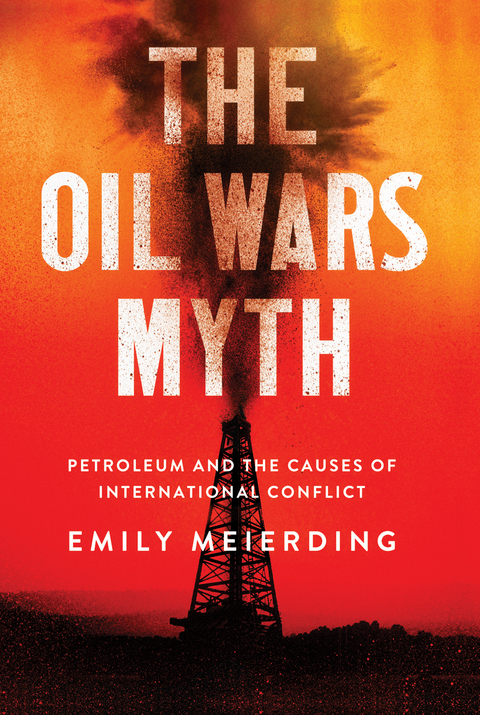
The Oil Wars Myth (eBook)
256 Seiten
Cornell University Press (Verlag)
978-1-5017-4894-3 (ISBN)
Do countries fight wars for oil? Given the resource's exceptional military and economic importance, most people assume that states will do anything to obtain it. Challenging this conventional wisdom, The Oil Wars Myth reveals that countries do not launch major conflicts to acquire petroleum resources. Emily Meierding argues that the costs of foreign invasion, territorial occupation, international retaliation, and damage to oil company relations deter even the most powerful countries from initiating "classic oil wars." Examining a century of interstate violence, she demonstrates that, at most, countries have engaged in mild sparring to advance their petroleum ambitions.
The Oil Wars Myth elaborates on these findings by reassessing the presumed oil motives for many of the twentieth century's most prominent international conflicts: World War II, the two American Gulf wars, the Iran–Iraq War, the Falklands/Malvinas War, and the Chaco War. These case studies show that countries have consistently refrained from fighting for oil. Meierding also explains why oil war assumptions are so common, despite the lack of supporting evidence. Since classic oil wars exist at the intersection of need and greed—two popular explanations for resource grabs—they are unusually easy to believe in.
The Oil Wars Myth will engage and inform anyone interested in oil, war, and the narratives that connect them.
Emily Meierding is Assistant Professor at the Naval Postgraduate School, Monterey, California.
Introduction: Blood and Oil
1. From Value to Violence: Connecting Oil and War
2. Explaining the Oil Wars Myth: Mad Max and El Dorado
3. Why Classic Oil Wars Do Not Pay
4. Searching for Classic Oil Wars
5. Red Herrings: The Chaco and Iran–Iraq Wars
6. Oil Spats: The Falkland/Malvinas Islands Dispute
7. Oil Campaigns: World War II
8. Oil Gambit: Iraq's Invasion of Kuwait
Conclusion: Petro-Myths and Petro-Realities
| Erscheint lt. Verlag | 15.5.2020 |
|---|---|
| Zusatzinfo | 5 maps |
| Verlagsort | Ithaca |
| Sprache | englisch |
| Maße | 150 x 150 mm |
| Themenwelt | Sozialwissenschaften ► Politik / Verwaltung ► Europäische / Internationale Politik |
| Sozialwissenschaften ► Politik / Verwaltung ► Politische Theorie | |
| Technik ► Elektrotechnik / Energietechnik | |
| Schlagworte | oil, natural resources, geo-political conflict, energy, US Foreign Policy |
| ISBN-10 | 1-5017-4894-7 / 1501748947 |
| ISBN-13 | 978-1-5017-4894-3 / 9781501748943 |
| Informationen gemäß Produktsicherheitsverordnung (GPSR) | |
| Haben Sie eine Frage zum Produkt? |
 EPUB (Adobe DRM)
Kopierschutz: Adobe-DRM
Adobe-DRM ist ein Kopierschutz, der das eBook vor Mißbrauch schützen soll. Dabei wird das eBook bereits beim Download auf Ihre persönliche Adobe-ID autorisiert. Lesen können Sie das eBook dann nur auf den Geräten, welche ebenfalls auf Ihre Adobe-ID registriert sind.
Details zum Adobe-DRM
Dateiformat: EPUB (Electronic Publication)
EPUB ist ein offener Standard für eBooks und eignet sich besonders zur Darstellung von Belletristik und Sachbüchern. Der Fließtext wird dynamisch an die Display- und Schriftgröße angepasst. Auch für mobile Lesegeräte ist EPUB daher gut geeignet.
Systemvoraussetzungen:
PC/Mac: Mit einem PC oder Mac können Sie dieses eBook lesen. Sie benötigen eine
eReader: Dieses eBook kann mit (fast) allen eBook-Readern gelesen werden. Mit dem amazon-Kindle ist es aber nicht kompatibel.
Smartphone/Tablet: Egal ob Apple oder Android, dieses eBook können Sie lesen. Sie benötigen eine
Geräteliste und zusätzliche Hinweise
Buying eBooks from abroad
For tax law reasons we can sell eBooks just within Germany and Switzerland. Regrettably we cannot fulfill eBook-orders from other countries.


