


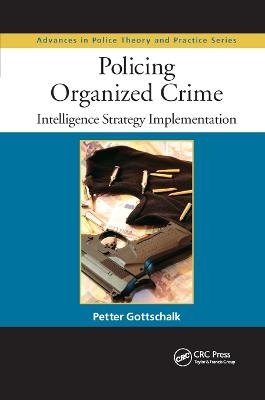
Policing Organized Crime
Intelligence Strategy Implementation
Seiten
2019
Routledge (Verlag)
978-0-367-86428-6 (ISBN)
Routledge (Verlag)
978-0-367-86428-6 (ISBN)
Beginning with an overview of theories and models, the book details specific issues such as drug trafficking, prostitution, and economic crime and considers the latest methods to combat them. Among others, it discusses the Mafia, Hell’s Angels, and terrorists.
When criminal activity is as straightforward as a child’s game of cops and robbers, the role of the police is obvious, but today’s bad guys don’t always wear black. In fact, the most difficult criminals to cope with are those who straddle the gray divide between licit and illicit activity. Many of these nefarious sorts operate on the fringe of society, often acting the part of businesspersons, meeting the demands of otherwise law-abiding clientele with illegally procured or delivered goods. Others, specially trained to occupy positions of responsibility, make the most of position and special knowledge to partake of ill-gotten gains. Then there are the organized crime families and syndicates who make use of common business models to turn dubious undertakings into profitable ventures.
Policing Organized Crime: Intelligence Strategy Implementation addresses these very real types of modern criminals. It examines the methods and motives of those operating on the fringes of society, including more obvious outlaws as well as less obvious lawyers, businesspeople, and bankers, social outcasts as well as devoted family people. Written by Petter Gottschalk, an internationally respected police expert in organized crime, this book details the workings of entrepreneurial crime through the use of case studies from around the world. He presents strategies that will alter the thinking and investigative styles of those police charged with the responsibility of preventing and putting a stop to business crimes. Implementation of an effective intelligence strategy is a key element in his thinking. He demonstrates the shrewd skill set required to bring down those criminals who twist the rules of supply and demand with business models designed to maximize illegal gain.
This important resource is a volume in the Advances in Police Theory and Practice Series, which features the work of international experts who provide researchers and those i
When criminal activity is as straightforward as a child’s game of cops and robbers, the role of the police is obvious, but today’s bad guys don’t always wear black. In fact, the most difficult criminals to cope with are those who straddle the gray divide between licit and illicit activity. Many of these nefarious sorts operate on the fringe of society, often acting the part of businesspersons, meeting the demands of otherwise law-abiding clientele with illegally procured or delivered goods. Others, specially trained to occupy positions of responsibility, make the most of position and special knowledge to partake of ill-gotten gains. Then there are the organized crime families and syndicates who make use of common business models to turn dubious undertakings into profitable ventures.
Policing Organized Crime: Intelligence Strategy Implementation addresses these very real types of modern criminals. It examines the methods and motives of those operating on the fringes of society, including more obvious outlaws as well as less obvious lawyers, businesspeople, and bankers, social outcasts as well as devoted family people. Written by Petter Gottschalk, an internationally respected police expert in organized crime, this book details the workings of entrepreneurial crime through the use of case studies from around the world. He presents strategies that will alter the thinking and investigative styles of those police charged with the responsibility of preventing and putting a stop to business crimes. Implementation of an effective intelligence strategy is a key element in his thinking. He demonstrates the shrewd skill set required to bring down those criminals who twist the rules of supply and demand with business models designed to maximize illegal gain.
This important resource is a volume in the Advances in Police Theory and Practice Series, which features the work of international experts who provide researchers and those i
Petter Gottschalk is a professor at the Department of Leadership and Organizational Management, Norwegian School of Management.
Theories of Organized Crime. Entrepreneurship in Organized Crime. Developing Intelligence Strategy. Implementing Intelligence Strategy. Organizational Structure. Organizational Culture. Intelligence Sources. Enforcing Law on Criminal Business. Policing Motorcycle Club Organized Crime. Applying Police Knowledge. Policing Criminal Enterprises. Performance Management in Policing. Performance Measurement in Policing.
| Erscheinungsdatum | 24.12.2019 |
|---|---|
| Reihe/Serie | Advances in Police Theory and Practice |
| Verlagsort | London |
| Sprache | englisch |
| Maße | 156 x 234 mm |
| Gewicht | 540 g |
| Themenwelt | Informatik ► Netzwerke ► Sicherheit / Firewall |
| Recht / Steuern ► EU / Internationales Recht | |
| Recht / Steuern ► Strafrecht ► Kriminologie | |
| Sozialwissenschaften ► Soziologie | |
| ISBN-10 | 0-367-86428-2 / 0367864282 |
| ISBN-13 | 978-0-367-86428-6 / 9780367864286 |
| Zustand | Neuware |
| Informationen gemäß Produktsicherheitsverordnung (GPSR) | |
| Haben Sie eine Frage zum Produkt? |
Mehr entdecken
aus dem Bereich

aus dem Bereich
Das Lehrbuch für Konzepte, Prinzipien, Mechanismen, Architekturen und …
Buch | Softcover (2022)
Springer Vieweg (Verlag)
CHF 53,15
Lehrbuch für Prüfung und Praxis
Buch | Softcover (2023)
Springer Fachmedien Wiesbaden GmbH (Verlag)
CHF 27,95
Management der Informationssicherheit und Vorbereitung auf die …
Buch (2024)
Carl Hanser (Verlag)
CHF 97,95


