Amanda W. Benckhuysen (PhD, University of St. Michael's College, Toronto) is Johanna K. And Martin J. Wyngaarden Senior professor of Old Testament at Calvin Theological Seminary and a researcher in biblical interpretation and reception history.
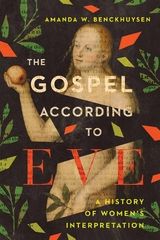
Word Guild Awards Shortlist - AcademicWhat does it mean to be male and female? Do women and men have different intellectual, spiritual, moral, or emotional capacities? Are women especially suited for serving and men for leading? Are women and men equal?While these may seem like relatively recent questions, they have been a topic of conversation throughout Christian history. At the center of this conversation is the biblical character Eve, the archetypal woman of Genesis 1-3. Not simply one woman among many, Eve comes to represent all women, defining the very essence of what it is to be female. As Eve was a woman, so all women were Eve, the conditions of her creation and her involvement in the Fall often serving as a justification for limitations placed on women and for their subordination to men. Over the centuries, women themselves have read and interpreted the story of Eve, scrutinizing the details of the text to discern God's word for them. Often their investigations led them to insights and interpretations that differed from dominant views, shaped as they were by men. The Gospel According to Eve traces the history of women's interpretation of Genesis 1-3, readings of Scripture that affirmed women's full humanity and equal worth. Biblical scholar Amanda Benckhuysen allows the voices of women from the past to speak of Eve's story and its implications for marriage, motherhood, preaching, ministry, education, work, voting, and more.
Amanda W. Benckhuysen (PhD, University of St. Michael's College, Toronto) is Johanna K. And Martin J. Wyngaarden Senior professor of Old Testament at Calvin Theological Seminary and a researcher in biblical interpretation and reception history.
INTRODUCTION
YEARS AGO, WHEN I WAS A CAMPUS MINISTER, a young woman came into my office and asked if I would help her understand some Scripture texts she had been studying in her English class. She was not a Christian and had had minimal exposure to the Bible, making it a difficult read. Even so, when I asked her what she thought about what she was reading and about the Bible more generally, she quickly indicated that she had no interest in the Bible as a religious text because “the Bible is not good news for women.” To some, this may be a bewildering statement. Of course the Bible is good news for women. In Christ’s death and resurrection, there is forgiveness of sin and reconciliation with God. All who believe in Jesus will be saved. That is the promise of Scripture.
While this is true, the gospel tends to come to women with strings attached. In many Christian communities, following Jesus for women also means subscribing to a gender ideology that subordinates women to men and circumscribes women’s activities to “divinely ordained” roles in church, home, and society. While men gain freedom in Christ to live for Jesus, women assume the yoke of a new law—restrictions and requirements assigned to them for being the “weaker” sex. The argument is that these restrictions and requirements are God’s will for women as revealed in Scripture. To ignore them is to reject God’s divine commands and to undermine the authority of God’s Word, the Bible.
Not all interpreters of Scripture, however, believe the Bible espouses the “domestication” and subordination of women. In the history of the church, there have always been those who have questioned notions of women’s inferiority and who have believed that the Bible intends woman’s full emancipation and equality. For them, the Bible, when interpreted correctly, is women’s greatest advocate, encouraging women to embrace in Christ their full humanity as image bearers of God. Unfortunately, this stream of interpretation within the history of the church has often been marginalized and ignored, leaving many to believe that the matter is quite settled: to accept the Bible as authoritative is to affirm women’s distinct status as the “weaker vessel.”
This book seeks to trace the history of this alternative reading of Scripture, reflected in the voices of women and their interaction with Genesis 1–3. Often when a matter is considered settled, as a rule of thumb, it ought not to be broached again unless there is new evidence. In this case, the new evidence is a history—a chorus, no less, of women’s voices that have been buried over time that raise serious challenges to traditional readings and to the gender ideologies these readings have spawned as well as offering compelling rereadings that highlight the dignity, worth, and full humanity of women. These women in history wrote not out of a pressure to be politically correct nor as an accommodation to a secular feminist movement. Instead, they wrote to explain to the church how its ideas and ideals of femininity were hurting the daughters of Christ and compromising their physical safety and well-being. Certain that this was not what a good God intended for them, these women offered their own interpretations of Scripture to encourage the church (and society) to rethink their convictions about the nature and role of women.
Today, women continue to struggle with the limitations and expectations placed on their gender in the Christian community. In many—particularly in evangelical—churches, the pulpit and leadership structures remain closed to women. Even in churches where women can be ordained, female pastors experience limited access to positions of senior leadership in churches or within the denomination as a whole. Unspoken ideals of femininity often associated with child rearing and domestic activities leave a growing number of women struggling for acceptance and welcome. And many churches continue to convey to women that they are responsible for men’s sexual misconduct, reinforcing notions that women’s bodies are dangerous and shameful. Suffice it to say, the Christian community continues to struggle with affirming and celebrating women and women’s gifts and callings. Given the high stakes of this issue for the church’s witness, the long history of harm against women justified by interpretations of Scripture, and the struggles women continue to face in the church and society, it may be time for the Christian community to take up the conversation again about what it means that God created human beings male and female. My hope and prayer is that this survey of women’s voices—their critiques, their rereadings, and their testimonies—will enhance this conversation, deepening our understanding of the Scriptures and opening our eyes to what the Scriptures say and don’t say about gender distinction.
A HISTORY OF WOMEN’S INTERPRETATIONS: WHAT TO EXPECT
In the pages that follow, the reader will be introduced to the writings of over sixty women from the fourth to the twenty-first century. In their interpretive work, many of these women were reacting or responding to a dominant interpretive tradition that emerged early in the church’s history. As such, chapter one explores the interpretations of the early church fathers and the Doctors of the Church who would become conversation partners, adversaries, and sometimes allies for women interpreters in their attempts to change ideas about women based on their own reading of the biblical text. Following this basic orientation, I have arranged the book thematically, exploring trends in the interpretation of Eve as they emerged through the centuries. To this end, chapter two explores the work of women in the fifteenth to the seventeenth century who appealed to the story of Eve to defend the worth and dignity of women. Chapter three surveys interpretations of this same time period that employed Eve’s story to advocate for greater access to formal education for women. Chapter four reflects on how women interpreters of the seventeenth to the nineteenth century wrestled with what Eve signified for women as wives and mothers. Chapter five takes up the interpretation of Eve in the seventeenth through nineteenth centuries by women interpreters who articulated the case for permitting women to preach and teach the gospel. Chapter six explores representations of Eve in nineteenth-century children’s Bibles, devotionals, and educational material, which women prepared primarily but not exclusively for the spiritual and moral formation of women and children. Chapter seven looks at nineteenth-century women interpreters who appealed to the story of Eve in their advocacy for social reform for oppressed populations, including women, people of color, and the poor. Finally, chapter eight considers the story of Eve today and its ongoing influence on gender ideology, particularly within the Christian community.
Because of the nature of the material and the thematic ordering of the book, each chapter can be considered separately. Questions at the end of the book relating to each chapter help the reader reflect more deeply on the material, making this book a great resource for the classroom setting or adult discussion groups. Many of the women’s writings are now accessible online, and the end matter includes links, arranged by chapter, to current internet sites where full or partial texts of women’s writings on Eve can be found. While this book introduces the reader to many interpretations of Eve, the works discussed are representative rather than exhaustive—that is, there are more women interpreters of Eve than those surveyed in the chapters here. Some are left out because their interpretive insights are well represented by other women and as a result, their work contributes little new to our understanding of women’s reflections on Eve. This is especially the case in the nineteenth century when women were writing on Scripture in much greater numbers. Another reason, however, for gaps in this survey of women’s writings on Eve is due to lack of access and knowledge of women’s writings from the Majority World. This is a growing area of scholarship that needs more attention, and, in this respect, this book is just the beginning of the work of recovering women’s voices in the history of the biblical interpretation of Eve.
The focus of this book is women’s representations of Eve. As such, the lives and struggles of the women themselves, while interesting, will not be addressed in any depth here. For such biographical material, I refer you to the Handbook of Women Biblical Interpreters by Marion Ann Taylor and Agnes Choi, which provides information on over 180 women interpreters.1 An appendix at the end of this book has been included, however, to give the reader a brief orientation to each of the women interpreters whose work is surveyed here.
In the end, I hope you are as surprised and inspired by these women and their interpretations of Eve as I was when I first learned of them. I remember in seminary reading Phyllis Trible’s God and the Rhetoric of Sexuality and feeling like I had found a kindred spirit, someone who offered a close examination of the text through the lens of women’s experience. Her work invited me to consider the way gender affects interpretation and to be conscious of the different questions, concerns, and issues women bring to the interpretation of texts. While Trible’s work was my first exposure to a woman’s interpretation of Eve, this survey demonstrates that she stands in a long line of women interpreters of the first woman of the Bible. Many of Trible’s insights are...
| Erscheint lt. Verlag | 29.10.2019 |
|---|---|
| Verlagsort | Lisle |
| Sprache | englisch |
| Themenwelt | Religion / Theologie ► Christentum ► Kirchengeschichte |
| Religion / Theologie ► Christentum ► Moraltheologie / Sozialethik | |
| Sozialwissenschaften ► Soziologie ► Gender Studies | |
| Schlagworte | Bible • Bible and gender • bible commentary • Bible interpretation • biblical story of eve • Christian women • egalitarian • Eve • Exegesis • gender roles • Gender Studies • Genesis • Genesis 1-3 • hermeneutics • History of Interpretation • legacy of Eve • Scripture • scripture interpretation • women Bible interpreters • women bible scholars • Women in the Bible |
| ISBN-10 | 0-8308-7365-1 / 0830873651 |
| ISBN-13 | 978-0-8308-7365-4 / 9780830873654 |
| Informationen gemäß Produktsicherheitsverordnung (GPSR) | |
| Haben Sie eine Frage zum Produkt? |
 EPUB (Adobe DRM)
Kopierschutz: Adobe-DRM
Adobe-DRM ist ein Kopierschutz, der das eBook vor Mißbrauch schützen soll. Dabei wird das eBook bereits beim Download auf Ihre persönliche Adobe-ID autorisiert. Lesen können Sie das eBook dann nur auf den Geräten, welche ebenfalls auf Ihre Adobe-ID registriert sind.
Details zum Adobe-DRM
Dateiformat: EPUB (Electronic Publication)
EPUB ist ein offener Standard für eBooks und eignet sich besonders zur Darstellung von Belletristik und Sachbüchern. Der Fließtext wird dynamisch an die Display- und Schriftgröße angepasst. Auch für mobile Lesegeräte ist EPUB daher gut geeignet.
Systemvoraussetzungen:
PC/Mac: Mit einem PC oder Mac können Sie dieses eBook lesen. Sie benötigen eine
eReader: Dieses eBook kann mit (fast) allen eBook-Readern gelesen werden. Mit dem amazon-Kindle ist es aber nicht kompatibel.
Smartphone/Tablet: Egal ob Apple oder Android, dieses eBook können Sie lesen. Sie benötigen eine
Geräteliste und zusätzliche Hinweise
Buying eBooks from abroad
For tax law reasons we can sell eBooks just within Germany and Switzerland. Regrettably we cannot fulfill eBook-orders from other countries.
aus dem Bereich