


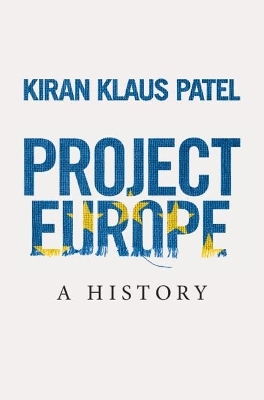
Project Europe
A History
Seiten
2020
Cambridge University Press (Verlag)
978-1-108-49496-0 (ISBN)
Cambridge University Press (Verlag)
978-1-108-49496-0 (ISBN)
A bracing re-examination of the myths and realities of European integration which challenges conventional wisdoms of Europhiles and Eurosceptics alike. Kiran Klaus Patel explores the EU's contribution to peace, prosperity, and democracy, its impact on peoples' lives and the lessons of the past for its contemporary crisis.
Today it often appears as though the European Union has entered existential crisis after decades of success, condemned by its adversaries as a bureaucratic monster eroding national sovereignty: at best wasteful, at worst dangerous. How did we reach this point and how has European integration impacted on ordinary people's lives - not just in the member states, but also beyond? Did the predecessors of today's EU really create peace after World War II, as is often argued? How about its contribution to creating prosperity? What was the role of citizens in this process, and can the EU justifiably claim to be a 'community of values'? Kiran Klaus Patel's bracing look back at the myths and realities of integration challenges conventional wisdoms of Europhiles and Eurosceptics alike and shows that the future of Project Europe will depend on the lessons that Europeans derive from its past.
Today it often appears as though the European Union has entered existential crisis after decades of success, condemned by its adversaries as a bureaucratic monster eroding national sovereignty: at best wasteful, at worst dangerous. How did we reach this point and how has European integration impacted on ordinary people's lives - not just in the member states, but also beyond? Did the predecessors of today's EU really create peace after World War II, as is often argued? How about its contribution to creating prosperity? What was the role of citizens in this process, and can the EU justifiably claim to be a 'community of values'? Kiran Klaus Patel's bracing look back at the myths and realities of integration challenges conventional wisdoms of Europhiles and Eurosceptics alike and shows that the future of Project Europe will depend on the lessons that Europeans derive from its past.
Kiran Klaus Patel is Professor of European History at Ludwig-Maximilians-Universität Munchen. His previous publications include The New Deal: A Global History (2016) which was co-winner of the 2017 World History Association Jerry Bentley Book Prize.
Prologue; 1. Europe and European integration; 2. Peace and security; 3. Growth and prosperity; 4. Participation and technocracy; 5. Values and norms; 6. Superstate or tool of nations?; 7. Disintegration and dysfunctionality; 8. The community and its world; Epilogue; Acknowledgements; Notes; Bibliography; Index.
| Erscheinungsdatum | 08.04.2020 |
|---|---|
| Zusatzinfo | Worked examples or Exercises; 6 Tables, black and white; 4 Maps; 7 Halftones, black and white; 4 Line drawings, black and white |
| Verlagsort | Cambridge |
| Sprache | englisch |
| Maße | 160 x 235 mm |
| Gewicht | 680 g |
| Themenwelt | Geschichte ► Allgemeine Geschichte ► Neuzeit (bis 1918) |
| Geschichte ► Allgemeine Geschichte ► Zeitgeschichte | |
| Geisteswissenschaften ► Geschichte ► Regional- / Ländergeschichte | |
| Sozialwissenschaften ► Politik / Verwaltung | |
| ISBN-10 | 1-108-49496-X / 110849496X |
| ISBN-13 | 978-1-108-49496-0 / 9781108494960 |
| Zustand | Neuware |
| Informationen gemäß Produktsicherheitsverordnung (GPSR) | |
| Haben Sie eine Frage zum Produkt? |
Mehr entdecken
aus dem Bereich
aus dem Bereich
Geschichte einer wilden Handlung
Buch | Hardcover (2024)
C.H.Beck (Verlag)
CHF 47,60


