


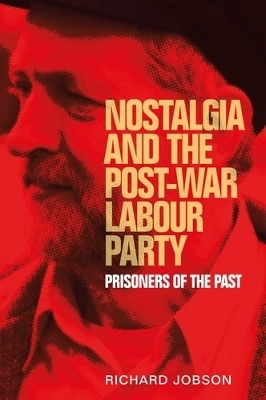
Nostalgia and the Post-War Labour Party
Prisoners of the Past
Seiten
2021
Manchester University Press (Verlag)
9781526113313 (ISBN)
Manchester University Press (Verlag)
9781526113313 (ISBN)
Through a detailed examination of the party’s post-war development, this book outlines how nostalgia has shaped the party’s trajectory. It argues that Labour’s nostalgically-informed identity has determined the extent to which the party has been able to respond effectively to the changing nature of Britain. -- .
This book examines the impact that nostalgia has had on the Labour Party’s political development since 1951. In contrast to existing studies that have emphasised the role played by modernity, it argues that nostalgia has defined Labour’s identity and determined the party’s trajectory over time. Jobson outlines how Labour, at both an elite and a grassroots level, has been and remains heavily influenced by a nostalgic commitment to an era of heroic male industrial working-class struggle.
This commitment has hindered policy discussion, determined the form that the modernisation process has taken and shaped internal conflict and cohesion. More broadly, Labour’s emotional attachment to the past has made it difficult for the party to adjust to the socioeconomic changes that have taken place in Britain. In short, nostalgia has frequently left the party out of touch with the modern world. In this way, this study offers an assessment of Labour’s failures to adapt to the changing nature and demands of post-war Britain and will be of interest to both students and academics working in the field of British political history and to those with a more general interest in Labour’s history and politics. -- .
This book examines the impact that nostalgia has had on the Labour Party’s political development since 1951. In contrast to existing studies that have emphasised the role played by modernity, it argues that nostalgia has defined Labour’s identity and determined the party’s trajectory over time. Jobson outlines how Labour, at both an elite and a grassroots level, has been and remains heavily influenced by a nostalgic commitment to an era of heroic male industrial working-class struggle.
This commitment has hindered policy discussion, determined the form that the modernisation process has taken and shaped internal conflict and cohesion. More broadly, Labour’s emotional attachment to the past has made it difficult for the party to adjust to the socioeconomic changes that have taken place in Britain. In short, nostalgia has frequently left the party out of touch with the modern world. In this way, this study offers an assessment of Labour’s failures to adapt to the changing nature and demands of post-war Britain and will be of interest to both students and academics working in the field of British political history and to those with a more general interest in Labour’s history and politics. -- .
Richard Jobson is a Lecturer in Twentieth-Century British History at the University of Exeter -- .
1 Introduction - Labour, nostalgia and 'nostalgia-identity'
2 Revisionism and the battle over clause IV - 1951-63
3 White heat and the Labour party 1963-70
4 Labour's alternative economic strategy 1970-83
5 Reinventing the Labour party 1983-92
6 The New Labour era 1992-2010
7 Back to the past? 2010 to the present
8 Conclusion
Bibliography
Index -- .
| Erscheinungsdatum | 07.07.2021 |
|---|---|
| Reihe/Serie | Manchester University Press |
| Verlagsort | Manchester |
| Sprache | englisch |
| Maße | 156 x 234 mm |
| Gewicht | 331 g |
| Themenwelt | Geschichte ► Allgemeine Geschichte ► Neuzeit (bis 1918) |
| Geisteswissenschaften ► Geschichte ► Regional- / Ländergeschichte | |
| Geschichte ► Teilgebiete der Geschichte ► Kulturgeschichte | |
| Sozialwissenschaften ► Politik / Verwaltung ► Politische Systeme | |
| Sozialwissenschaften ► Politik / Verwaltung ► Politische Theorie | |
| ISBN-13 | 9781526113313 / 9781526113313 |
| Zustand | Neuware |
| Informationen gemäß Produktsicherheitsverordnung (GPSR) | |
| Haben Sie eine Frage zum Produkt? |
Mehr entdecken
aus dem Bereich



aus dem Bereich


