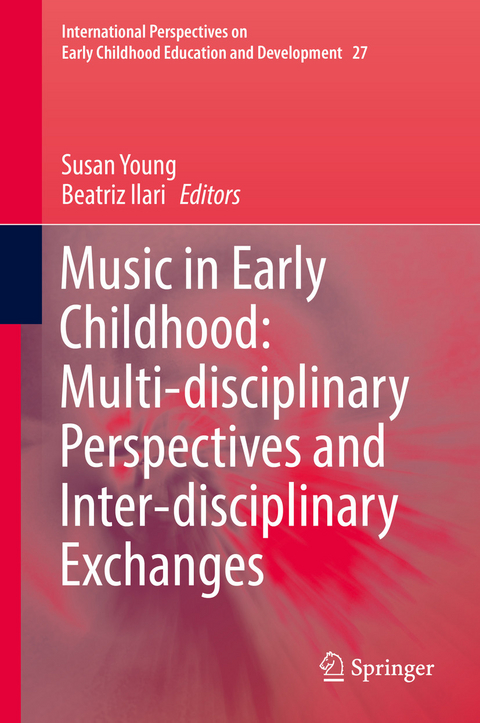
Music in Early Childhood: Multi-disciplinary Perspectives and Inter-disciplinary Exchanges (eBook)
XIV, 278 Seiten
Springer International Publishing (Verlag)
978-3-030-17791-1 (ISBN)
This book examines four main areas of music in early childhood: the traditions of music for young children, their capacities for music, the way they make music with others, and constructed and mediated musical childhoods. It studies several themes in detail, including music making in the home and family life, various musical experiences in schools, day cares, and the community at large in several locations around the globe. It looks at technology and diverse musical repertoires, as well as innovative pedagogies, children's agency, and brain research. Expanding on the knowledge bases on which early childhood music education typically draws, the book brings together contributions from a range of authors from diverse fields such as education, psychology, sociology, cultural studies, anthropology, philosophy, ethnomusicology, and the neurosciences. The end result is a volume that offers a broad and contemporary picture of music in early childhood.
Contents 6
Author Biographies 8
List of Figures 14
Chapter 1: Introduction 16
The Present Volume 18
The Chapters 19
Places and Spaces 20
Educational Settings, Pedagogical Gaps, and Transformative Pedagogies 22
Music and the Child 23
Musicking 24
Generating Music 24
Singing 25
Multimodality 25
Young Children’s Musical Cultures: ‘Listening’ to Children 25
Musical Play and Playworlds 26
Identities 27
Gender Identity 27
Cultural Identity 28
Being With 29
Agency 30
Final Word 32
References 32
Part I: Children Making Music with Others 34
Chapter 2: Singing and Playing with Friends: Musical Identities and Peer Cultures in Early Years Settings 35
Introduction 35
Background: Music in the Early Years 36
Early Childhood Music Education Research 37
Curriculum Approaches to Music 38
Identity Development in Early Childhood and the Role of Music 39
Musical Identities and Peer Cultures in Infant and Toddler Settings 40
Research Project 1: Music, Identity and Belonging in a Nursery 40
Musical Identities and Peer Cultures in Preschool and Kindergarten Settings 43
Research Project 2: The Lives of Songs 45
Conclusion and Implications for Early Childhood Educators 47
References 49
Chapter 3: Probing the Dynamics of Sibling Interactions in Relation to Musical Development 52
Introduction 52
Siblings 53
Musical Development 54
Three Interdisciplinary Frameworks 54
Probing the Dynamics of Sibling Interactions 55
Research Project Participants and Methods 55
Complementary and Reciprocal Frameworks 56
Complementary and Reciprocal Relationships with the Kensington Family 57
Family Systems Theory 59
Family Systems Theory with the Jones Family 60
Communicative Musicality 64
Communicative Musicality with the Gibson Siblings 65
Conclusion 68
References 69
Chapter 4: The Art of Listening: Infants and Toddlers in Education and Care Group Settings 72
Introduction 72
The Setting and the Participants 73
Music in the World of Infants and Toddlers 74
Introducing Play Pedagogy and Playworlds 76
Interpreting the Observations: Playworlds and Play Pedagogy 78
Conclusion 80
References 81
Part II: Young Children’s Capacities for Music 83
Chapter 5: The Social Meaning of Shared Musical Experiences in Infancy and Early Childhood 84
The Acquisition of Culture-Specific Music Knowledge and Preference 84
Music as a Form of Shared Cultural Experience 87
Shared Knowledge of Songs as a Marker of Shared Group Membership 88
The Effects of Shared Musical Experiences in Infancy 90
The Effects of Music Education on Children’s Cross-Cultural Attitudes 91
Conclusion 92
References 93
Chapter 6: Embodiment in Early Childhood Music Education 97
Introduction 97
Embodied Music Cognition 99
Enactment: Transforming Sound into Music Through Movement 99
Basic Mechanisms of Enactment in Music 100
Alignment with Music 101
Entrainment in Music 102
Predicting Music 104
Musical Interaction, Reward and Expression 106
Technology Supporting Embodied Music Learning 107
Conclusion 109
References 110
Chapter 7: Spontaneous Singing and Musical Agency in the Everyday Home Lives of Three- and Four-Year-Old Children 113
Introduction 113
Young Children’s Spontaneous Singing at Home 114
At Home with Alfie 117
Applying a Framework of Musical Agency 119
Spontaneous Singing as a Tool of Personal Agency 121
Spontaneous Singing as a Tool of Social Agency 123
Singing to Explore and Express Identity 126
Conclusion 126
References 127
Chapter 8: Neuromusical Research and Young Children: Harmonious Relationship or Discordant Notes? 129
The Developing Brain 130
Two Brain Imaging Techniques Appropriate for Use with Young Children 130
Electroencephalography (EEG) 131
Magnetic Resonance Imaging (MRI) and Functional Magnetic Resonance Imaging (fMRI) 131
Formal Music Learning and the Young Brain 133
Development in Music: Brain Plasticity and Auditory-Perceptual Skills 133
Sensitive Periods for Music Learning 135
Development Through Music 136
Informal Musical Experiences 138
Neuroscientific Research and Early Childhood: Discordant Notes 139
Ways Forward: Towards a Harmonious Relationship 141
References 142
Part III: Music for Young Children: Traditions 146
Chapter 9: Sustaining Musical Traditions in Early Childhood: A View from the Field of Ethnomusicology 147
Introduction 147
Ethnomusicology and Childhood Studies 148
What Is a Child? 150
Research with Children 151
Music Sustainability and Childhood 155
Conclusion 157
References 159
Chapter 10: Interculturalism in Early Childhood Music Education and the Training of Educators: An Anthropological Framework from the Mediterranean 163
Introduction 163
From Greek Cypriot Children’s Musical Worlds to the Mediterranean 164
The European Project 165
The Strategic Importance of Identities in Intercultural Communication 167
An Anthropological Perspective and Principles of Interculturalism 169
The Importance of Reflexivity 170
Aristotelian Mimesis and Children’s Pretend Play 172
Conclusion 178
References 179
Chapter 11: Self-Initiated Musicking in Kindergarten as Instances of Emancipation: The Case of Arabic Speaking Young Children in Israel 181
Introduction 181
Early Childhood Education from a Postcolonial Perspective 182
Decolonizing Early Childhood: The Kindergarten 183
Early Childhood (Music) Education of Israeli Palestinians: A Colonizing Project 185
Emancipation Through Music: Stories from Kindergarten 187
Appropriating Songs Learnt in Kindergarten 188
Dancing Like Children, Dancing Like Adults 189
Experiences from Public Spaces Go to Kindergarten 189
Conclusion 190
References 191
Chapter 12: World Music Pedagogy in Early Schooling: Issues of Implementation 194
World Music Pedagogy 196
Setting the Scene 197
The Five Dimensions and the Children’s Musical Skills 198
Issues of Attention and Memory 200
The Importance of Visual Stimuli 202
Issues of Social Justice 202
World Music Pedagogy for Early Elementary Students Reconsidered 204
References 205
Part IV: Constructed and Mediated Musical Childhoods 207
Chapter 13: Re-thinking Systems of Meaning-Making: A Possible Theoretical Framework for Exploring Children’s Engagement in Music and the Subject Positions of ‘Rock-Boys’ and ‘Pop-Girls’ 208
Introduction 208
Children’s Music as Children’s Culture: Setting Up a Watchtower 210
Children’s Musickingships: Multimodality, Meaning, and Relations 212
Making Space for New Thoughts: Music as a Verb and the Child as Musicker 214
Affordance: Music Offers Participation and Works as a Resource for the Self 216
Performativity: Moments of Musical Meaning 217
Interpretative Repertoires: Systems of Musical Meaning 218
Gender and Music in the Early Years 221
Conclusion 224
References 225
Chapter 14: The Kindie Movement: Independent Children’s Music in the United States Since 2000 227
Introduction 227
References 236
Chapter 15: Music at Their Finger-Tips: Musical Experiences via Touchscreen Technologies in the Everyday Home Lives of Young Children 238
Introduction 238
Introducing the Case Studies 242
Ellen and Her Family 242
Doris and Her Family 244
Lucy and Her Family 247
Parenting Mediation and Family Life 248
Commodified Girlhoods 250
Implications for Education and Understandings of Development 251
Conclusion 252
References 252
Chapter 16: Improvisation and/or Music Education: A Child’s Upsetting Clarity 255
Introduction 255
Leoni 258
The Complexity of ‘Innocence’ 259
Erecting Walls 263
Appropriation: Enlivening Formalism 267
Improvisation as a Means of Resistance to Symbolic Violence 270
References 274
Afterword 277
References 280
| Erscheint lt. Verlag | 17.7.2019 |
|---|---|
| Reihe/Serie | International Perspectives on Early Childhood Education and Development | International Perspectives on Early Childhood Education and Development |
| Zusatzinfo | XIV, 278 p. 21 illus. |
| Sprache | englisch |
| Themenwelt | Geisteswissenschaften ► Philosophie |
| Geisteswissenschaften ► Psychologie | |
| Sozialwissenschaften ► Pädagogik ► Vorschulpädagogik | |
| Schlagworte | childhood culture • childhood studies • Cultural and Media Studies • Ethnomusicology • musical childhood • Music Education • music in families and between siblings • music play in nurseries |
| ISBN-10 | 3-030-17791-2 / 3030177912 |
| ISBN-13 | 978-3-030-17791-1 / 9783030177911 |
| Informationen gemäß Produktsicherheitsverordnung (GPSR) | |
| Haben Sie eine Frage zum Produkt? |
 PDF (Wasserzeichen)
DRM: Digitales Wasserzeichen
Dieses eBook enthält ein digitales Wasserzeichen und ist damit für Sie personalisiert. Bei einer missbräuchlichen Weitergabe des eBooks an Dritte ist eine Rückverfolgung an die Quelle möglich.
Dateiformat: PDF (Portable Document Format)
Mit einem festen Seitenlayout eignet sich die PDF besonders für Fachbücher mit Spalten, Tabellen und Abbildungen. Eine PDF kann auf fast allen Geräten angezeigt werden, ist aber für kleine Displays (Smartphone, eReader) nur eingeschränkt geeignet.
Systemvoraussetzungen:
PC/Mac: Mit einem PC oder Mac können Sie dieses eBook lesen. Sie benötigen dafür einen PDF-Viewer - z.B. den Adobe Reader oder Adobe Digital Editions.
eReader: Dieses eBook kann mit (fast) allen eBook-Readern gelesen werden. Mit dem amazon-Kindle ist es aber nicht kompatibel.
Smartphone/Tablet: Egal ob Apple oder Android, dieses eBook können Sie lesen. Sie benötigen dafür einen PDF-Viewer - z.B. die kostenlose Adobe Digital Editions-App.
Buying eBooks from abroad
For tax law reasons we can sell eBooks just within Germany and Switzerland. Regrettably we cannot fulfill eBook-orders from other countries.
aus dem Bereich