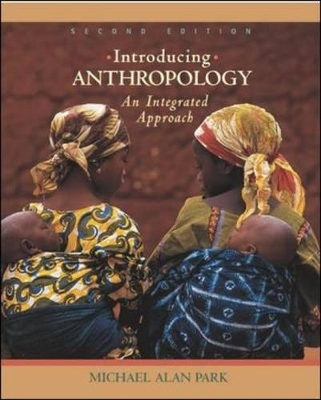
Introducing Anthropology
McGraw Hill Higher Education
978-0-07-284101-5 (ISBN)
- Titel ist leider vergriffen;
keine Neuauflage - Artikel merken
Because of the increasing breadth and complexity of the field, texts for introductory-level, general anthropology courses (so-called four-field courses) have tended to become longer and more detailed. This places a burden on instructors using these texts and, more importantly, on students reading them to learn about the field. This book is short and with a tightly managed amount of detail. It also uses a narrative approach (that is, explaining its topics through a clear sequence of ideas), which is more user-friendly to students. At the same time, no traditional topic in anthropology is left out.
Michael Alan Park (Ph.D. Indiana, 1979) is a professor of anthropology at Central Connecticut State University, where he has been on the faculty since 1973, teaching courses in general anthropology, human evolution, biocultural diversity, human ecology, forensic anthropology, and the evolution of human behavior. His interests focus on the application of evolutionary theory to the story of human evolution and on the quality of science education and the public perception and understanding of scientific matters. He is the author or co-author of four current texts in anthropology as well as technical and popular articles.
Part One. Background and Context Chapter 1. Doing Anthropology: Taking Fingerprints in the High Plains In the Field The Hutterites Anthropology Contemporary Issues: What Responsibilities Does the Anthropologist Have When Studying Other Cultures? Chapter 2. Methods of Inquiry: Anthropology as Science The Scientific Method Belief Systems Anthropology as a Science Contemporary Issues: Isn't Science Sometimes A Threat to Society? Chapter 3. Evolution: Change in Nature and the Nature of Change The Evolution of Evolution Adaptation Descent with Modification The Origin of Species Contemporary Issues: Is Evolution a Fact, a Theory or a Hypothesis? Part Two. The Identity and Nature of Our Species Chapter 4. Our Place in Nature: Humans as Primates Naming the Animals Into the Trees Contemporary Issues: Should Nonhuman Primates Have Rights? Chapter 5. Anatomy and Physiology: The Bipedal Primate Out of the Trees Around the World Contemporary Issues: Have We Found the "Missing Link"? Chapter 6. Reproduction: The Sexual Primate Sex and Genetics Sex and Human Evolution Vive la Difference Sex and Gender Sex and Cultural Institutions Contemporary Issues: What Causes Differences in Sexual Orientation? Chapter 7. Learning How to Survive: The Cultural Primate The Concept of Culture Brains and Culture A Model for the Study of Cultural Systems An Anthropological Analysis of the Necktie Contemporary Issues: Can Anthropologists Study Their Own Cultures? Part Three. Adapting to Our Worlds Chapter 8. Food: Getting It, Growing It, Eating It, and Passing It Around Food and Human Evolution Food Collecting Societies Food Producing Societies Some Basic Economics Contemporary Issues: Is There a World Population Crisis That is Putting Pressure of Food and Other Resources? Chapter 9. Nature of the Group: Arranging Our Families and Organizing Our People Primate Societies Marriage and Family Kinship Kinship Terminology Organization Above the Family Level Contemporary Issues: Why Don't Bilateral Societies Have Equality Between the Sexes? Chapter 10. Material Culture: The Things We Make and the Things We Leave Behind Archaeology: Recovering and Interpreting the Cultural Past Some Prehistoric High Points Contemporary Issues: Who Owns Archaeological Sites and Their Contents? Chapter 11. Communication: Sharing What We Need to Know Language Language and Evolution Apes and Language Language and Culture Contemporary Issues: Are Written Languages More Advanced Then Unwritten Ones? Chapter 12. Maintenance of Order: Making the World View Real Religion and Religious Systems Religion and Culture Law Contemporary Issues: How Can We Account for the Recent Interest in Witchcraft? Chapter 13. The Evolution of Our Behaviors: Pigs, Wars, Killer Proteins, and Sorcerers Of Their Flesh Ye Shall Not Eat Peaceful Warriors and Cannibal Farmers Biology and Culture in Interaction Contemporary Issues: Are Humans Naturally Violent? Part Four. The Species Today, The Species Tomorrow Chapter 14. Human Variation: Different Looks, Different Behaviors Why Are There No Biological Races with the Human Species? What, Then, Are Human Races? Race, Racism, and Social Issues Contemporary Issues: Are There Racial Differences in Athletic Ability? Chapter 15. Culture Change: Processes and Problems and the Contributions of Anthropology The Processes of Culture Change Theories of Cultural Evolution Change in the Modern World Applying Anthropology Contemporary Issues: Can Anthropology Be Both Scientific and Humanistic in Today's World? Chapter 16. State of the Species: The Edge of the Future The Human Species Today The Human Species in the Future Glossary Bibliography Index
| Erscheint lt. Verlag | 1.8.2002 |
|---|---|
| Verlagsort | London |
| Sprache | englisch |
| Maße | 185 x 231 mm |
| Gewicht | 675 g |
| Themenwelt | Sozialwissenschaften ► Ethnologie |
| Sozialwissenschaften ► Soziologie | |
| ISBN-10 | 0-07-284101-X / 007284101X |
| ISBN-13 | 978-0-07-284101-5 / 9780072841015 |
| Zustand | Neuware |
| Informationen gemäß Produktsicherheitsverordnung (GPSR) | |
| Haben Sie eine Frage zum Produkt? |
aus dem Bereich