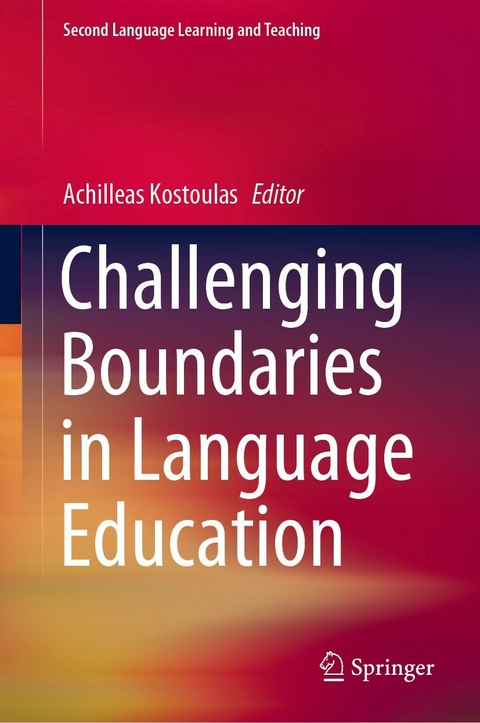
Challenging Boundaries in Language Education (eBook)
260 Seiten
Springer International Publishing (Verlag)
978-3-030-17057-8 (ISBN)

This edited collection challenges the perceptions of disciplinary, linguistic, geographical and ideological borders that run across language education. By highlighting commonalities and tracing connections between diverse sub-fields that have traditionally been studied separately, the book shows how the perspectives of practitioners and researchers working in diverse areas of language education can mutually inform each other. It consists of three thematic parts: Part I outlines the field of language education and challenges its definition by highlighting additional theoretical constructs that have tended to be viewed as separate from language education. Part II investigates curricular boundaries, showing how the language-learning curriculum can be enriched by connections with other curricular areas. Lastly, Part III looks into the challenges and opportunities associated with language education against the backdrop of globalisation.
Contents 7
Editor and Contributors 9
Abbreviations 14
List of Figures 16
List of Tables 18
Conceptualizing and Problematizing Boundaries in Language Education 20
1 Introduction 20
2 Language Education at a Time of Post-certainty 22
3 The Contents of This Book 24
4 Before We Move on… 29
References 29
Rethinking Language Education Theory 31
A Journey Through the Landscapes of Language Education 32
1 Introduction 32
2 The Landscape of Language Teaching and Teacher Education 33
3 Clouds of Academic Ideas 34
3.1 The Conceptual Basis of Language Education 35
3.2 The Empirical Basis of Language Education 35
4 The English Language Teaching World 36
5 The Teacher Education Mountain 40
5.1 The Emergence of Applied Linguistics 41
5.2 Changes in Conceptualizing the Knowledge Base of Language Teaching 41
5.3 Changes in Conceptualizing Language Teachers 42
5.4 The Scope, Impact, and Realities of Pre-service Teacher Education 44
6 Conclusion 46
References 47
Repositioning Language Education Theory 50
1 Introduction 50
2 A Conceptual Framework for Language Education Theory 52
2.1 Applied Linguistics 54
2.2 Language Education Psychology 55
2.3 Pedagogical Theory 57
2.4 An Interdisciplinary Perspective 59
3 Transforming Practice 60
3.1 Conservative and Transformative Orientations 60
3.2 Conservative and Transformative Influences 61
4 Repositioning Theory: Final Remarks 64
References 64
An Ecological Perspective for Critical Action in Applied Linguistics 68
1 Introduction 68
2 Critical Perspectives and Applied Linguistics 69
3 Features the Ecological Perspective 72
3.1 Mutuality, Affordances and Situations 72
3.2 Intentionality 73
3.3 Intentional Dynamics 75
3.4 Power and Agency 76
3.5 Solidarity Through Diversity 77
4 Using the Ecological Perspective 78
4.1 Globalization, English and Universities 78
4.2 “Parallel Language Use” as Critical-Intentional Action 81
5 Conclusion 83
References 84
Space and Time for Understanding(s): The Recursive Cycle of Language Education and Classroom Enquiry 87
1 Introduction 87
2 Positioning “Understanding”: Practitioner-Research as Sustained and Sustainable Pedagogical Practice 90
2.1 Exploratory Practice as an Inclusive and Ethical Form of Practitioner-Research 90
2.2 Understanding Classroom Life: The Teachers’ Perspective 91
2.3 My Involvement with Exploratory Practice 91
3 Discussing “Understanding”: Theories and Epistemologies 93
4 Challenging the Technocratic Model of Language Education 96
4.1 The Two-Level Fragmentation of Classroom Practices 97
4.2 Towards Recomposing the Language Classroom as a Lived and Living Practice 99
5 Understanding Everyday Practices: Quality Over Quantity 100
References 101
Reshaping Language Education Practice 103
Challenging Curricular Boundaries and Identities Through CLIL: An E-learning Professional Development Program for CLIL Teachers 104
1 Introduction 104
2 CLIL: A Brief Outline 105
3 The Identity of CLIL Teachers 107
3.1 Teaching at the Boundary 107
3.2 An Activity Theory Perspective of CLIL Teacher Identity 109
4 An E-Learning Professional Development Program for CLIL Teachers in Greece 111
4.1 The Greek Language Education Context 112
4.2 The Professional Development Program Framework 113
4.3 Preliminary Research on Teachers’ Attitudes Towards CLIL in Greece 114
5 Conclusion 117
Appendix 118
References 119
Beyond the Garrison: Global Education and Teaching (Canadian) Literature in the EFL Classroom 122
1 What Role Should Global Education Play in Foreign Language Learning? 122
2 Ethnology as Language Learning—the Language Learner as Ethnologist 124
3 Problems of a Semiotic Concept of Culture in the Context of Global Education 125
4 An Alternative Concept of Culture for Global Education: Manuel DeLanda’s Assemblage Theory 127
5 Global Education and Teaching Literature in the EFL Classroom 128
6 In the Classroom: Sketch of a Teaching Unit on Margaret Atwood’s Surfacing 130
7 Moving Beyond the Garrison 134
References 134
Building a Model Engine for Language Learning with Tertiary Engineering Students 136
1 Introduction 136
1.1 Disciplinary Boundaries and Cultures 137
1.2 Background 138
1.3 Rationale 139
1.4 Research Questions 139
2 Methods 140
2.1 Participants and Sampling 140
2.2 Survey Instrument 140
3 Results 141
3.1 Demographics 141
3.2 Quantitative Results for the Module Evaluation 141
3.3 Qualitative Results from Item 3 147
4 Discussion 147
4.1 Discussion of Results 147
4.2 Discussion of Methods 150
4.3 Discussion of Pedagogical Implications 151
5 Conclusions 152
References 153
Across Languages and Cultures: Modelling Teaching and Learning with Intercomprehension 155
1 Introduction 155
2 Conceptual Considerations 157
2.1 Intercomprehension: Definition and Use 158
2.2 Authenticity 161
2.3 Scaffolding and Autonomy 162
2.4 Strategies and Awareness 164
2.5 Sensitivity 165
3 Authentic Texts and Tasks 166
4 Summary 171
References 173
Redefining Language Teachers and Learners 176
Thinking Outside the Box: The Impact of Globalization on English Language Teachers in Austria 177
1 Introduction 177
2 Defining Teacher Identity 179
2.1 The Case for Teacher Identity Research 179
2.2 Bringing It All Together 180
3 Methodology 181
4 Findings and Discussion 183
4.1 Fascination with English 183
4.2 Significant People and/or Critical Experiences 185
4.3 Changes 186
4.4 Challenges 187
4.5 Mediating Factors 189
5 Concluding Remarks 190
Appendix 191
References 192
Third-Age University Teachers in Language Education: Navigating the Boundaries of Work-Life Balance and Retirement 194
1 Introduction 194
2 Literature Review 195
2.1 Tertiary-Level Teachers 195
2.2 Third-Age Teachers in Language Education 196
2.3 Work-Life Balance 197
2.4 Work/Family Border Theory 198
3 Methodology 199
3.1 Aims 199
3.2 Participants 199
3.3 Data Generation 200
3.4 Data Analysis 201
4 Results 201
4.1 Michael 201
4.2 Jackie 202
4.3 Samuel 203
5 Discussion 204
6 Conclusion 207
References 208
Study Abroad: L2 Self-efficacy and Engagement in Intercultural Interactions 210
1 Introduction 210
2 Literature Review 211
3 Methodology 213
3.1 The Study Abroad Program 213
3.2 Participants 213
3.3 Instruments 214
3.4 Data Analysis 214
4 Results 216
5 Discussion 217
6 Future Work 218
Appendix 219
References 220
Schools as Linguistic Space: Multilingual Realities at Schools in Vienna and Brno 222
1 Introduction 222
2 Superdiverse Schools Here and There: Contextualizing Schools as Linguistic Space 224
2.1 Language Policy Between Uniformity and Pluralism 225
3 The Principals’ Constructions: Setting Limits to the Chaos 227
4 Individuals and Their Linguistic Repertoires: Relating Life-World and School-Experiences? 231
4.1 Categorizations of Languages: Home Languages, School Languages, and Desired Languages 232
5 Conclusion 237
References 238
Beyond Conventional Borders of Second Language Teachers’ Education: A Digital, Interdisciplinary, and Critical Postgraduate Curriculum 240
1 Introduction 241
2 The Need for LRM in Times of Amplified Migration: Sociopolitical & Institutional Context
2.1 The Institutional Context: HOU’s Strategic Framework 242
2.2 The LRM Curriculum as an Educational Policy Decision for Language Educators at an Institutional Level 243
3 Designing LRM: Structure, Principles, Content 245
4 Pilot Implementation: Motives, Challenges, Boundaries, and Potential of the LRM Community 248
5 Expanding the Language Education Scenery: Redesigning Second Language Teachers’ Education in the Digital Age 253
References 254
Boundaries Crossed, and New Frontiers: Ongoing Theoretical, Empirical, and Pedagogical Issues in Language Education 257
1 Introduction 257
2 Boundaries Crossed 258
2.1 Teachers and Learners 258
2.2 Learning Communities 259
2.3 Curriculum 260
2.4 Language Education Theory and Practice 260
3 New Frontiers 261
3.1 Theory: Thinking About Language Education 261
3.2 Research: Learning About Language Education 262
3.3 Teaching and Learning: Developing as Language Educators 263
4 Epilogue 264
References 265
Index 266
| Erscheint lt. Verlag | 8.6.2019 |
|---|---|
| Reihe/Serie | Second Language Learning and Teaching | Second Language Learning and Teaching |
| Zusatzinfo | XX, 260 p. |
| Sprache | englisch |
| Themenwelt | Sozialwissenschaften ► Pädagogik ► Schulpädagogik / Grundschule |
| Schlagworte | Applied Linguistics • E-learning Teacher Training Programme • language education • Language Teaching • TESOL |
| ISBN-10 | 3-030-17057-8 / 3030170578 |
| ISBN-13 | 978-3-030-17057-8 / 9783030170578 |
| Informationen gemäß Produktsicherheitsverordnung (GPSR) | |
| Haben Sie eine Frage zum Produkt? |
 PDF (Wasserzeichen)
DRM: Digitales Wasserzeichen
Dieses eBook enthält ein digitales Wasserzeichen und ist damit für Sie personalisiert. Bei einer missbräuchlichen Weitergabe des eBooks an Dritte ist eine Rückverfolgung an die Quelle möglich.
Dateiformat: PDF (Portable Document Format)
Mit einem festen Seitenlayout eignet sich die PDF besonders für Fachbücher mit Spalten, Tabellen und Abbildungen. Eine PDF kann auf fast allen Geräten angezeigt werden, ist aber für kleine Displays (Smartphone, eReader) nur eingeschränkt geeignet.
Systemvoraussetzungen:
PC/Mac: Mit einem PC oder Mac können Sie dieses eBook lesen. Sie benötigen dafür einen PDF-Viewer - z.B. den Adobe Reader oder Adobe Digital Editions.
eReader: Dieses eBook kann mit (fast) allen eBook-Readern gelesen werden. Mit dem amazon-Kindle ist es aber nicht kompatibel.
Smartphone/Tablet: Egal ob Apple oder Android, dieses eBook können Sie lesen. Sie benötigen dafür einen PDF-Viewer - z.B. die kostenlose Adobe Digital Editions-App.
Buying eBooks from abroad
For tax law reasons we can sell eBooks just within Germany and Switzerland. Regrettably we cannot fulfill eBook-orders from other countries.
aus dem Bereich