


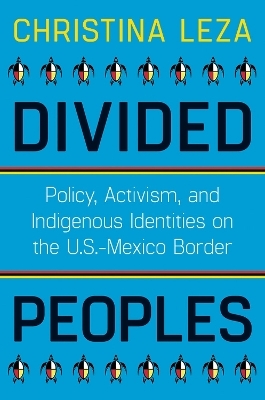
Divided Peoples
Policy, Activism, and Indigenous Identities on the U.S.-Mexico Border
Seiten
2019
University of Arizona Press (Verlag)
9780816537006 (ISBN)
University of Arizona Press (Verlag)
9780816537006 (ISBN)
- Titel ist leider vergriffen;
keine Neuauflage - Artikel merken
Addresses the impact border policies have on traditional lands and the peoples who live there - whether environmental degradation, border patrol harassment, or the disruption of traditional ceremonies. Anthropologist Christina Leza shows how such policies affect the traditional cultural survival of Indigenous peoples along the border.
The border region of the Sonoran Desert, which spans southern Arizona in the United States and northern Sonora, Mexico, has attracted national and international attention. But what is less discussed in national discourses is the impact of current border policies on the Native peoples of the region. There are twenty-six tribal nations recognized by the U.S. federal government in the southern border region and approximately eight groups of Indigenous peoples in the United States with historical ties to Mexico-the Yaqui, the O'odham, the Cocopah, the Kumeyaay, the Pai, the Apaches, the Tiwa (Tigua), and the Kickapoo.
Divided Peoples addresses the impact border policies have on traditional lands and the peoples who live there-whether environmental degradation, border patrol harassment, or the disruption of traditional ceremonies. Anthropologist Christina Leza shows how such policies affect the traditional cultural survival of Indigenous peoples along the border. The author examines local interpretations and uses of international rights tools by Native activists, counter-discourse on the U.S.-Mexico border, and challenges faced by Indigenous border activists when communicating their issues to a broader public.
Through ethnographic research with grassroots Indigenous activists in the region, the author reveals several layers of division-the division of Indigenous peoples by the physical U.S.-Mexico border, the divisions that exist between Indigenous perspectives and mainstream U.S. perspectives regarding the border, and the traditionalist/nontraditionalist split among Indigenous nations within the United States. Divided Peoples asks us to consider the possibilities for challenging settler colonialism both in sociopolitical movements and in scholarship about Indigenous peoples and lands.
The border region of the Sonoran Desert, which spans southern Arizona in the United States and northern Sonora, Mexico, has attracted national and international attention. But what is less discussed in national discourses is the impact of current border policies on the Native peoples of the region. There are twenty-six tribal nations recognized by the U.S. federal government in the southern border region and approximately eight groups of Indigenous peoples in the United States with historical ties to Mexico-the Yaqui, the O'odham, the Cocopah, the Kumeyaay, the Pai, the Apaches, the Tiwa (Tigua), and the Kickapoo.
Divided Peoples addresses the impact border policies have on traditional lands and the peoples who live there-whether environmental degradation, border patrol harassment, or the disruption of traditional ceremonies. Anthropologist Christina Leza shows how such policies affect the traditional cultural survival of Indigenous peoples along the border. The author examines local interpretations and uses of international rights tools by Native activists, counter-discourse on the U.S.-Mexico border, and challenges faced by Indigenous border activists when communicating their issues to a broader public.
Through ethnographic research with grassroots Indigenous activists in the region, the author reveals several layers of division-the division of Indigenous peoples by the physical U.S.-Mexico border, the divisions that exist between Indigenous perspectives and mainstream U.S. perspectives regarding the border, and the traditionalist/nontraditionalist split among Indigenous nations within the United States. Divided Peoples asks us to consider the possibilities for challenging settler colonialism both in sociopolitical movements and in scholarship about Indigenous peoples and lands.
Christina Leza is an associate professor of anthropology at Colorado College. She is a linguistic anthropologist whose research interests include Indigenous peoples, racial and ethnic discourses, Indigenous rights, grassroots activism, and the U.S.-Mexico border.
| Erscheinungsdatum | 26.09.2019 |
|---|---|
| Reihe/Serie | Critical Issues in Indigenous Studies |
| Zusatzinfo | 1 black & white illustration, 3 maps |
| Verlagsort | Tucson |
| Sprache | englisch |
| Maße | 152 x 229 mm |
| Gewicht | 483 g |
| Themenwelt | Sozialwissenschaften ► Ethnologie ► Völkerkunde (Naturvölker) |
| Sozialwissenschaften ► Soziologie | |
| ISBN-13 | 9780816537006 / 9780816537006 |
| Zustand | Neuware |
| Informationen gemäß Produktsicherheitsverordnung (GPSR) | |
| Haben Sie eine Frage zum Produkt? |
Mehr entdecken
aus dem Bereich


aus dem Bereich
die Ethnologische Sammlung der Georg-August-Universität Göttingen
Buch | Softcover (2024)
Universitätsverlag Göttingen
CHF 58,75
Lebenswelten und Werte zwischen "Tradition" und "Moderne" aus …
Buch | Softcover (2024)
transcript (Verlag)
CHF 64,40


