


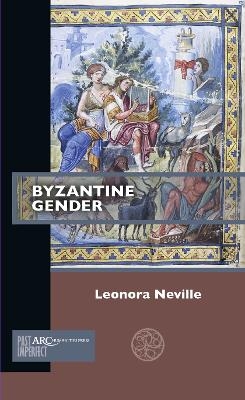
Byzantine Gender
Seiten
2019
|
New edition
ARC Humanities Press (Verlag)
978-1-64189-016-8 (ISBN)
ARC Humanities Press (Verlag)
978-1-64189-016-8 (ISBN)
This lively and personal book explains some key aspects of how
people of the Byzantine Empire perceived gender, enabling readers to understand
Byzantine society and its fascinating otherness more fully.
Why were virtuous Byzantine women described as manly? Why were boys' bodies thought to be closer in constitution to those of women than adult men? Did Byzantines think eunuchs were men?
This lively and personal book explains some key aspects of how people of the Medieval Roman Empire (Byzantine Empire) conceived of men and women, masculinity and femininity, and proper behaviour for men and women. By laying bare fundamental ideas about how gender was defined and performed, Byzantine Gender enables readers to understand Byzantine society more fully. And by providing background information about Byzantine gender, it makes it easier to approach and appreciate the fascinating otherness of Byzantine culture.
people of the Byzantine Empire perceived gender, enabling readers to understand
Byzantine society and its fascinating otherness more fully.
Why were virtuous Byzantine women described as manly? Why were boys' bodies thought to be closer in constitution to those of women than adult men? Did Byzantines think eunuchs were men?
This lively and personal book explains some key aspects of how people of the Medieval Roman Empire (Byzantine Empire) conceived of men and women, masculinity and femininity, and proper behaviour for men and women. By laying bare fundamental ideas about how gender was defined and performed, Byzantine Gender enables readers to understand Byzantine society more fully. And by providing background information about Byzantine gender, it makes it easier to approach and appreciate the fascinating otherness of Byzantine culture.
Leonora Neville studies Byzantine culture and society, and is the John W. and Jeanne M. Rowe Professor of Byzantine History at the University of Wisconsin Madison. Her work focuses on medieval history writing, authority, gender, and the importance of the classical past for Byzantine culture.
Introduction
1 “Byzantine” People: Powerful Women & Wimpy Men
2 Medieval Roman Anthropology
3 Gender & Virtue
4 How did medieval Roman Women get so much done?
5 Masculinity & Military Strength
6 Change Over Time
Conclusion
Further Reading
| Erscheinungsdatum | 01.08.2019 |
|---|---|
| Reihe/Serie | Past Imperfect |
| Zusatzinfo | 4 Illustrations, black and white |
| Sprache | englisch |
| Maße | 111 x 181 mm |
| Themenwelt | Geschichte ► Allgemeine Geschichte ► Mittelalter |
| Geisteswissenschaften ► Geschichte ► Regional- / Ländergeschichte | |
| Sozialwissenschaften ► Soziologie ► Gender Studies | |
| ISBN-10 | 1-64189-016-9 / 1641890169 |
| ISBN-13 | 978-1-64189-016-8 / 9781641890168 |
| Zustand | Neuware |
| Informationen gemäß Produktsicherheitsverordnung (GPSR) | |
| Haben Sie eine Frage zum Produkt? |
Mehr entdecken
aus dem Bereich



aus dem Bereich
Geschichte einer Augsburger Familie (1367-1650)
Buch | Softcover (2024)
Kohlhammer (Verlag)
CHF 47,60


