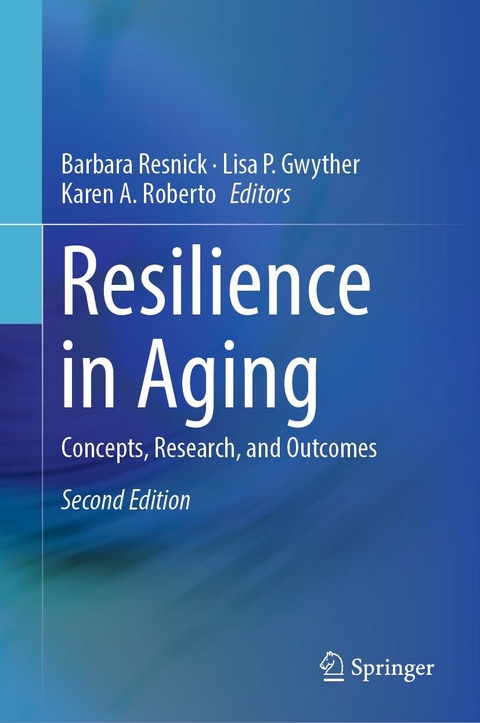
Resilience in Aging (eBook)
XIII, 420 Seiten
Springer International Publishing (Verlag)
978-3-030-04555-5 (ISBN)
This updated and expanded second edition of Resilience in Aging offers a comprehensive description of the current state of knowledge with regard to resilience from physiological (including genetic), psychological (including cognitive and creative), cultural, and economic perspectives. In addition, the book considers the impact of resilience on many critical aspects of life for older adults including policy issues, economic, cognitive and physiological challenges, spirituality, chronic illness, and motivation. The only book devoted solely to the importance and development of resilience in quality of life among older adults, Resilience in Aging, 2nd Edition continues to offer evidence-based theory, clinical guidelines, and new and updated case examples and real-world interventions so professional readers can make the best use of this powerful tool. The critical insights in this volume are concluded with a discussion of future directions on optimizing resilience and the importance of a lifespan approach to the critical component of aging.
The book's coverage extends across disciplines and domains, including:
- Resilience and personality disorders in older age.
- Cultural and ethnic perspectives on enhancing resilience in aging
- Sustained by the sacred: religious and spiritual factors for resilience in adulthood and aging.
- Building resilience in persons with early-stage dementia and their care partners.
- Interdisciplinary geriatric mental health resilience interventions.
- Developing resilience in the aged and dementia care workforce.
- Using technology to enhance resilience among older adults.
This wide-ranging and updated lifespan approach gives Resilience in Aging, 2nd Edition particular relevance to the gamut of practitioners in gerontology and geriatrics, including health psychologists, neuropsychologists, clinical psychologists, psychiatrists, social workers, geriatricians, family physicians, nurses, occupational and physical therapists, among others.
Barbara Resnick, PhD, CRNP, FAAN, FAANP, is a professor in the Department of Organizational Systems and Adult Health at the University of Maryland School of Nursing. She holds the Sonya Ziporkin Gershowitz Chair in Gerontology at the School of Nursing, and she maintains a clinical/faculty position with clinical work at Roland Park Place, a Lifecare community. Her research focuses on optimizing function and physical activity, motivation, resilience and adherence to healthy behaviors. She has published over 250 articles in nursing and/or medical journals, numerous chapters in nursing and medical textbooks related to care of the older adult, and a book on restorative care nursing.
Lisa P. Gwyther, MSW, LCSW, is a clinical social worker, an associate professor in the Duke Department of Psychiatry and Behavioral Sciences and a Senior Fellow of the Duke Center for Aging. She is the founder and immediate past director of the Duke (Alzheimer's) Family Support Program, a NC state-level first-responder for families and professionals with questions about dementia and family care. She is author of over 150 journal articles, book chapters and books on interventions to support individuals and families through progressive dementias, including the 2011 e-book, Living Well after a Diagnosis of Alzheimer's. Karen A. Roberto is a university distinguished professor, director of the Institute for Society, Culture and Environment, and senior fellow at the Center for Gerontology at Virginia Tech. She also holds secondary appointments in the departments of internal medicine and psychiatry and behavioral medicine at the Virginia Tech Carilion School of Medicine. Her research agenda focuses on health and social support in late life and includes multiple studies of the daily lives of older women with chronic health conditions, family relationships and caregiving, and elder abuse. She has published over 200 scholarly articles and book chapters, is editor/author of 9 books and is a fellow of the American Psychological Association, the Gerontological Society of America, and the National Council on Family Relations.Barbara Resnick, PhD, CRNP, FAAN, FAANP, is a professor in the Department of Organizational Systems and Adult Health at the University of Maryland School of Nursing. She holds the Sonya Ziporkin Gershowitz Chair in Gerontology at the School of Nursing, and she maintains a clinical/faculty position with clinical work at Roland Park Place, a Lifecare community. Her research focuses on optimizing function and physical activity, motivation, resilience and adherence to healthy behaviors. She has published over 250 articles in nursing and/or medical journals, numerous chapters in nursing and medical textbooks related to care of the older adult, and a book on restorative care nursing. Lisa P. Gwyther, MSW, LCSW, is a clinical social worker, an associate professor in the Duke Department of Psychiatry and Behavioral Sciences and a Senior Fellow of the Duke Center for Aging. She is the founder and immediate past director of the Duke (Alzheimer’s) Family Support Program, a NC state-level first-responder for families and professionals with questions about dementia and family care. She is author of over 150 journal articles, book chapters and books on interventions to support individuals and families through progressive dementias, including the 2011 e-book, Living Well after a Diagnosis of Alzheimer's. Karen A. Roberto is a university distinguished professor, director of the Institute for Society, Culture and Environment, and senior fellow at the Center for Gerontology at Virginia Tech. She also holds secondary appointments in the departments of internal medicine and psychiatry and behavioral medicine at the Virginia Tech Carilion School of Medicine. Her research agenda focuses on health and social support in late life and includes multiple studies of the daily lives of older women with chronic health conditions, family relationships and caregiving, and elder abuse. She has published over 200 scholarly articles and book chapters, is editor/author of 9 books and is a fellow of the American Psychological Association, the Gerontological Society of America, and the National Council on Family Relations.
Chapter 1: Definition of Resilience.- Chapter 2: Successful Aging and Resilience: Applications for Public Health, Healthcare, and Policy.- Chapter 3: Resilience and Personality Disorders in Older Age.- Chapter 4: What Do We Know About Resilience in Older Adults? An Exploration of Some Facts, Factors, and Facets.- Chapter 5: Psychological Resilience.- Chapter 6: Physiological resilience and the Impact on Health.- Chapter 7: How the Arts and Humanities Can Help Older Persons with Dementia and Their Caregivers Be More Resilient.- Chapter 8: Cultural and Ethnic Perspectives on Enhancing Resilience in Aging.- Chapter 9: Volunteering in Later Life: Policies and Programs to Support a Resilient Aging Society.- Chapter 10: Sustained by the Sacred: Religious and Spiritual Factors for Resilience in Adulthood and Aging.- Chapter 11: Overcoming Stressful Experiences in Older Age.- Chapter 12: The Relationship Between Resilience and Motivation.- Chapter 13: Fostering Resilience in Dementia through Narratives: Contribution of Multimedia Technologies.- Chapter 14: Building Resilience in Persons with Early-Stage Dementia and Their Care Partners.- Chapter 15: Resilience and Faith for African American Caregivers.- Chapter 16: Promoting Resilience through Aging-Friendly Community Initiatives: Opportunities and Challenges.- Chapter 17: Promoting Resilience in Small-Scale, Homelike Residential Care Settings for Older People with Dementia: Experiences from the Netherlands and the United States.- Chapter 18: Interdisciplinary Geriatric Mental Health Resilience Interventions.- Chapter 19: Developing Resilience in the Aged and Dementia Care Workforce.- Chapter 20: Understanding Resilience of Adult Foster Care Providers.- Chapter 21: Using Technology to Enhance Resiliency among Older Adults.- Chapter 22: Conclusion: The Key to Successful Aging.
| Erscheint lt. Verlag | 27.12.2018 |
|---|---|
| Zusatzinfo | XIII, 420 p. 12 illus., 4 illus. in color. |
| Verlagsort | Cham |
| Sprache | englisch |
| Themenwelt | Geisteswissenschaften |
| Medizin / Pharmazie ► Medizinische Fachgebiete ► Psychiatrie / Psychotherapie | |
| Sozialwissenschaften ► Pädagogik ► Sozialpädagogik | |
| Schlagworte | arts and resilience in elderly • civic engagement and elder resilience • Creative resilience • economical resilience • fostering resilience through narratives • geriatric mobile crisis response • interventions for resilience • motivating to increase reslience • optimizing reslience in older people • Physiological resilience • Psychological resilience • religion, spirituality, and resilience • resilience and aging friendly communiities • resilience and personality disorders in older age • resilience and stress in older age • resilience from a cultural perspective • Resilience in Aging • resilience in chronic illness • Successful aging • worker resilience over the lifespan |
| ISBN-10 | 3-030-04555-2 / 3030045552 |
| ISBN-13 | 978-3-030-04555-5 / 9783030045555 |
| Informationen gemäß Produktsicherheitsverordnung (GPSR) | |
| Haben Sie eine Frage zum Produkt? |
 PDF (Wasserzeichen)
DRM: Digitales Wasserzeichen
Dieses eBook enthält ein digitales Wasserzeichen und ist damit für Sie personalisiert. Bei einer missbräuchlichen Weitergabe des eBooks an Dritte ist eine Rückverfolgung an die Quelle möglich.
Dateiformat: PDF (Portable Document Format)
Mit einem festen Seitenlayout eignet sich die PDF besonders für Fachbücher mit Spalten, Tabellen und Abbildungen. Eine PDF kann auf fast allen Geräten angezeigt werden, ist aber für kleine Displays (Smartphone, eReader) nur eingeschränkt geeignet.
Systemvoraussetzungen:
PC/Mac: Mit einem PC oder Mac können Sie dieses eBook lesen. Sie benötigen dafür einen PDF-Viewer - z.B. den Adobe Reader oder Adobe Digital Editions.
eReader: Dieses eBook kann mit (fast) allen eBook-Readern gelesen werden. Mit dem amazon-Kindle ist es aber nicht kompatibel.
Smartphone/Tablet: Egal ob Apple oder Android, dieses eBook können Sie lesen. Sie benötigen dafür einen PDF-Viewer - z.B. die kostenlose Adobe Digital Editions-App.
Buying eBooks from abroad
For tax law reasons we can sell eBooks just within Germany and Switzerland. Regrettably we cannot fulfill eBook-orders from other countries.
aus dem Bereich