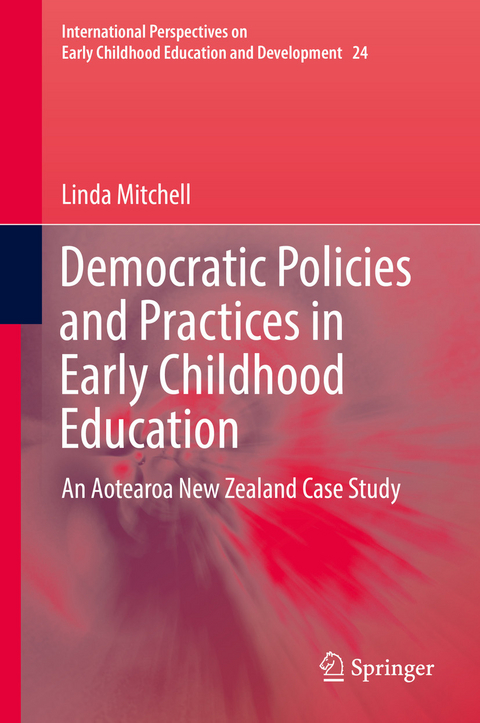
Democratic Policies and Practices in Early Childhood Education (eBook)
IX, 176 Seiten
Springer Singapore (Verlag)
978-981-13-1793-4 (ISBN)
This book uses case studies of Aotearoa New Zealand policy formulation and practice to explore early childhood education and care (ECEC) as a site for democratic citizenship and social justice. Addressing fundamental questions about the purpose of education, it argues for explicit values focusing on children and childhood as a basis for ECEC policy to replace discourses of economic investment and child vulnerability that are dominant within policy goals in many countries. A commitment to democracy and equity is a good place to start. Aotearoa New Zealand is of special interest because of its world-renowned ECE curriculum, Te Wh?riki, which is based on principles of social justice, respect for rights and an aim to support children growing up in a democracy. The curriculum upholds M?ori rights to tino rangatiratanga (absolute authority over their lives and resources). Yet, Aotearoa New Zealand's extreme market policies and harsh labour laws during recent periods run contrary to ideals of democracy and are puzzlingly inconsistent with curriculum principles.
The book starts with an analysis and critique of global trends in ECEC in countries that share capitalist mixed economies of welfare, and where competition and marketisation have become dominant principles. It then analyses ideas about children, childhood and ECEC within a framework of democracy, going back to the Athenean origins of democracy and including recent literature on meanings and traditions of democracy in education. The book uses vivid examples from researching curriculum, pedagogy and assessment practices within Aotearoa New Zealand ECEC settings and collective action to influence policy change in order to illustrate opportunities for democratic education. It concludes by examining what conditions might be needed for integrated and democratic ECEC provision in Aotearoa New Zealand, and what changes are necessary for the future. It offers a compass not a map; it points to promising directions and provides insights into issues in ECEC policy and practice that are of current global concern.
Linda Mitchell is Associate Professor of Early Childhood Education and Director of the Early Years Research Centre at The University of Waikato, New Zealand. She has built a national and international reputation through her research and publications in early childhood education policy, and has been a strong critic of the marketization and commercialisation of education and their impact on children, families and early childhood services. Other current areas of her research are assessment, culturally responsive pedagogy, and connections with parents, families and community. A main interest is in democratic policies and practices in early childhood education.
This book uses case studies of Aotearoa New Zealand policy formulation and practice to explore early childhood education and care (ECEC) as a site for democratic citizenship and social justice. Addressing fundamental questions about the purpose of education, it argues for explicit values focusing on children and childhood as a basis for ECEC policy to replace discourses of economic investment and child vulnerability that are dominant within policy goals in many countries. A commitment to democracy and equity is a good place to start. Aotearoa New Zealand is of special interest because of its world-renowned ECE curriculum, Te Whariki, which is based on principles of social justice, respect for rights and an aim to support children growing up in a democracy. The curriculum upholds Maori rights to tino rangatiratanga (absolute authority over their lives and resources). Yet, Aotearoa New Zealand's extreme market policies and harsh labour laws during recent periods run contrary to idealsof democracy and are puzzlingly inconsistent with curriculum principles. The book starts with an analysis and critique of global trends in ECEC in countries that share capitalist mixed economies of welfare, and where competition and marketisation have become dominant principles. It then analyses ideas about children, childhood and ECEC within a framework of democracy, going back to the Athenean origins of democracy and including recent literature on meanings and traditions of democracy in education. The book uses vivid examples from researching curriculum, pedagogy and assessment practices within Aotearoa New Zealand ECEC settings and collective action to influence policy change in order to illustrate opportunities for democratic education. It concludes by examining what conditions might be needed for integrated and democratic ECEC provision in Aotearoa New Zealand, and what changes are necessary for the future. It offers a compass not a map; it points to promising directions and provides insights into issues in ECEC policy and practice that are of current global concern.
Linda Mitchell is Associate Professor of Early Childhood Education and Director of the Early Years Research Centre at The University of Waikato, New Zealand. She has built a national and international reputation through her research and publications in early childhood education policy, and has been a strong critic of the marketization and commercialisation of education and their impact on children, families and early childhood services. Other current areas of her research are assessment, culturally responsive pedagogy, and connections with parents, families and community. A main interest is in democratic policies and practices in early childhood education.
1 Introduction.- 2 Aotearoa New Zealand within global trends in ECEC policy.- 3 Traditions of democracy in education.- 4 Weaving a curriculum.- 5 Assessment and pedagogical documentation.- 6 Influencing policy change through collective action.- 7 Policy frameworks and democratic participation.- 8 Conclusion.
| Erscheint lt. Verlag | 24.10.2018 |
|---|---|
| Reihe/Serie | International Perspectives on Early Childhood Education and Development | International Perspectives on Early Childhood Education and Development |
| Zusatzinfo | IX, 176 p. 3 illus. |
| Verlagsort | Singapore |
| Sprache | englisch |
| Themenwelt | Sozialwissenschaften ► Pädagogik ► Bildungstheorie |
| Sozialwissenschaften ► Pädagogik ► Vorschulpädagogik | |
| Schlagworte | Competition in education • Democratic education • Early childhood assesment • Early childhood education in New Zealand • Early childhood education reform • Early childhood pedagogy • economies of welfare • international policy comparisons • marketization of early childhood education • Parental choice in education • preschool education • radical education • Social Justice in Education • Te Whāriki |
| ISBN-10 | 981-13-1793-3 / 9811317933 |
| ISBN-13 | 978-981-13-1793-4 / 9789811317934 |
| Informationen gemäß Produktsicherheitsverordnung (GPSR) | |
| Haben Sie eine Frage zum Produkt? |
 PDF (Wasserzeichen)
DRM: Digitales Wasserzeichen
Dieses eBook enthält ein digitales Wasserzeichen und ist damit für Sie personalisiert. Bei einer missbräuchlichen Weitergabe des eBooks an Dritte ist eine Rückverfolgung an die Quelle möglich.
Dateiformat: PDF (Portable Document Format)
Mit einem festen Seitenlayout eignet sich die PDF besonders für Fachbücher mit Spalten, Tabellen und Abbildungen. Eine PDF kann auf fast allen Geräten angezeigt werden, ist aber für kleine Displays (Smartphone, eReader) nur eingeschränkt geeignet.
Systemvoraussetzungen:
PC/Mac: Mit einem PC oder Mac können Sie dieses eBook lesen. Sie benötigen dafür einen PDF-Viewer - z.B. den Adobe Reader oder Adobe Digital Editions.
eReader: Dieses eBook kann mit (fast) allen eBook-Readern gelesen werden. Mit dem amazon-Kindle ist es aber nicht kompatibel.
Smartphone/Tablet: Egal ob Apple oder Android, dieses eBook können Sie lesen. Sie benötigen dafür einen PDF-Viewer - z.B. die kostenlose Adobe Digital Editions-App.
Buying eBooks from abroad
For tax law reasons we can sell eBooks just within Germany and Switzerland. Regrettably we cannot fulfill eBook-orders from other countries.
aus dem Bereich