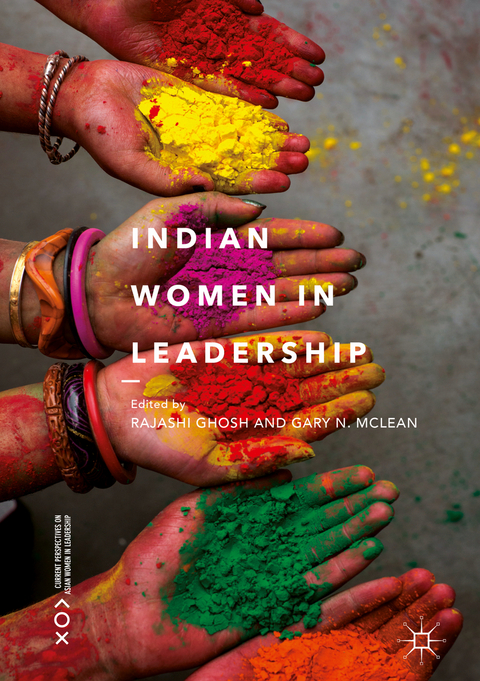
Indian Women in Leadership (eBook)
XXV, 299 Seiten
Springer International Publishing (Verlag)
978-3-319-68816-9 (ISBN)
Rajashi Ghosh is an Associate Professor in the Adult Education and Organization Development program and the Ph.D Program Director in the School of Education at Drexel University, USA. She is a member of the AHRD Board, Associate Editor of Human Resource Development International and also the Editorial Board of Human Resource Development Review. She is the immediate past chairperson of the India HRD SIG.
Rajashi Ghosh is an Associate Professor in the Adult Education and Organization Development program and the Ph.D Program Director in the School of Education at Drexel University, USA. She is a member of the AHRD Board, Associate Editor of Human Resource Development International and also the Editorial Board of Human Resource Development Review. She is the immediate past chairperson of the India HRD SIG.Gary N. McLean is President of McLean Global Consulting, Inc. As an OD practitioner, he works extensively globally, including many trips to India for work and conferences, including a quarter sabbatical as Visiting Professor at Rohilkind University, Bareilly. He served as president of the Academy of Human Resource Development and the International Management Development Association. He is Professor Emeritus of the University of Minnesota, USA.
Acknowledgments 6
Contents 7
Notes on Contributors 10
List of Figures 22
List of Tables 23
1: Indian Women in Leadership: An Introduction 24
Women Indian Deities and Women’s Leadership 25
Women in Indian Epics and Women Leadership 27
Overview of Chapters 30
Conclusion 31
References 31
Part I 33
2: Family Roles Posing Challenges for Women Leaders in India 34
Gendered Family Roles in India and Influence of Social Norms 37
Cultural Beliefs that Encourage Gendered Family Roles 39
Prevalence of Caste System and Its Impact on Family Roles 40
Impact of Rural Versus Urban Settings on Gendered Family Roles 42
The Changing Face of India 43
Rising Middle Urban Class and Changing Mindsets 44
Impact of Globalization 45
Progressive HRD Practices 46
Conclusion 46
References 47
3: Indian Women in Leadership: Engaging with the Terrain of Constraints Rooted in Religion and Traditions 51
Religion and Women in Leadership 52
Hinduism 52
Islam 57
Buddhism 60
Christianity 61
Conclusion 62
References 63
4: Career Development Challenges for Women Pursuing Leadership in India 67
Cultural and Organizational Barriers 68
Available Career Development Resources 72
Recommendations for Improving Women Leaders’ Career Development in India 80
Recommendations for Future Research 81
References 82
Part II 86
5: Policies and Legislation for Indian Women Leaders 87
Legislation and Policies by the Union Government of India 89
Government of India: Five-Year Plans 91
Special Focus on Women and Child Development by the Government of India 92
Swavalamban [Self-Reliance] 92
Support for Training and Employment Programs for Women (STEP) 93
Swa-Shakti [Self-Power] 93
Swayamsiddha [Self-Reliant] 94
Mahila E-Haat [Women E-Marketplace] 94
Beti [Girl Child] Bachao Beti Padhao [Save the Girl Child and Support Her Education] 94
Selected State Government-Sponsored Schemes 95
Kerala: Kerala State Women’s Development Corporation (KSWDC) Career Orientation Programs 95
KSWDC Sandesh (Communication and Network) One: Social Enterprises Network Scheme 96
Karnataka: Stree Shakti [Women Empowerment] Scheme 96
Women’s Financial Assistance Schemes 97
Gujarat: Gujarat Women Economic Development Corporation (GWEDC) 97
Goa: Incentive to Women Entrepreneurs Scheme 97
Puducherry (Union Territory): Women Entrepreneur Schemes 98
Autonomous Bodies Under MWCD 98
National Mission for Empowerment of Women (NMEW): Autonomous Body Under Ministry of Women and Child Development (MWCD), GoI 98
Schemes and Programs by NMEW 98
Rashtriya Mahila Kosh (RMK): Autonomous Body Under MWCD, GoI 99
Impact of the Legislation and Policies 100
Future Legislation Needed 102
Conclusion 105
References 106
6: Role of Education in Developing Women Leaders in India 108
Role of Education in Leadership Development of Women in Developing Nations 109
Factors That Have Restrained Access to Education and Leadership Development of Women in India 110
Facilitating Access to Education for Women in Post-Colonial India: Government Initiatives 114
Other Factors Enabling Women for Leadership Fostered by Higher Education 117
A Way Forward 120
Future Research Needed 122
References 123
7: It Takes a Village: Collaborations and Partnerships Empowering Women in India for Leadership 126
Political Leadership 128
Women in Local Government 129
Women in National Government 130
Economic Leadership 131
Business Leadership 134
Social Leadership 136
Strengths and Challenges of Collaborations for Developing Women Leaders 138
Collaboration or Conflict? 139
Gender and Perceptions at Play 139
Equitable Opportunities and Access to Resources 140
Social Acceptance of Empowering Structures 141
Recommendations for Future Research 141
The Future of Collaborations 142
References 144
Part III 148
8: Women Leaders in Corporate India 149
Literature Review 152
Barriers to Advancement 153
Work-Life Balance 156
Safety and Health Concerns at Work 157
Profiles of Current Women Leaders in Corporate India 158
Ambiga Dhiraj 158
Anu Aga 159
Arundhati Bhattacharya 159
Chanda Kochhar 159
Dipali Goenka 160
Kiran Mazumdar-Shaw 160
Shikha Sharma 160
Usha Ananthasubramanian 161
Vandana Luthra 161
Vinita Gupta 161
Recommendations for Research 163
Recommendations for Practice 165
References 166
9: Women Entrepreneurs in India 171
Women Entrepreneurs in India 174
Women’s Motivation for Entrepreneurship 176
Family Traditions and Women Entrepreneurs in India 177
Drivers and Challenges for Women Entrepreneurs in India 178
Ways Forward 181
References 185
10: Indian Women’s Leadership in the Government Sector 187
Women’s Leadership in the Government Sector Since Independence 189
Administrative Services 190
Political Positions 192
Initiatives, Legislation, and Reforms by the Indian Government for Promoting Women’s Leadership in the Government Sector 195
Potential Measures to Promote and Strengthen Women’s Leadership in the Government Sector by Other Stakeholders 197
Improve the Education Sector 197
Streamline Governmental Programs for Women Empowerment 198
Conduct Gender Sensitization Programs 198
Organize Societal Change Programs in Villages and Rural Areas 199
Promote Women for Leadership Self-Help Groups 200
Provide Online and Offline Career Counseling Platforms 200
Conclusion 201
References 202
11: Women in Leadership in the Education Sector in India 206
Women Leaders in Education in Pre-Independence India 208
Women Leaders in Post-Independence India 210
Formal Schooling 211
Informal Schooling 212
Barriers and Opportunities for Women in Education in India 215
Barriers 215
Opportunities 218
Conclusion 221
References 221
12: Indian Women Leaders in the NGO Sector 226
Significance of Understanding the Role of Women Leadership in NGOs 227
A Brief Overview of NGO History and Current State of NGOs in India 228
Urban and Rural NGOs 229
Non-Governmental Organizations and Values 230
Funding, Support, and Governance 230
Women Leaders in Twenty-First Century India 232
NGO Sector and Women Leaders in India 233
Leadership Challenges 235
Macro- and Micro-Factors Facilitating Women’s Success in NGOs in India 237
The Experiences of Women Leaders in NGOs in India 238
Sumana Bhasin, Joint Director, HelpAge India 239
Dr. Usha Pillai, Co-Founder & Director, Foundation for Initiatives in Development and Education for All, Pune, India
Anupama Saxena, President, Aakash Maindwal Foundation, India 241
Women NGO Leaders’ Ideology and Motivation 243
Women NGO Leaders’ Self-Assurance and Evaluation 243
Challenges Faced by Women NGO Leaders in India 244
Conclusion 245
References 246
13: Women Leaders in Indian Agriculture: Grassroots Perspective 250
Indian Agriculture and Women 251
Agriculture Education 253
Agriculture Value Chain 254
Women’s Leadership in Indian Agriculture 257
Leadership Characteristics and Style 258
Impact of Women’s Leadership in Indian Agriculture 263
Challenges Faced by Indian Women in Agricultural Leadership 265
Recommendations 266
Recommendations for Practice 266
Future Research 267
Recommendations to Policymakers 267
Conclusion 268
References 268
Part IV 271
14: Indian Women in Leadership in an Asian Context 272
A Comparison of Barriers to Advancement of Women in India and Asian Countries 274
Gender Development Index and Gender Stereotypes 274
Cultural Context 277
Family Commitment 278
Organization Practices 279
Drivers Contributing to Women’s Leadership in Asian Countries 280
Progressive Practices and Trends 280
Emphasis on Women’s Education 282
Blurring of Gender Roles 283
Discussion and Implications 284
Recommendations for Further Research 286
Conclusion 286
References 287
Part V 293
15: From Darkness into Light: Hope for the Future of Women in Leadership in India 294
Why Is It So Difficult for the Light to Shine? 296
Parenthood 296
Occupational Choice 297
Discrimination and Sex Bias 297
What Must Happen to Quell the Darkness? 298
Enact New Laws and Enforce Existing Laws 299
Focus on Youth 300
Equalize College Major and Occupational Choice 301
Develop Negotiating Skills 302
Demand Family-Friendly Benefits 303
Let Employer Self-Interest Take Its Course 303
Change the Culture 304
Conclusion 305
References 305
Index 307
| Erscheint lt. Verlag | 10.10.2018 |
|---|---|
| Reihe/Serie | Current Perspectives on Asian Women in Leadership | Current Perspectives on Asian Women in Leadership |
| Zusatzinfo | XXV, 299 p. 3 illus. |
| Verlagsort | Cham |
| Sprache | englisch |
| Themenwelt | Sozialwissenschaften ► Politik / Verwaltung |
| Wirtschaft ► Betriebswirtschaft / Management ► Personalwesen | |
| Wirtschaft ► Betriebswirtschaft / Management ► Unternehmensführung / Management | |
| Schlagworte | career development • female leadership • Gender gap, , , , • gender roles • gender socialization • Human resource development • Human Resource Management • India • nternational relations • women’s studies |
| ISBN-10 | 3-319-68816-2 / 3319688162 |
| ISBN-13 | 978-3-319-68816-9 / 9783319688169 |
| Informationen gemäß Produktsicherheitsverordnung (GPSR) | |
| Haben Sie eine Frage zum Produkt? |
 PDF (Wasserzeichen)
DRM: Digitales Wasserzeichen
Dieses eBook enthält ein digitales Wasserzeichen und ist damit für Sie personalisiert. Bei einer missbräuchlichen Weitergabe des eBooks an Dritte ist eine Rückverfolgung an die Quelle möglich.
Dateiformat: PDF (Portable Document Format)
Mit einem festen Seitenlayout eignet sich die PDF besonders für Fachbücher mit Spalten, Tabellen und Abbildungen. Eine PDF kann auf fast allen Geräten angezeigt werden, ist aber für kleine Displays (Smartphone, eReader) nur eingeschränkt geeignet.
Systemvoraussetzungen:
PC/Mac: Mit einem PC oder Mac können Sie dieses eBook lesen. Sie benötigen dafür einen PDF-Viewer - z.B. den Adobe Reader oder Adobe Digital Editions.
eReader: Dieses eBook kann mit (fast) allen eBook-Readern gelesen werden. Mit dem amazon-Kindle ist es aber nicht kompatibel.
Smartphone/Tablet: Egal ob Apple oder Android, dieses eBook können Sie lesen. Sie benötigen dafür einen PDF-Viewer - z.B. die kostenlose Adobe Digital Editions-App.
Buying eBooks from abroad
For tax law reasons we can sell eBooks just within Germany and Switzerland. Regrettably we cannot fulfill eBook-orders from other countries.
aus dem Bereich