



Adaptive Thinking
Rationality in the Real World
Seiten
2002
Oxford University Press Inc (Verlag)
978-0-19-515372-9 (ISBN)
Oxford University Press Inc (Verlag)
978-0-19-515372-9 (ISBN)
A collection of Gigerenzer's important papers on rationality, heuristics, and rituals.
Where do new ideas come from? What is social intelligence? Why do social scientists perform mindless statistical rituals? This vital book is about rethinking rationality as adaptive thinking: to understand how minds cope with their environments, both ecological and social.
Gerd Gigerenzer proposes and illustrates a bold new research program that investigates the psychology of rationality, introducing the concepts of ecological, bounded, and social rationality. His path-breaking collection takes research on thinking, social intelligence, creativity, and decision-making out of an ethereal world where the laws of logic and probability reign, and places it into our real world of human behavior and interaction. Adaptive Thinking is accessibly written for general readers with an interest in psychology, cognitive science, economics, sociology, philosophy, artificial intelligence, and animal behavior. It also teaches a practical audience, such as physicians, AIDS counselors, and experts in criminal law, how to understand and communicate uncertainties and risks.
Where do new ideas come from? What is social intelligence? Why do social scientists perform mindless statistical rituals? This vital book is about rethinking rationality as adaptive thinking: to understand how minds cope with their environments, both ecological and social.
Gerd Gigerenzer proposes and illustrates a bold new research program that investigates the psychology of rationality, introducing the concepts of ecological, bounded, and social rationality. His path-breaking collection takes research on thinking, social intelligence, creativity, and decision-making out of an ethereal world where the laws of logic and probability reign, and places it into our real world of human behavior and interaction. Adaptive Thinking is accessibly written for general readers with an interest in psychology, cognitive science, economics, sociology, philosophy, artificial intelligence, and animal behavior. It also teaches a practical audience, such as physicians, AIDS counselors, and experts in criminal law, how to understand and communicate uncertainties and risks.
Gerd Gigerenzer is Director of the Center for Adaptive Behavior and Cognition at the Max Planck Institute for Human Development in Berlin, and was previously a professor of psychology at The University of Chicago and other institutions. His books include the recent Simple Heuristics that Make Us Smart (Oxford, 1999).
PART ONE: WHERE DO NEW IDEAS COME FROM?; PART TWO: ECOLOGICAL RATIONALITY; PART FOUR: BOUNDED RATIONALITY; PART FOUR: SOCIAL RATIONALITY; PART FIVE: ILLUSIONS AND RITUALS
| Erscheint lt. Verlag | 28.3.2002 |
|---|---|
| Reihe/Serie | Evolution and Cognition Series |
| Zusatzinfo | line figures |
| Verlagsort | New York |
| Sprache | englisch |
| Maße | 226 x 167 mm |
| Gewicht | 499 g |
| Themenwelt | Geisteswissenschaften ► Psychologie ► Allgemeine Psychologie |
| Geisteswissenschaften ► Psychologie ► Sozialpsychologie | |
| Geisteswissenschaften ► Psychologie ► Verhaltenstherapie | |
| Sozialwissenschaften ► Soziologie ► Allgemeines / Lexika | |
| ISBN-10 | 0-19-515372-3 / 0195153723 |
| ISBN-13 | 978-0-19-515372-9 / 9780195153729 |
| Zustand | Neuware |
| Informationen gemäß Produktsicherheitsverordnung (GPSR) | |
| Haben Sie eine Frage zum Produkt? |
Mehr entdecken
aus dem Bereich


aus dem Bereich
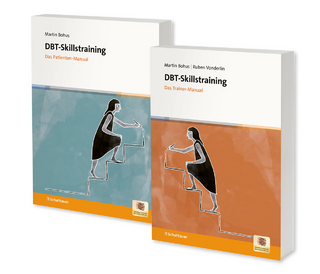
Paket bestehend aus »Das Patienten-Manual« und »Das Trainer-Manual«
Buch | Softcover (2025)
Schattauer (Verlag)
CHF 125,95


