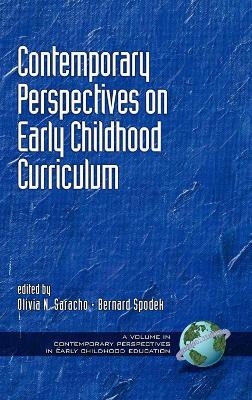
Contemporary Influences in Early Childhood Curriculum
Information Age Publishing (Verlag)
978-1-930608-26-9 (ISBN)
- Titel z.Zt. nicht lieferbar
- Versandkostenfrei
- Auch auf Rechnung
- Artikel merken
Over the years, educational scholars have proposed different conceptions of the curriculum. It is as if each scholar, researcher, university educator, and practitioner has developed her or his own personal definition. Unfortunately, there is no one single definition that everybody has agreed upon. Table 1 presents a sample of these definitions.
A universal definition for curriculum may continue to be elusive and may even change through the years to address changes in the social forces and changes in related school goals. Nonetheless, the approach in curriculum development is consistent. Curriculum developers establish goals, develop experiences, designate content, and evaluate experiences and outcomes. Most curriculum developers consistently use such terms as curriculum planning, curriculum development, curriculum implementation, and curriculum evaluation, and many others to describe curriculum related activities. Unfortunately, without a consistent definition of curriculum, it is difficult for the curriculum developers to identify what it is that needs to be planned, developed, implemented, or evaluated. If curriculum developers rely on the curriculum experts’ definitions, they will find that their definitions identify a product, a program, determine goals and objectives, and learner experiences. However, its heterogeneity may be inspiring if curriculum developers rely on the components of each definition that depict the richness of the field, which in turn, can provide a foundation for contemporary content, concepts, and creativity.
A curriculum is an anthology of learning experiences, conceived and arranged based on a program’s educational goals and the community’s social forces. Each curriculum manifests an image of what children "ought to be and become" (Biber, 1984, p. 303) grounded on the awareness of social values and a system that interprets those values into experiences for learners. The concept of curriculum, as a distinctive domain of study within education, arose from the demand to arrange, organize, and translate such awareness into educational programs of study. It integrates the historical study of the goals and content of schooling, analyses of curriculum documents, and analyses of the children’s experiences in school. The first formal curriculum text was published in 1918 (Bobbit, 1918), although in the United States contemporary curriculum study goes back to the early 1890's, when lead committees challenged the form and structure of public schooling. Presently curriculum development is fundamental at all educational levels.
Chapter 1. Introduction: The Backbone of the Early Childhood Curriculum; Olivia Saracho and Bernard Spodek.
Chapter 2. Influences on Early Childhood Curriculum Development; Bernard Spodek and Olivia N. Saracho.
Chapter 3. Sociable Thinking: Cognitive Development in Early Childhood Education; Kehin Seifert.
Chapter 4. Developmental Play Theories and Children's Social Pretend Play; Olivia N. Saracho.
Chapter 5. Effective Early Childhood Curriculum For Children At Risk; Barbara A. Wasik, Mary Alice Bond, and Annemarue Hindman.
Chapter 6. Addressing Linguistic and Cultural Diversity in Early Childhood: From Equity to Excellence, From "Raices" to "Alas"; Eugene E. Garcia.
Chapter 7. Young Children's Literacy Development; Olivia N. Saracho.
Chapter 8. Developments in Young Children's Mathematical Reasoning; Joe Becker and Daniel Miltner.
Chapter 9. Early Childhood Social Studies; Tomas D. Weible and Ann J. Dromsky.
Chapter 10. Strengthening the Role of Curriculum in Child Care; Douglas R. Powell and Gary E. Bingham.
Chapter 11. What Counts in Early Learning?; Tony Bertram and Christine Pascal.
Chapter 12. New Directions in Curriculum Development; Bernard Spodek and Olivia N. Saracho.
About the Authors
| Erscheint lt. Verlag | 30.1.2002 |
|---|---|
| Reihe/Serie | Contemporary Perspectives in Early Childhood Education |
| Sprache | englisch |
| Maße | 156 x 234 mm |
| Gewicht | 414 g |
| Themenwelt | Sozialwissenschaften ► Pädagogik ► Schulpädagogik / Grundschule |
| Sozialwissenschaften ► Pädagogik ► Vorschulpädagogik | |
| ISBN-10 | 1-930608-26-8 / 1930608268 |
| ISBN-13 | 978-1-930608-26-9 / 9781930608269 |
| Zustand | Neuware |
| Informationen gemäß Produktsicherheitsverordnung (GPSR) | |
| Haben Sie eine Frage zum Produkt? |
aus dem Bereich