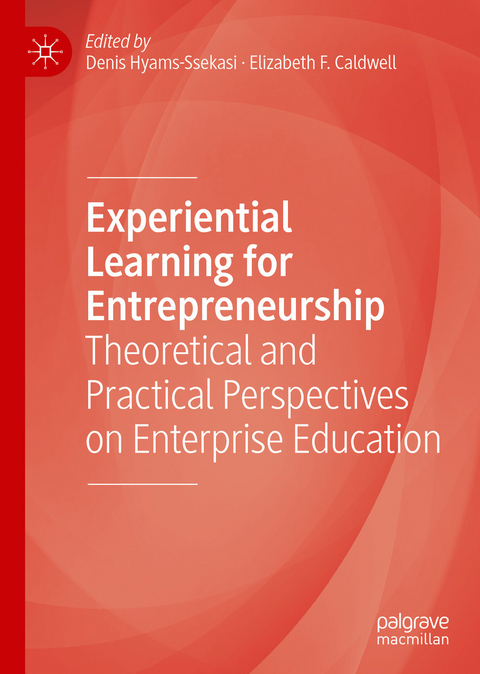
Experiential Learning for Entrepreneurship (eBook)
XXXI, 270 Seiten
Springer International Publishing (Verlag)
9783319900056 (ISBN)
This topical new book provides an illuminating overview of enterprise education, and poses the question as to whether current establishments have adequate systems in place to prepare students for the world of work. Addressing the increasing need for graduates with practical skills and expertise in the labour market, this collection of insightful chapters analyses the opportunities that are available for aspiring entrepreneurs to develop enterprise skills and experience key aspects of starting and running a business, whilst in a supported environment such as an educational program or incubator scheme. With comprehensive discussion of higher education initiatives and empirical examples of experiential learning in the workplace, this book is an important and timely read for those researching business enterprise, entrepreneurship and higher education more generally.
Denis Hyams-Ssekasi is a Research Coordinator and Lecturer in Business Management at the University of Bolton, UK. He has developed and delivered modules on entrepreneurship, ran several mentoring schemes and offered consultancy to start-up businesses, especially in developing countries. He is a Senior Fellow of the Higher Education Academy and a member of the Institute for Small Business and Entrepreneurship.
Elizabeth F. Caldwell is an Academic Skills Tutor at the University of Huddersfield, UK, and a Fellow of the Higher Education Academy. She received her PhD from University College London and her current research interests revolve around the theory and practice of higher education, including a comparative approach to discipline specific pedagogies.
Denis Hyams-Ssekasi is a Research Coordinator and Lecturer in Business Management at the University of Bolton, UK. He has developed and delivered modules on entrepreneurship, ran several mentoring schemes and offered consultancy to start-up businesses, especially in developing countries. He is a Senior Fellow of the Higher Education Academy and a member of the Institute for Small Business and Entrepreneurship.Elizabeth F. Caldwell is an Academic Skills Tutor at the University of Huddersfield, UK, and a Fellow of the Higher Education Academy. She received her PhD from University College London and her current research interests revolve around the theory and practice of higher education, including a comparative approach to discipline specific pedagogies.
Foreword 5
References 9
Preface 10
References 13
Contents 15
Notes on Contributors 18
List of Figures 25
List of Tables 26
Part I: Experiential Learning in Education 27
1: Experiential Learning Philosophies of Enterprise and Entrepreneurship Education 28
Introduction 28
Conceptual Background 29
Review of Hannon’s Contributions 30
A Dynamic Perspective on Experiential Learning 31
Learning Outcomes in Entrepreneurship Education 32
Transformative Learning Processes in Higher Education 33
Entrepreneurial Identity: Educator and Student Perspectives 34
Action-Based Experiential Learning 34
Discussion 35
Conclusion 38
References 39
2: Assessing Experiential Entrepreneurship Education: Key Insights from Five Methods in Use at a Venture Creation Programme 44
Introduction 44
Literature Review 46
Five Approaches for Assessing Experiential Education 46
Performance Assessment 46
Reflective Assessment 48
Peer and Self-Assessment 48
E-Assessment 49
Constructive Alignment 49
Assessment in Entrepreneurship Education 50
Method 52
Research Approach and Design 52
The Case Studied 53
Critical Underlying Principle of the CSE Case: Creating Value for Others 54
Findings 55
Performance Assessment at CSE 55
Reflective Assessment at CSE 57
Peer and Self-Assessment at CSE 58
E-Assessment at CSE 59
Constructive Alignment at CSE 60
Discussion 61
Assessment of Value Versus Assessment of Learning 62
Synthesizing into a Coherent Assessment Model 63
A New Assessment Method: Capturing Learning from Emotion-Laden Activities 65
Leveraging on a Third Learning Space: Informal and Hybrid Learning 66
Implications 66
References 68
3: Enterprise Simulation Gaming: Effective Practices for Assessing Student Learning with SimVenture Classic and VentureBlocks 75
Introduction 75
What Is Experiential Learning? 76
Enterprise and Entrepreneurial Skills Development Through Business Simulation 78
Case Study A: SimVenture Classic and Learning Points 82
Effective Practice 1: SimVenture for Individual Students and a Reflective Essay 83
Effective Practice 2: Board Meeting or Group Presentation Approach 84
Effective Practice 3: Method of Delivery and Transition from Lecturer to Coach/Mentor 84
Case Study B: VentureBlocks and Learning Points 85
Effective Practice 1: Relating Theoretical Concepts to the Simulation 86
Effective Practice 2: No Instructional Interference During Gameplay 87
Effective Practice 3: The Debrief Activity 87
Effective Practice 4: Post-Simulation and Debrief Activity 88
Conclusion 88
References 89
4: An Exploration of Experiential Education as a Catalyst for Future Entrepreneurs 94
Introduction 94
Literature Review 95
Background to the Case Study: The Enterprise and Entrepreneurship Module 96
Timetabled Classes 97
Assessment 98
Live Project and Trade Fair 99
Group Work 100
Developing an Entrepreneurial Mindset 102
Challenges for Embedding Experiential Learning 103
Conclusion 104
References 104
5: An Appreciation of the Stakeholder Impact in an Enterprise Education Experiential Learning Event: ‘The Enterprise Challenge’, a Case Story from Dumfries and Galloway, Scotland 107
Introduction 107
Experiential Learning and Enterprise Education Theories: In Brief 110
Contextualising ‘the Enterprise Challenge’: Aims and Objectives 113
Developing and Refreshing the ‘Challenge’ via Annual Themes 116
Challenges, Benefits, and Impacts 117
Challenges 117
Benefits and Impact 118
Testimonials 119
Conclusions 124
References 125
6: Embedding Interdisciplinary and Challenge-Led Learning into the Student Experience 127
Introduction 127
Context 128
Background to ICE 129
Methodology 130
Analysis 134
What Next? 137
Experiential Learning in Context 141
Conclusion 143
References 144
7: A Holistic Approach to the Delivery of Effective Enterprise Education 146
Introduction 146
University-Based Entrepreneurship: A New Innovative Model 147
A Proposed, New Entrepreneurial Education Model in the UK Ecosystem 149
1. & 2. Research-Teaching Nexus
3. International Activities 152
4. Enterprise Activities 153
A Real Case of Entrepreneurial Education: The “Enterprise Creation” Module at the University of the West of Scotland 154
Module Content 155
Module Delivery 158
Module Environment: Physical and Digital Spaces 158
Discussion and Conclusion 159
References 161
Part II: Experiential Learning in the World of Work 166
8: Experiential Learning in Entrepreneurial Families: Lessons from Mexico 167
Introduction 167
Theoretical Considerations 168
Experiential Learning Theory 168
Family Entrepreneurship and Experiential Learning 170
Background to the Case Study 171
Methodology 174
Analysis: Experiential Learning in Entrepreneurial Families 174
The Entrepreneurial Family as Learning Space for Exploration and Exploitation of Opportunities 178
Conclusion 180
References 181
9: Learning from a Premium Dining Restaurant to Implement a Delight Strategy in a Bar/Grill: Applying Experiential Learning 184
Introduction 184
Case Restaurant Chain Background 185
Literature Review 185
Service Delight 185
Expectations 186
Expectation Disconfirmation Model 186
The Zone of Service Tolerance 187
Phase One 188
Method 188
Findings 188
Restaurant Service 188
Booking and Greeting Episodes 190
Restaurant Atmosphere Episodes 190
Manager Episodes 191
Drinks and Bartender Episodes 191
Food Episodes 192
Staff Episodes 192
Diners’ Request Episodes 193
Payment and Departure Episodes 193
Phase Two 194
Method 194
Findings 195
Service Improvement 195
Managerial Implications 198
Conclusion 198
References 200
10: Do Intrapreneurs Learn by Doing? 203
Introduction 203
Who Is and What Does the Intrapreneur Do? 205
Learning in the Intrapreneurial Process 208
The Organizational Level of Intrapreneurial Learning 208
The Individual Level of Intrapreneurial Learning 210
Intrapreneurship as a Dynamic, Multilevel, Learning Process 213
Concluding Remarks and Implications for Management 215
References 216
11: Understanding Organizational Values Through Experiential Learning 222
Introduction 222
Values and Organizational Development 223
Voluntary and Community Sector 225
British Government Perspective 227
Research Method 228
Two VCS Case Study Organizations 229
Iterative Semi-structured Interview Approach 229
The Organizational Values Matrix 230
Organizational Values Matrix Interrelationships 232
Values Connectors 232
Values Controllers 233
The Auxiliary Quadrant 233
The Altruistic Quadrant 234
Discussion 235
Conclusion 238
References 238
12: Experiential Learning Through the Transformational Incubation Programme: A Case Study from Accra, Ghana 241
Introduction 241
Entrepreneurship Education 242
Experiential Learning 243
Entrepreneurial Development Through Incubators 245
The Case Study: Transformational Incubator, Accra, Ghana 245
Country Context 245
Transformational Incubator: Skills Hub and Innovation Centre 246
Case 1 Supply Chain Co. 249
Case 2 Uniform Workshop Co. 250
Case 3 Estates Construction Co. 251
Discussion 252
Implications for Practice 256
Conclusions 257
References 258
13: When Pedagogic Worlds Collide: Reflections on a Pan-European Entrepreneurship Education Project 261
Introduction 261
Background 262
Introducing the STARTIFY7 Project and Context 264
STARTIFY7: From Design to Implementation 268
Outputs and Outcomes of STARTIFY7 271
Knowledge 273
Skills 273
Attitudes 274
The Experiential Development of STARTIFY7 275
Conclusions 277
References 278
Index 280
| Erscheint lt. Verlag | 30.6.2018 |
|---|---|
| Zusatzinfo | XXXI, 270 p. 8 illus. |
| Verlagsort | Cham |
| Sprache | englisch |
| Themenwelt | Sachbuch/Ratgeber ► Beruf / Finanzen / Recht / Wirtschaft ► Bewerbung / Karriere |
| Sozialwissenschaften ► Pädagogik | |
| Wirtschaft ► Betriebswirtschaft / Management | |
| Schlagworte | educational program • Entrepreneurial Skills • Entrepreneurship • graduate • Labour Market • Practical Skills • training and development |
| ISBN-13 | 9783319900056 / 9783319900056 |
| Informationen gemäß Produktsicherheitsverordnung (GPSR) | |
| Haben Sie eine Frage zum Produkt? |
 PDF (Wasserzeichen)
DRM: Digitales Wasserzeichen
Dieses eBook enthält ein digitales Wasserzeichen und ist damit für Sie personalisiert. Bei einer missbräuchlichen Weitergabe des eBooks an Dritte ist eine Rückverfolgung an die Quelle möglich.
Dateiformat: PDF (Portable Document Format)
Mit einem festen Seitenlayout eignet sich die PDF besonders für Fachbücher mit Spalten, Tabellen und Abbildungen. Eine PDF kann auf fast allen Geräten angezeigt werden, ist aber für kleine Displays (Smartphone, eReader) nur eingeschränkt geeignet.
Systemvoraussetzungen:
PC/Mac: Mit einem PC oder Mac können Sie dieses eBook lesen. Sie benötigen dafür einen PDF-Viewer - z.B. den Adobe Reader oder Adobe Digital Editions.
eReader: Dieses eBook kann mit (fast) allen eBook-Readern gelesen werden. Mit dem amazon-Kindle ist es aber nicht kompatibel.
Smartphone/Tablet: Egal ob Apple oder Android, dieses eBook können Sie lesen. Sie benötigen dafür einen PDF-Viewer - z.B. die kostenlose Adobe Digital Editions-App.
Buying eBooks from abroad
For tax law reasons we can sell eBooks just within Germany and Switzerland. Regrettably we cannot fulfill eBook-orders from other countries.
aus dem Bereich