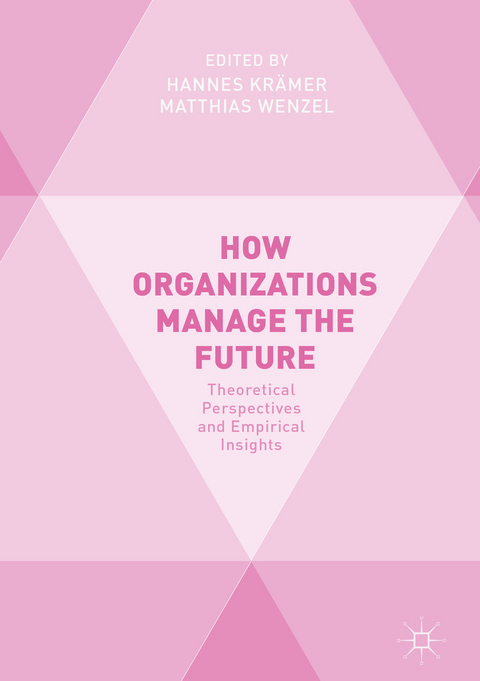
How Organizations Manage the Future (eBook)
XXI, 328 Seiten
Springer International Publishing (Verlag)
978-3-319-74506-0 (ISBN)
This pioneering edited collection explores the question of how organizations manage the future. Moving away from traditional research which focuses on the past, the editors problematize the future as an inherent but under-examined part of organizing. Arguing that the future acts as both a driver of and a performative result of organizing, the book asks how organizations conceptualize and deal with the future and what processes are in place to handle things to come. With empirical research examining the practices, discourses and concepts that play key roles, organizations and their approaches are scrutinized. A timely compendium of theoretical discussion and practical implications on the relevance of the future, this book is essential reading for those interested in organization, sociology and management studies.
Hannes Krämer is Head of the research group Border and Boundary Studies and Scientific Coordinator of the Viadrina Center B/ORDERS IN MOTION at the European University Viadrina in Frankfurt (Oder), Germany. His research interests comprise the fields of future research, practice theory, organizational sociology, cultural theory, and boundary research.
Matthias Wenzel is a post-doctoral researcher at the Chair of Management and Organization at the European University Viadrina in Frankfurt (Oder), Germany. His research interests include strategy as practice, demand-side research in management and video methods.
Hannes Krämer is Head of the research group Border and Boundary Studies and Scientific Coordinator of the Viadrina Center B/ORDERS IN MOTION at the European University Viadrina in Frankfurt (Oder), Germany. His research interests comprise the fields of future research, practice theory, organizational sociology, cultural theory, and boundary research. Matthias Wenzel is a post-doctoral researcher at the Chair of Management and Organization at the European University Viadrina in Frankfurt (Oder), Germany. His research interests include strategy as practice, demand-side research in management and video methods.
Acknowledgements 5
Contents 6
Notes on Contributors 9
List of Figures 16
List of Tables 18
1: Introduction: Managing the Future—Foundations and Perspectives 19
Introduction 19
Looking Back, but Not Forward? 20
An Overview of the Chapters in This Edited Collection 25
Conclusion: Towards a Research Agenda on the Management of the Future 30
References 31
Part I: Philosophical Perspectives 40
2: From Defuturization to Futurization and Back Again? A System-Theoretical Perspective to Analyse Decision-Making 41
Introduction 41
Introducing System-Theoretical Thinking 43
Structure and Time 43
Organization, Organizing and the Temporal Dimension of Decision-Making 45
Illustration: The Change of Decision Semantics 48
Coping with the Contingent Past: The Knowledge-Based Decision 50
Coping with a Fast-Changing World: The Decision for Long-Term Success 51
Coping with the Contingent Future: The Strategic Decision 52
Praising Both the Future of the Future and the Feeling for the Present: The Sensual Decision 54
Conclusion 55
References 57
3: What’s New? Temporality in Practice Theory and Pragmatism 60
Introduction 60
Mead and the Philosophy of the Present 63
Schatzki’s Event Ontology 66
Producing a Novel Genre Film: Antboy 68
What’s New in Antboy? 72
Conclusion 76
References 78
4: Creativity in/of Organizations for Managing Things to Come: Lessons to Be Learnt from Philosophy 81
Introduction 81
Creativity in Times of Escalating Contingency, Necessity and Impossibility 83
Paradoxicality, Complementarity and Recursiveness 86
Modo futuri exacti: Deciding, Acting and Imagination 88
The Platonic Search Paradox: Certainty and Uncertainty 89
Jon Elster: States That Are Essentially By-products 92
Dancing in Chains: Contingency, Freedom and Constraints 93
The Emergence of Corporate Actors and the Creativity of Organizations 96
References 98
5: Organizational Futurity: Being and Knowing in the Engagement with What Is Yet to Come 103
Introduction 103
Points of Departure 104
The Aporetics of Organizational Knowing in the Age of Higher-Order Contingency 106
Problematizing Prospective Organizational Knowing 106
Problematizing Retrospective Organizational Knowing 110
Organizational Futurity 113
The Insufficiency of Bare Knowing 113
From the Futurity of Dasein to Organizational Futurity 115
Inconclusion 118
A Mere Opening Toward the Intelligibility of Organizational Futurity 119
References 122
Part II: Theoretical and Methodological Perspectives 125
6: Open(ing up) for the Future: Practising Open Strategy and Open Innovation to Cope with Uncertainty 126
Introduction 126
Openness as an Organizing Principle 127
Towards Organizational Practices of Openness 129
Open Innovation: Probing the Future 130
Crowdsourcing 131
Corporate Incubating 132
Open Strategy: Importing the Future 134
Transparent Strategizing 134
Inclusive Strategizing 136
Discussion and Conclusion 138
References 140
7: Antenarratives in Ongoing Strategic Change: Using the Story Index to Capture Daunting and Optimistic Futures 145
Introduction 145
Story Index: Theoretical Framing 148
Antenarratives, Prospective Sensemaking and Narrative Rationality 149
Research Site, Data and Methodology 151
Results: Using SIX 152
Optimistic Future: The Leading Bank Antenarrative 153
Daunting Future: The Digitalization Antenarrative 155
Discussion and Conclusion 157
References 161
8: What Scenarios Are You Missing? Poststructuralism for Deconstructing and Reconstructing Organizational Futures 164
Introduction 164
Poststructuralism as a Research Methodology for Scenario (Re)development 168
The Role of Knowledge and Power Residing in Scenarios 169
Deconstruction and Reconstruction as Poststructuralist Approaches to Analysis 169
A Method for Practical Poststructuralism: Cross-Impact Balance Analysis 171
Context for the Poststructuralist Inquiry of Emissions Scenarios 172
The Reanalysis of Emissions Scenarios Using CIB 173
Conclusions and Reflections 177
References 180
9: Historical Methods and the Study of How Organizations Manage the Future 184
Introduction 184
Historical Methods and the Future 186
Applications of the Study of How Organizations Manage the Future 187
Application #1: How Actors Make Sense of the (Possible) Future(s) 188
Application #2: How Actors Enact The(ir) Future (or Adapt to Others’ Enactment) 189
Application #3: How Actors Organize (for) the Future 191
Analysing Historical Evidence 193
Principle #1: Source Criticism 193
Principle #2: Triangulation 194
Principle #3: Hermeneutic Circle 195
Discussion and Conclusion 196
References 198
Part III: Empirical Insights 201
10: In the Wake of Disaster: Resilient Organizing and a New Path for the Future 202
Introduction 202
Resilient Organizing 203
Research Methods 205
Resilient Organizing and a New Path for the Future 207
Preparing for the New Future: Learning from the Disaster Through Resilient Organizing 208
Building the New Future: Finding Resolve Through Resilient Organizing 214
Cultivating the New Future: Refocusing Through Resilient Organizing 215
Committing to the New Future: Experiencing Transformation Through Action 216
Resilient Organizing for the Future: Implications and Future Directions 218
References 220
11: The Darkened Horizon: Two Modes of Organizing Pandemics 224
Introduction 224
Organizing Global Public Health 226
Early Intervention 228
Emergency Planning 231
Pandemics in a Society of Organizations 233
References 237
12: Managing the Digital Transformation: Preparing Cities for the Future 240
Introduction 240
Research Methodology and Data 242
Research Setting 242
Data Collection 244
Data Analysis 246
Findings 246
Phase I: Understand 247
Phase II: Create 249
Phase III: Disseminate 250
A Framework to Manage Digital Transformation Within an Innovation Network 252
Discussion 254
Temporal Mode of the Future 254
For-Profit Versus a Variety of Organizations Within an Innovation Network 255
Conclusion 257
References 258
13: Creating Collective Futures: How Roadmaps and Conferences Reconfigure the Institutional Field of Semiconductor Manufacturing 261
Introduction 261
Theoretical Perspective 263
Research Setting and Methods 265
Data Sources and Data Collection 267
Organizing Roadmaps and Conferences as Forms of Institutional Work 268
Organizing Roadmaps 268
Organizing Conferences 272
Field-Level Impacts of Organizing Roadmaps and Conferences 276
Conclusion 278
References 281
14: Organizational Artifacts as Pre-presentations of Things to Come: The Case of Menu Development in Haute Cuisine 285
Introduction 285
Artifacts in Time: Inscription and Agencement in a Processual Perspective 286
Method 291
Case Selection 291
Data Collection 293
Data Analysis 294
Findings 296
Menu as Artifact 296
The Menu Development Process 299
Discussion and Concluding Remarks 301
References 303
15: Solid Futures: Office Architecture and the Labour Imaginary 307
Introduction 307
Office Space and the Labour Relation 308
Architecture Beyond Instrumentalism 310
Discourse, Materiality, Praxis: A Brief Remark on Methodology 314
The Future(s) of Office Architecture 315
The Promise of Office Architecture 315
Planning (for) the Future 317
Performing Office Architecture 319
Staging the Potentiality of Labour 320
Conclusion 323
References 324
Index 328
| Erscheint lt. Verlag | 27.6.2018 |
|---|---|
| Zusatzinfo | XXI, 328 p. 14 illus. |
| Verlagsort | Cham |
| Sprache | englisch |
| Themenwelt | Sozialwissenschaften ► Soziologie |
| Wirtschaft ► Betriebswirtschaft / Management ► Personalwesen | |
| Wirtschaft ► Betriebswirtschaft / Management ► Unternehmensführung / Management | |
| Schlagworte | future planning • Management • organization • Practice Theory • Sociology |
| ISBN-10 | 3-319-74506-9 / 3319745069 |
| ISBN-13 | 978-3-319-74506-0 / 9783319745060 |
| Informationen gemäß Produktsicherheitsverordnung (GPSR) | |
| Haben Sie eine Frage zum Produkt? |
 PDF (Wasserzeichen)
DRM: Digitales Wasserzeichen
Dieses eBook enthält ein digitales Wasserzeichen und ist damit für Sie personalisiert. Bei einer missbräuchlichen Weitergabe des eBooks an Dritte ist eine Rückverfolgung an die Quelle möglich.
Dateiformat: PDF (Portable Document Format)
Mit einem festen Seitenlayout eignet sich die PDF besonders für Fachbücher mit Spalten, Tabellen und Abbildungen. Eine PDF kann auf fast allen Geräten angezeigt werden, ist aber für kleine Displays (Smartphone, eReader) nur eingeschränkt geeignet.
Systemvoraussetzungen:
PC/Mac: Mit einem PC oder Mac können Sie dieses eBook lesen. Sie benötigen dafür einen PDF-Viewer - z.B. den Adobe Reader oder Adobe Digital Editions.
eReader: Dieses eBook kann mit (fast) allen eBook-Readern gelesen werden. Mit dem amazon-Kindle ist es aber nicht kompatibel.
Smartphone/Tablet: Egal ob Apple oder Android, dieses eBook können Sie lesen. Sie benötigen dafür einen PDF-Viewer - z.B. die kostenlose Adobe Digital Editions-App.
Buying eBooks from abroad
For tax law reasons we can sell eBooks just within Germany and Switzerland. Regrettably we cannot fulfill eBook-orders from other countries.
aus dem Bereich