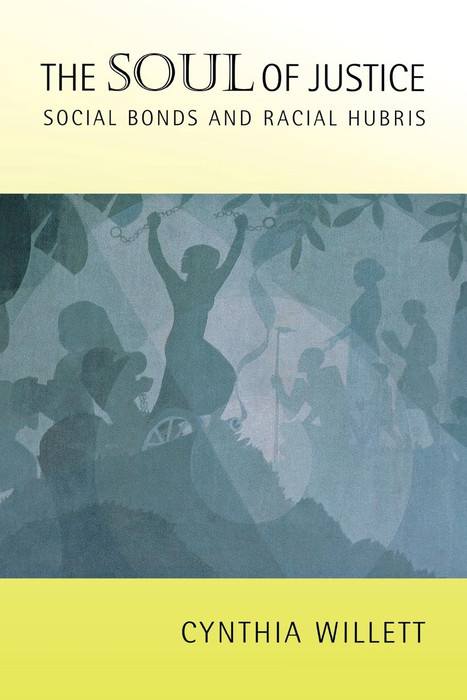
The Soul of Justice (eBook)
256 Seiten
Cornell University Press (Verlag)
978-1-5017-1163-3 (ISBN)
Cynthia Willett brings together diverse insights from social psychology, classical and contemporary literature, and legal and justice theory to redefine the basis of the moral and legal person. Feminists, communitarians, and postmodern thinkers have...
Cynthia Willett brings together diverse insights from social psychology, classical and contemporary literature, and legal and justice theory to redefine the basis of the moral and legal person.Feminists, communitarians, and postmodern thinkers have made clear that classical liberalism, with its emphasis on individual autonomy and excessive rationalism, is severely limited. Although she is sympathetic with the liberal view, Willett finds it necessary to go further. For her, attention to the social dimensions of the family and civil society is critical if issues of race, gender, class, and sexuality are to be taken seriously. Interdependency, not autonomy, is of increasing significance in an era of globalization.Willett proposes an alternate normative theory that recognizes the impact of social forces on individual well-being. Citizenship in a democracy should not be defined solely on the basis of rights to autonomy, such as bare rights to property or free speech, she explains. Rather, citizenship should be defined first of all in terms of the rights, responsibilities, and capacities of the social person.It is within the African American tradition of political thought that Willett finds a more useful definition of human identity and political freedom. The African American experience offers a compelling vision of social change and a deeper understanding of what it means to be a social person. By focusing on everyday battles against racism, Willett contends, we can gain valuable insight into the meaning of justice.
Cynthia Willett brings together diverse insights from social psychology, classical and contemporary literature, and legal and justice theory to redefine the basis of the moral and legal person.
Feminists, communitarians, and postmodern thinkers have made clear that classical liberalism, with its emphasis on individual autonomy and excessive rationalism, is severely limited. Although she is sympathetic with the liberal view, Willett finds it necessary to go further. For her, attention to the social dimensions of the family and civil society is critical if issues of race, gender, class, and sexuality are to be taken seriously. Interdependency, not autonomy, is of increasing significance in an era of globalization.
Willett proposes an alternate normative theory that recognizes the impact of social forces on individual well-being. Citizenship in a democracy should not be defined solely on the basis of rights to autonomy, such as bare rights to property or free speech, she explains. Rather, citizenship should be defined first of all in terms of the rights, responsibilities, and capacities of the social person.
It is within the African American tradition of political thought that Willett finds a more useful definition of human identity and political freedom. The African American experience offers a compelling vision of social change and a deeper understanding of what it means to be a social person. By focusing on everyday battles against racism, Willett contends, we can gain valuable insight into the meaning of justice.
Cynthia Willett is Associate Professor of Philosophy and Winship Distinguished Research Scholar at Emory University. She is the author of Maternal Ethics and Other Slave Moralities and the editor of Theorizing Multiculturalism.
| Erscheint lt. Verlag | 31.5.2018 |
|---|---|
| Verlagsort | Ithaca |
| Sprache | englisch |
| Maße | 150 x 150 mm |
| Themenwelt | Geschichte ► Teilgebiete der Geschichte ► Militärgeschichte |
| Geisteswissenschaften ► Philosophie ► Allgemeines / Lexika | |
| Geisteswissenschaften ► Philosophie ► Ethik | |
| Recht / Steuern ► Allgemeines / Lexika | |
| Recht / Steuern ► Rechtsgeschichte | |
| Sozialwissenschaften ► Politik / Verwaltung | |
| Sozialwissenschaften ► Soziologie | |
| ISBN-10 | 1-5017-1163-6 / 1501711636 |
| ISBN-13 | 978-1-5017-1163-3 / 9781501711633 |
| Informationen gemäß Produktsicherheitsverordnung (GPSR) | |
| Haben Sie eine Frage zum Produkt? |
 PDF (Adobe DRM)
Kopierschutz: Adobe-DRM
Adobe-DRM ist ein Kopierschutz, der das eBook vor Mißbrauch schützen soll. Dabei wird das eBook bereits beim Download auf Ihre persönliche Adobe-ID autorisiert. Lesen können Sie das eBook dann nur auf den Geräten, welche ebenfalls auf Ihre Adobe-ID registriert sind.
Details zum Adobe-DRM
Dateiformat: PDF (Portable Document Format)
Mit einem festen Seitenlayout eignet sich die PDF besonders für Fachbücher mit Spalten, Tabellen und Abbildungen. Eine PDF kann auf fast allen Geräten angezeigt werden, ist aber für kleine Displays (Smartphone, eReader) nur eingeschränkt geeignet.
Systemvoraussetzungen:
PC/Mac: Mit einem PC oder Mac können Sie dieses eBook lesen. Sie benötigen eine
eReader: Dieses eBook kann mit (fast) allen eBook-Readern gelesen werden. Mit dem amazon-Kindle ist es aber nicht kompatibel.
Smartphone/Tablet: Egal ob Apple oder Android, dieses eBook können Sie lesen. Sie benötigen eine
Geräteliste und zusätzliche Hinweise
Buying eBooks from abroad
For tax law reasons we can sell eBooks just within Germany and Switzerland. Regrettably we cannot fulfill eBook-orders from other countries.
aus dem Bereich