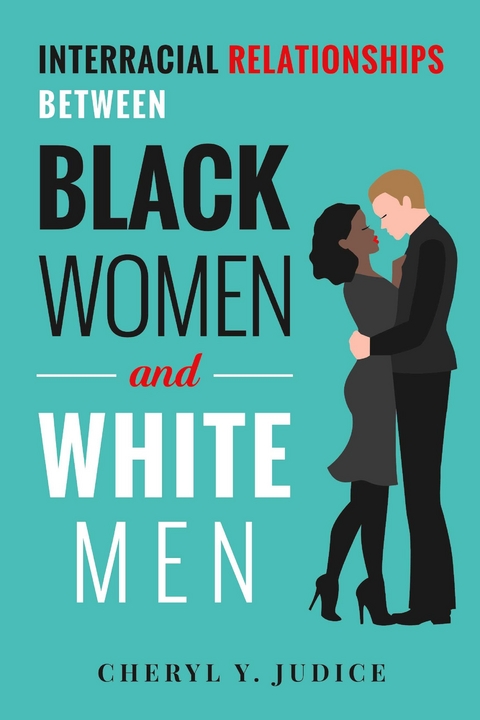
Interracial Relationships Between Black Women and White Men (eBook)
214 Seiten
Bookbaby (Verlag)
978-1-5439-3417-5 (ISBN)
Interracial Relationships Between Black Women and White Men contains vignettes on the lives of black women who are dating, married to, or divorced from white men. Black women and white men in interracial relationships were interviewed between 2014 and 2017 to learn how they met and how their relationships progressed. These forty interviews offer thought-provoking insights on the lives of those willing to cross the racial divide in pursuit of personal happiness.
CHAPTER 4
In Their Own Words: African American Women On Dating White Men
When it comes to dating across racial/ethnic lines, two personality traits stood out among all of the black women who participated in my study: they were confident and had high self-esteem. Many had outgoing personalities; others were more reticent, but all of them exhibited a strong and positive sense of self. Undoubtedly these personality traits would make any individual attractive to another, but still, I was delighted to learn that the black women I interviewed felt good about themselves.
Second, these women were not constrained by racial stereotypes in selecting dating partners. While all of them were well aware of the stereotypes about black women and knew the history of how some of them were treated at the hands of some white men, these factors did not impede them from dating outside their race.
Third, the women identified as African American or biracial and physically appeared as such. None of them would have been mistaken for being from another racial/ethnic group. Moreover, several of the women tended to be ‘Afro-centric’ in some manner, such as hairstyle choices, clothing styles or home decorations. This is an important factor to note, as one prevailing stereotype about black women who date outside their race is that they could ‘pass’ as white or from another minority ethnic group.
I began by asking each of the interviewees how they came to date outside their race. A common theme among most of these women was that their formative years were either spent in integrated or majority white communities. Moreover, most of these communities were comprised of middle to upper middle class people. Socializing with whites in school, sports or other community activities was a fairly normal occurrence in their lives. Only a couple of the women had grown up in a primarily African American community. No matter where these young women had grown up, the social contact they had with white people generally and white males in particular had been positive or, at a minimum, neutral, so they weren’t deterred from socially interacting with them. Additionally, some of the women noted that the black males they did meet either weren’t interested in them or vice versa, leaving them with little choice but to seek dates outside their race. Following are eleven narratives which are representative of the black women I interviewed who date white men.
CATHY
Cathy stated that when she was growing up, she lived in a mostly white town, and the small number of black people who attended her high school generally weren’t from the same social class she was, nor were they in the honors track classes in which she was enrolled. Cathy laughed when she said that there was only one other black girl in the honors track, and no black males, so she didn’t get to know any of them. Her first boyfriends wound up being young men who attended the same church she did. She dated a Puerto Rican guy and then an African American; in both cases these young men were childhood friends, and she didn’t form any lasting romantic attachment to either of them. However, when she went to college, she had her first serious romantic relationship, and this was with a white guy. He was in many of the same classes, and their paths crossed frequently at campus events. They eventually started speaking when they would run into each other, and from these initial short conversations, longer ones followed. They became comfortable enough with each other that if they showed up in the cafeteria at the same time, they would often eat together. Cathy described their early relationship as “a friendship, nothing more than that.” Cathy noted that at the predominantly white university she attended, she had difficulty forming similar friendships with the other African American students because ‘she didn’t talk like them.’ She was told that she ‘talked too white’ and discovered also she had been socialized differently from most of the other black students. “So trying to like go and hang out with people [black] just became a big issue because it was like, ‘You guys see “Wayne’s World”?’ And they’re like, no. So they are looking at completely different movies and doing different dances and all of these things that I hadn’t had any experience with.” By contrast, Cathy’s experience with white students was easier: “So the people I most had contact with were white students because we all had the same upbringing, same class background, same socialization in terms of music that we liked; like I’m really into alternative music.”
Cathy acknowledged that she did receive some interest from black guys while in college, but they never asked her out on a date. The only males who asked her out were the white guys. “So I just went out with who asked me out because I am traditional enough to not ask a guy out first.” The one black boyfriend she had in college was nice, but that was it. When she started working, she traveled frequently for her job, primarily meeting people who were either South Asians or whites. The males would invite her to go out with them or join them for dinner. The men weren’t boyfriends but they made her feel included and thus enhanced her comfort level dating outside her race. As Cathy’s career progressed, she met few black male colleagues, and none were interested in her. She did, however, meet several white male colleagues who asked her out. Over time, she recognized that white males were more likely than black men to demonstrate interest in her.
I asked Cathy how her parents felt about her primarily dating white men. She responded that her family didn’t care. When I asked if she had met any of the parents of the white men she dated and if the family accepted her, Cathy said that she had met many of the parents, and generally she felt welcomed by them. However, she noted that a couple of the men had parents who she thought accepted her because they knew the community and neighborhood in which she had grown up and recognized she must have come from the same social class, making it easier to accept her. She acknowledged that there were a couple of white parents who didn’t accept her, or if they did, other family members didn’t. In the latter situation, lack of parental acceptance doomed the relationship since Cathy wasn’t about to deal with any family tension over race. As she noted, “Life is too short and there are too many other people I can date to spend time worrying about dealing with someone whose family has these types of issues.”
JANE
Jane offered another perspective on how she began dating white men. Originally from the East Coast, when her parents decided to move to the Chicago area, their first consideration was where her brother and she would attend school. Paramount for her father, especially, was that they attend schools in a community where it was expected all of the students would enroll in four-year colleges. This led her parents to buy a home in a fairly affluent northern Chicago suburb. Jane noted that there were only a couple of other black families in the neighborhood, along with a few Asian families. The majority of families were white, which was reflected in the school system.
Jane was very athletic when she was in junior high school and as a result belonged to several sports teams. Her primary acquaintances and friends were white, but she did meet a few other minority students when any of her teams traveled. Overall though, she lived in a white world and only interacted with black people when she attended family reunions or other gatherings. She indicated that she didn’t think much about race growing up because living where she did, race didn’t come up as an issue in her interactions with whites. With her extensive participation in sports, her family was relatively well known since they attended her games. She was fairly popular in school and described herself as a ‘late bloomer’ when it came to dating. During her senior year in high school, Jane was surprised when she was voted to be in the homecoming court, which meant she had to attend the prom. She went to the prom with a longtime friend, a white male who was also very athletic.
When Jane enrolled in college in Chicago, she expanded her friend network and began dating more seriously. Her first college boyfriend was black, followed by an Asian boyfriend, another black boyfriend and then she met her husband (Tom), who is white. Jane remarked that she was open to dating people from a variety of backgrounds because she hadn’t dated much before college and wanted to make up for lost time. She had a serious relationship with her second black boyfriend and she did consider race when they broke up and she started dating her husband. She wondered for the first time if race was going to be an issue in the relationship. She was introduced to Tom through her Asian roommate. Tom and her roommate were in many of the same classes, and one day walking through campus, she came upon the two of them leaving class. While she was talking to them, a friend of Tom’s joined the group. The four of them decided to go out to dinner and from this event, Jane states that she was the one to initiate the relationship. Sometime after the dinner, she called Tom to see if he was interested in getting together again because she found him to be very interesting. This was around Valentine’s Day and she asked him if he had other plans. When Tom responded no, she...
| Erscheint lt. Verlag | 7.5.2018 |
|---|---|
| Sprache | englisch |
| Themenwelt | Sozialwissenschaften ► Soziologie |
| ISBN-10 | 1-5439-3417-X / 154393417X |
| ISBN-13 | 978-1-5439-3417-5 / 9781543934175 |
| Informationen gemäß Produktsicherheitsverordnung (GPSR) | |
| Haben Sie eine Frage zum Produkt? |
 EPUB (Ohne DRM)
Größe: 486 KB
Digital Rights Management: ohne DRM
Dieses eBook enthält kein DRM oder Kopierschutz. Eine Weitergabe an Dritte ist jedoch rechtlich nicht zulässig, weil Sie beim Kauf nur die Rechte an der persönlichen Nutzung erwerben.
Dateiformat: EPUB (Electronic Publication)
EPUB ist ein offener Standard für eBooks und eignet sich besonders zur Darstellung von Belletristik und Sachbüchern. Der Fließtext wird dynamisch an die Display- und Schriftgröße angepasst. Auch für mobile Lesegeräte ist EPUB daher gut geeignet.
Systemvoraussetzungen:
PC/Mac: Mit einem PC oder Mac können Sie dieses eBook lesen. Sie benötigen dafür die kostenlose Software Adobe Digital Editions.
eReader: Dieses eBook kann mit (fast) allen eBook-Readern gelesen werden. Mit dem amazon-Kindle ist es aber nicht kompatibel.
Smartphone/Tablet: Egal ob Apple oder Android, dieses eBook können Sie lesen. Sie benötigen dafür eine kostenlose App.
Geräteliste und zusätzliche Hinweise
Buying eBooks from abroad
For tax law reasons we can sell eBooks just within Germany and Switzerland. Regrettably we cannot fulfill eBook-orders from other countries.
aus dem Bereich