


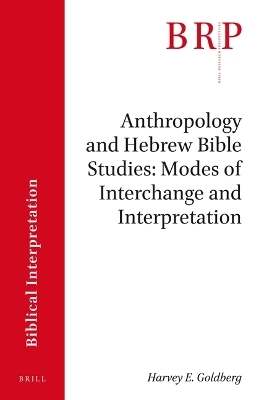
Anthropology and Hebrew Bible Studies: Modes of Interchange and Interpretation
Seiten
2018
Brill (Verlag)
9789004375758 (ISBN)
Brill (Verlag)
9789004375758 (ISBN)
Early anthropologists saw a simple society in the Hebrew Bible. Recent approaches call upon ethnographic sensibilities, structuralism, and attention to literacy to understand biblical ritual, notions of purity, and the social structures within which these are embedded.
Interchange between anthropology and biblical scholarship began because of perceived similarities between “simpler” societies and practices appearing in the Hebrew Bible. After some disengagement when anthropologists turned mainly to ethnographic fieldwork, new cross-disciplinary possibilities opened up when structuralism emerged in anthropology. Ritual and mythology were major topics receiving attention, and some biblical scholars partially adopted structuralist methods. In addition, anthropological research extended to complex societies and also had an impact upon historical studies. Modes of interpretation developed that reflected holistic perspectives along with a sensibility to ethnographic detail. This essay illustrates these trends in regard to rituals and to notions of purity in the Hebrew Bible, as well as to the place of literacy in Israelite society and culture. After discussing these themes, three examples of structuralist-inspired analysis are presented which in different ways take into account historical and literacy-based facets of the Bible.
Interchange between anthropology and biblical scholarship began because of perceived similarities between “simpler” societies and practices appearing in the Hebrew Bible. After some disengagement when anthropologists turned mainly to ethnographic fieldwork, new cross-disciplinary possibilities opened up when structuralism emerged in anthropology. Ritual and mythology were major topics receiving attention, and some biblical scholars partially adopted structuralist methods. In addition, anthropological research extended to complex societies and also had an impact upon historical studies. Modes of interpretation developed that reflected holistic perspectives along with a sensibility to ethnographic detail. This essay illustrates these trends in regard to rituals and to notions of purity in the Hebrew Bible, as well as to the place of literacy in Israelite society and culture. After discussing these themes, three examples of structuralist-inspired analysis are presented which in different ways take into account historical and literacy-based facets of the Bible.
Harvey E. Goldberg, Ph.D. (1967), Harvard University, is Emeritus Professor of Sociology and Anthropology, Hebrew University of Jerusalem. One example of his combining Anthropology and Jewish Studies is his Jewish Passages: Cycles of Jewish Life (University of California Press, 2003).
| Erscheinungsdatum | 23.08.2018 |
|---|---|
| Reihe/Serie | Brill Research Perspectives in Biblical Interpretation |
| Verlagsort | Leiden |
| Sprache | englisch |
| Maße | 155 x 235 mm |
| Gewicht | 156 g |
| Themenwelt | Religion / Theologie ► Christentum ► Kirchengeschichte |
| Geisteswissenschaften ► Religion / Theologie ► Judentum | |
| Sozialwissenschaften ► Ethnologie | |
| Sozialwissenschaften ► Soziologie | |
| ISBN-13 | 9789004375758 / 9789004375758 |
| Zustand | Neuware |
| Informationen gemäß Produktsicherheitsverordnung (GPSR) | |
| Haben Sie eine Frage zum Produkt? |
Mehr entdecken
aus dem Bereich
aus dem Bereich
die Macht des Dunklen in unserer Zeit und wie wir ihr entgegentreten
Buch | Hardcover (2025)
Verlag Herder
CHF 27,90


