


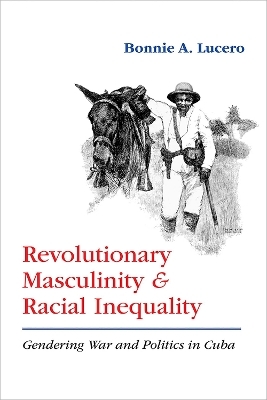
Revolutionary Masculinity and Racial Inequality
Gendering War and Politics in Cuba
Seiten
2018
University of New Mexico Press (Verlag)
978-0-8263-6009-0 (ISBN)
University of New Mexico Press (Verlag)
978-0-8263-6009-0 (ISBN)
- Titel z.Zt. nicht lieferbar
- Versandkostenfrei
- Auch auf Rechnung
- Artikel merken
One of the most paradoxical aspects of Cuban history is the coexistence of national myths of racial harmony with lived experiences of racial inequality. In this book a historian addresses this issue by examining the ways soldiers and politicians coded their discussions of race in ideas of masculinity during Cuba's transition from colony to republic.
One of the most paradoxical aspects of Cuban history is the coexistence of national myths of racial harmony with lived experiences of racial inequality. Here a historian addresses this issue by examining the ways soldiers and politicians coded their discussions of race in ideas of masculinity during Cuba's transition from colony to republic. Cuban insurgents, the author shows, rarely mentioned race outright. Instead, they often expressed their attitudes toward racial hierarchy through distinctly gendered language-revolutionary masculinity.
By examining the relationship between historical experiences of race and discourses of masculinity, Lucero advances understandings about how racial exclusion functioned in a supposedly raceless society. Revolutionary masculinity, she shows, outwardly reinforced the centrality of color blindness to Cuban ideals of manhood at the same time as it perpetuated exclusion of Cubans of African descent from positions of authority.
One of the most paradoxical aspects of Cuban history is the coexistence of national myths of racial harmony with lived experiences of racial inequality. Here a historian addresses this issue by examining the ways soldiers and politicians coded their discussions of race in ideas of masculinity during Cuba's transition from colony to republic. Cuban insurgents, the author shows, rarely mentioned race outright. Instead, they often expressed their attitudes toward racial hierarchy through distinctly gendered language-revolutionary masculinity.
By examining the relationship between historical experiences of race and discourses of masculinity, Lucero advances understandings about how racial exclusion functioned in a supposedly raceless society. Revolutionary masculinity, she shows, outwardly reinforced the centrality of color blindness to Cuban ideals of manhood at the same time as it perpetuated exclusion of Cubans of African descent from positions of authority.
Bonnie A. Lucero is a coeditor of Voices of Crime: Constructing and Contesting Social Control in Modern Latin America. She lives in New Orleans, Louisiana.
| Erscheinungsdatum | 16.01.2019 |
|---|---|
| Verlagsort | Albuquerque, NM |
| Sprache | englisch |
| Maße | 165 x 241 mm |
| Gewicht | 673 g |
| Themenwelt | Sachbuch/Ratgeber ► Geschichte / Politik ► Allgemeines / Lexika |
| Geisteswissenschaften ► Geschichte ► Allgemeine Geschichte | |
| Geisteswissenschaften ► Geschichte ► Regional- / Ländergeschichte | |
| Geschichte ► Teilgebiete der Geschichte ► Kulturgeschichte | |
| Sozialwissenschaften ► Ethnologie | |
| Sozialwissenschaften ► Soziologie | |
| ISBN-10 | 0-8263-6009-2 / 0826360092 |
| ISBN-13 | 978-0-8263-6009-0 / 9780826360090 |
| Zustand | Neuware |
| Informationen gemäß Produktsicherheitsverordnung (GPSR) | |
| Haben Sie eine Frage zum Produkt? |
Mehr entdecken
aus dem Bereich



aus dem Bereich
Die Revolution des Gemeinen Mannes
Buch | Softcover (2024)
C.H.Beck (Verlag)
CHF 16,80
vom Mittelalter bis zur Gegenwart
Buch | Softcover (2024)
C.H.Beck (Verlag)
CHF 16,80
Eine Geschichte des Geschmacks
Buch | Hardcover (2025)
C.H.Beck (Verlag)
CHF 49,95


