Zum Hauptinhalt springen
Nicht aus der Schweiz? Besuchen Sie lehmanns.de

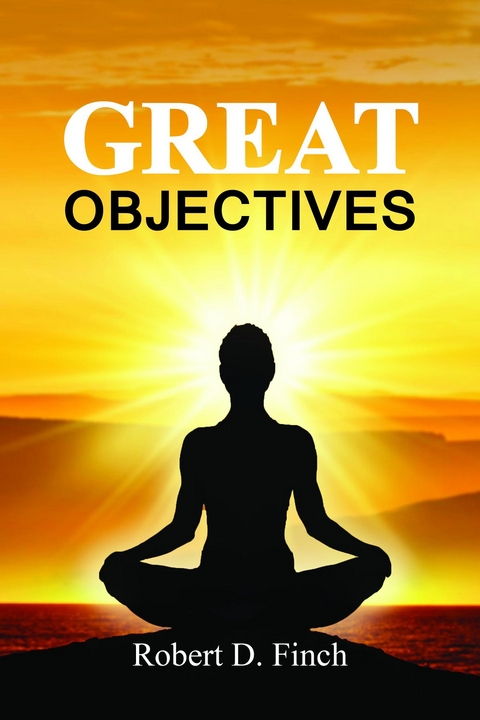
Great Objectives (eBook)

eBook Download: EPUB
2017
500 Seiten
PageTurner, Press and Media (Verlag)
978-1-948304-17-7 (ISBN)

Lese- und Medienproben

Great Objectives -  Robert D. Finch
Systemvoraussetzungen
3,65 inkl. MwSt
(CHF 3,55)
Der eBook-Verkauf erfolgt durch die Lehmanns Media GmbH (Berlin) zum Preis in Euro inkl. MwSt.
  • Download sofort lieferbar
  • Zahlungsarten anzeigen
Robert Bob Finch was educated at Imperial College, University of London, where he studied Physics and obtained his Ph.D. in 1963. While at college, he helped found a Humanist club called the Huxley Society, named after Thomas Henry Huxley who was a Professor at Imperial College. Bob and his wife have two children, Matthew and Christine.Upon completing a postdoctoral fellowship in the Physics Department of UCLA, Bob joined the faculty of Mechanical Engineering at the University of Houston in 1965, where he has been a Professor in Mechanical Engineering since 1972. He received the Biennial Award of the Acoustical Society of America in 1972 for research on liquid helium, and was also made a Fellow of that Society in the same year. He served as Chairman of the Mechanical Engineering Department at the University of Houston from 1976 to 1979.He also served as Assistant Executive Director of the Governors Energy Advisory Council, State of Texas, during the energy crisis of the early 1970s. He has some 40 technical publications in Acoustics. He is a Fellow of the Acoustical Society of America and was recipient of the Biennial Award of that Society in 1972. He retired from the University in 1998 and is now a Professor Emeritus. He is the author of the textbook Introduction to Acoustics published in 2005. He was President of the Humanists of Houston from 1992 to 1997, and has published some 20 papers on Humanism. He was elected Vice-Chairman of the Chapter Assembly of the American Humanist Association in 1999, and to the AHA Board in 2002. He is also on the Board of the Imperial College Foundation. He has also been President of the University of Houston Retirees Association.In his book Utilitarianism, John Stuart Mill refers to the great objects of human life. We may assume that what Mill calls an object is the same as an objective in modern parlance. The examples of great objectives that Mill cites include power, fame, and money. One wonders how seriously Mill was actually endorsing such aims to be the overarching objectives of living or whether he was simply expressing his finding that many people actually do take such aims as these for life. The contention is that Mill was indeed recognizing that people do choose such goals in life. After all, happiness has been recognized as an objective of life at least since the time of Aristotle, and virtue has a similarly ancient pedigree. It is quite common for ordinary people to adopt such mottos as ';Healthy, wealthy, and wise' as aims for life. But we know that having more than one such value can lead to conflicts. This had been a concern to Sidgwick as well as other nineteenth-century moralists. A resolution to the problem was found by the time of the twentieth century, when it was realized that we should not try to achieve definite objectives, but instead look to some other procedure, such as a variety of evolution, to shape our objectives. In that case, we make plans and evaluate them, as we proceed. We should use our values, as Dewey recommended, for guideposts. The book discusses the methods of arriving at such plans and weighs some of the ethical and moral problems an individual or a society might face at the present time.
Erscheint lt. Verlag 22.12.2017
Sprache englisch
Themenwelt Schulbuch / Wörterbuch Schulbuch / Allgemeinbildende Schulen
Sozialwissenschaften Pädagogik Allgemeines / Lexika
Sozialwissenschaften Pädagogik Bildungstheorie
Schlagworte Educational • ethics • Great Objectives • Humanism • Philosophy • Robert D. Finch • Utilitarianism
ISBN-10 1-948304-17-1 / 1948304171
ISBN-13 978-1-948304-17-7 / 9781948304177
Informationen gemäß Produktsicherheitsverordnung (GPSR)
Haben Sie eine Frage zum Produkt?
EPUBEPUB (Adobe DRM)

Kopierschutz: Adobe-DRM
Adobe-DRM ist ein Kopierschutz, der das eBook vor Mißbrauch schützen soll. Dabei wird das eBook bereits beim Download auf Ihre persönliche Adobe-ID autorisiert. Lesen können Sie das eBook dann nur auf den Geräten, welche ebenfalls auf Ihre Adobe-ID registriert sind.
Details zum Adobe-DRM

Dateiformat: EPUB (Electronic Publication)
EPUB ist ein offener Standard für eBooks und eignet sich besonders zur Darstellung von Belle­tristik und Sach­büchern. Der Fließ­text wird dynamisch an die Display- und Schrift­größe ange­passt. Auch für mobile Lese­geräte ist EPUB daher gut geeignet.

Systemvoraussetzungen:
PC/Mac: Mit einem PC oder Mac können Sie dieses eBook lesen. Sie benötigen eine Adobe-ID und die Software Adobe Digital Editions (kostenlos). Von der Benutzung der OverDrive Media Console raten wir Ihnen ab. Erfahrungsgemäß treten hier gehäuft Probleme mit dem Adobe DRM auf.
eReader: Dieses eBook kann mit (fast) allen eBook-Readern gelesen werden. Mit dem amazon-Kindle ist es aber nicht kompatibel.
Smartphone/Tablet: Egal ob Apple oder Android, dieses eBook können Sie lesen. Sie benötigen eine Adobe-ID sowie eine kostenlose App.
Geräteliste und zusätzliche Hinweise

Buying eBooks from abroad
For tax law reasons we can sell eBooks just within Germany and Switzerland. Regrettably we cannot fulfill eBook-orders from other countries.

Mehr entdecken
aus dem Bereich
Einführung in die Theorie transformatorischer Bildungsprozesse

von Hans-Christoph Koller

eBook Download (2023)
Kohlhammer Verlag
CHF 29,95
Einführung in die Theorie transformatorischer Bildungsprozesse

von Hans-Christoph Koller

eBook Download (2023)
Kohlhammer Verlag
CHF 29,95
Ihr individueller Weg: von der Themensuche zum Doktortitel

von Randi Gunzenhäuser; Erika Haas

eBook Download (2025)
UTB GmbH (Verlag)
CHF 17,55