


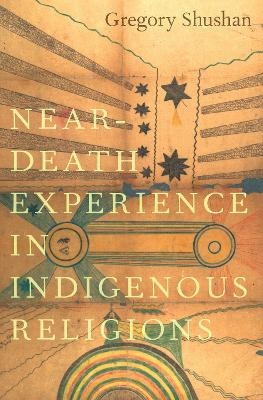
Near-Death Experience in Indigenous Religions
Seiten
2018
Oxford University Press Inc (Verlag)
978-0-19-087247-2 (ISBN)
Oxford University Press Inc (Verlag)
978-0-19-087247-2 (ISBN)
This book is a fascinating and engaging exploration of the interface between near-death experiences, afterlife beliefs, and shamanism in indigenous societies of North America, Africa, and Oceania. Incorporating ideas from anthropology, philosophy, psychology, and cognitive evolutionary science, the book explains the continuum of similarities and differences between these phenomena.
Near-death experiences are known around the world and throughout human history. They are sometimes reported by individuals who have revived from a period of clinical death or near-death and they typically feature sensations of leaving the body, entering and emerging from darkness, meeting deceased friends and relatives, encountering beings of light, judgment of one's earthly life, feelings of oneness, and reaching barriers, only to return to the body. Those who have NDEs almost invariably understand them as having profound spiritual or religious significance.
In this book, Gregory Shushan explores the relationships between near-death experiences, shamanism, and beliefs about the afterlife in traditional indigenous societies in Africa, North America, and Oceania. Drawing on historical accounts of the earliest encounters with explorers, missionaries, and ethnologists, this study addresses questions such as: Do ideas about the afterlife commonly originate in NDEs? What role does culture play in how people experience and interpret NDEs? How can we account for cross-cultural similarities and differences between afterlife beliefs? Though NDEs are universal, Shushan shows that how they are actually experienced and interpreted varies by region and culture. As the historical documents reveal, in North America, they were commonly valorized, and attempts were made to replicate them through shamanic rituals. In Africa, however, they were largely considered aberrational events with links to possession or sorcery. In Oceania, Micronesia corresponded more to the African model, while Australia had a greater focus on afterlife journey shamanism. Polynesia and Melanesia showed an almost casual acceptance of the phenomenon as reflected in numerous myths, legends, and historical accounts.
This study examines the continuum of similarities and differences between NDEs, shamanism, and afterlife beliefs in dozens of cultures throughout these regions. In the process, it makes a valuable contribution to our knowledge about the origins of afterlife beliefs around the world and the significance of related experiences in human history.
Near-death experiences are known around the world and throughout human history. They are sometimes reported by individuals who have revived from a period of clinical death or near-death and they typically feature sensations of leaving the body, entering and emerging from darkness, meeting deceased friends and relatives, encountering beings of light, judgment of one's earthly life, feelings of oneness, and reaching barriers, only to return to the body. Those who have NDEs almost invariably understand them as having profound spiritual or religious significance.
In this book, Gregory Shushan explores the relationships between near-death experiences, shamanism, and beliefs about the afterlife in traditional indigenous societies in Africa, North America, and Oceania. Drawing on historical accounts of the earliest encounters with explorers, missionaries, and ethnologists, this study addresses questions such as: Do ideas about the afterlife commonly originate in NDEs? What role does culture play in how people experience and interpret NDEs? How can we account for cross-cultural similarities and differences between afterlife beliefs? Though NDEs are universal, Shushan shows that how they are actually experienced and interpreted varies by region and culture. As the historical documents reveal, in North America, they were commonly valorized, and attempts were made to replicate them through shamanic rituals. In Africa, however, they were largely considered aberrational events with links to possession or sorcery. In Oceania, Micronesia corresponded more to the African model, while Australia had a greater focus on afterlife journey shamanism. Polynesia and Melanesia showed an almost casual acceptance of the phenomenon as reflected in numerous myths, legends, and historical accounts.
This study examines the continuum of similarities and differences between NDEs, shamanism, and afterlife beliefs in dozens of cultures throughout these regions. In the process, it makes a valuable contribution to our knowledge about the origins of afterlife beliefs around the world and the significance of related experiences in human history.
Gregory Shushan is an Honorary Research Fellow at the Religious Experience Research Centre, University of Wales Trinity Saint David. He is the author of Conceptions of the Afterlife in Early Civilizations and has been Research Fellow at Oxford University's Ian Ramsey Centre for Science and Religion and at the Centro Incontri Umani at Ascona, Switzerland.
Foreword by Allan Kellehear
Acknowledgements
I. Exploring Near-Death Experiences Across Cultures
II. North America
III. Africa
IV. Oceania
V. Interpretations, Implications, and Conclusions
Notes
References
Index
| Erscheinungsdatum | 20.09.2018 |
|---|---|
| Verlagsort | New York |
| Sprache | englisch |
| Maße | 236 x 157 mm |
| Gewicht | 499 g |
| Themenwelt | Geisteswissenschaften ► Psychologie ► Allgemeine Psychologie |
| Geisteswissenschaften ► Religion / Theologie | |
| Sozialwissenschaften ► Ethnologie | |
| Sozialwissenschaften ► Soziologie | |
| ISBN-10 | 0-19-087247-0 / 0190872470 |
| ISBN-13 | 978-0-19-087247-2 / 9780190872472 |
| Zustand | Neuware |
| Informationen gemäß Produktsicherheitsverordnung (GPSR) | |
| Haben Sie eine Frage zum Produkt? |
Mehr entdecken
aus dem Bereich


aus dem Bereich
Paket bestehend aus »Das Patienten-Manual« und »Das Trainer-Manual«
Buch | Softcover (2025)
Schattauer (Verlag)
CHF 125,95
Lernen, Emotion, Motivation, Gedächtnis
Buch | Softcover (2025)
Beltz (Verlag)
CHF 39,20


