NATO's Lessons in Crisis
Oxford University Press Inc (Verlag)
978-0-19-067218-8 (ISBN)
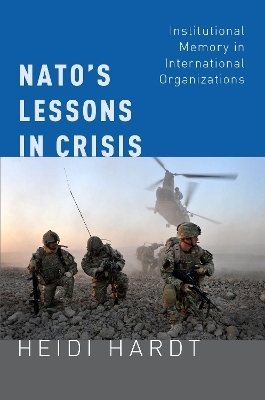
This book introduces an argument for how and why international organizations develop institutional memory of strategic errors. As Heidi Hardt shows, formal learning processes -- such as lessons learned offices and databases - can ironically deter elite officials from using the processes to share their relevant knowledge. Elites have few professional incentives to report observed strategic errors. As a result, most memory-building occurs behind the scenes via informal processes. These informal processes include elites' use of transnational interpersonal networks, private documentation, and conversations during crisis management exercises. Such processes ensure that institutional memory develops, but they do so at a price: an organization's memory is vulnerable to knowledge loss if even one critical elite chooses to retire.
Hardt tests her argument through extensive, original field research inside one of the world's largest crisis management organizations -- the North Atlantic Treaty Organization (NATO). She conducted interviews and a survey experiment with 120 NATO elites, including almost all NATO ambassadors and military representatives, all assistant secretary generals, and civilian and military leaders engaged in the decision-making and planning of operations. Her findings provide insights into NATO's institutional memory concerning three cases of crisis management in Afghanistan, Libya, and Ukraine. Ultimately, this book argues that formal learning processes alone are insufficient for an organization to capture knowledge, learn and change.
Heidi Hardt is an Assistant Professor of Political Science at the University of California, Irvine. Her research explains how and why international organizations perform in the ways that they do, particularly in the area of international conflict management. She is the author of Time to React: The Efficiency of International Organizations in Crisis Response (Oxford University Press, 2014). Her research has also been published in edited volumes and in journals, including Review of International Organizations, Global Governance, European Security and African Security.
Table of Contents
Abbreviations
Acknowledgements
Chapter 1: Lessons in Failure: Institutional Memory of Strategic Errors
Chapter 2: Tête à tête: The Informal Development of Institutional Memory
Chapter 3: Dilemmas in Design: Constraints on Sharing Knowledge of Errors
Chapter 4: See No Evil: Reflections on Errors in Afghanistan, Libya and Ukraine
Chapter 5: Hear No Evil: The Informal Processes of Sharing Knowledge of Errors
Chapter 6: Speak No Evil: The Sources that Spur Knowledge Sharing of Errors
Chapter 7: A Reactive Culture: Why the Informal Development of Memory Persists
Chapter 8: Conclusion: Toward Total Recall in International Organizations
Appendix
Notes
Bibliography
Index
| Erscheinungsdatum | 12.06.2018 |
|---|---|
| Verlagsort | New York |
| Sprache | englisch |
| Maße | 231 x 155 mm |
| Gewicht | 417 g |
| Themenwelt | Sozialwissenschaften ► Politik / Verwaltung ► Europäische / Internationale Politik |
| Sozialwissenschaften ► Politik / Verwaltung ► Vergleichende Politikwissenschaften | |
| ISBN-10 | 0-19-067218-8 / 0190672188 |
| ISBN-13 | 978-0-19-067218-8 / 9780190672188 |
| Zustand | Neuware |
| Informationen gemäß Produktsicherheitsverordnung (GPSR) | |
| Haben Sie eine Frage zum Produkt? |
aus dem Bereich