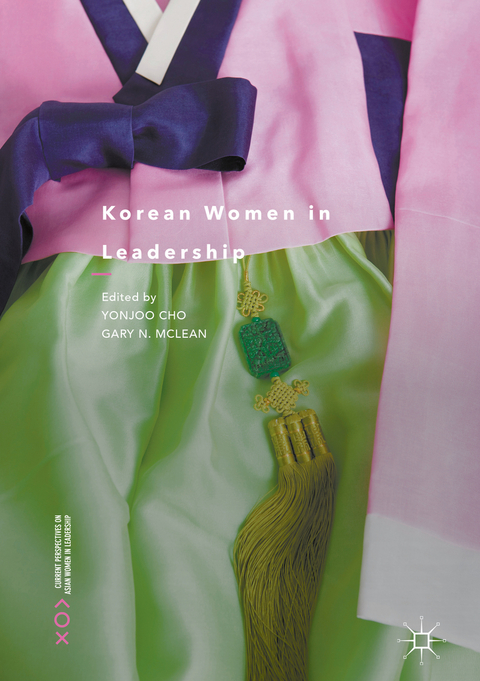
Korean Women in Leadership (eBook)
XIII, 297 Seiten
Springer International Publishing (Verlag)
9783319642710 (ISBN)
The book focuses on the historical, political, economic, and cultural elements of Korea and the strong influence these have on women leaders in the nation. It examines challenges and opportunities for women leaders as they try to balance their professional and personal lives. A team of leading experts familiar with the aspirations and frustrations of Korean women offer insight into the coexistence of traditional and modern values. It is an eye-opening look at the convergence and divergence across Korean sectors that international leadership researchers, students, and managers need to know in order to realize and appreciate the potential of Korean women leaders.
Yonjoo Cho is Associate Professor of Instructional Systems Technology at Indiana University, USA. She serves as an Associate Editor of the Human Resource Development Review and also serves on the Editorial Advisory Board of the Human Resource Development Quarterly, European Journal of Training and Development, and Action Learning: Research and Practice.
Gary N. McLean is President of McLean Global Consulting, Inc. and Professor Emeritus at the University of Minnesota, USA. He is the editor of Korean Philately and served as president of the AHRD and the International Management Development Association.
Yonjoo Cho is Associate Professor of Instructional Systems Technology at Indiana University, USA. She serves as an Associate Editor of the Human Resource Development Review and also serves on the Editorial Advisory Board of the Human Resource Development Quarterly, European Journal of Training and Development, and Action Learning: Research and Practice.Gary N. McLean is President of McLean Global Consulting, Inc. and Professor Emeritus at the University of Minnesota, USA. He is the editor of Korean Philately and served as president of the AHRD and the International Management Development Association.
Acknowledgements 6
Contents 7
List of Figures 10
List of Tables 11
Part I: Introduction 12
Chapter 1: The Status of Women Leaders in South Korea: Challenges and Opportunities 13
Review of the Literature 14
Women Leaders 14
Women’s Leadership 14
Feminist Leadership 15
Gender Differences in Leadership 15
Women’s Participation in the Labor Market 17
Status of Women Leaders in Diverse Sectors 19
Political Sector 19
Government Administration and Legal Sector 20
Education Sector 20
Public Corporations 20
Private Corporations 22
Women Leaders’ Challenges 23
Gender Inequality 23
Token Status 24
Limited Behavior Patterns 24
Work–Life Balance and Career Interruptions 25
Opportunities for Women Leaders 26
Conclusion 28
References 28
Part II: Barriers and Challenges 32
Chapter 2: Korean Women in Leadership: Family Roles 33
The Meaning of Family in Korea 35
Women’s Role in Society 39
Challenges and Hopes for the Future 42
My Story 46
References 47
Chapter 3: Overcoming Cultural Constraints: Essential to Korean Women’s Leadership Success in Korea 50
Cultural Beliefs 52
How Cultural Beliefs Are Ingrained 53
What Role Do Ingrained Beliefs Play in the Gender Gap? 55
Path to Overcoming Cultural Constraints 56
Paradigm Shift in Thinking 56
Paradigm Shift in Learning from Conceptual to Transformative 59
Integration of Paradigm Shifts in Thinking and Learning 60
Dwell in Possibility 62
Recommendations for Future Research 63
Conclusion 63
References 64
Chapter 4: A New Perspective on Korean Women Leaders’ Career Development 69
Cultural Forces Affecting Korean Women’s Careers 70
Korean Women Leaders’ Career Orientation 72
Raising Awareness of Chance or Happenstance in the Korean Context 74
A New Perspective on Korean Women Leaders’ Career Development 77
Conclusion 79
References 79
Part III: Signs of Hope 85
Chapter 5: Policies and Legislation for Women in Korea from the 1990s to the Present 86
Women’s Policies Before the 1990s 88
Presidential Policies and Legislation for Women After the 1990s 89
President Kim Young-Sam 89
President Kim Dae-Jung 92
President Roh Moo-Hyun 94
President Lee Myung-Bak 95
Discussion 97
Conclusion 99
References 100
Chapter 6: Educational Opportunities for Developing Korean Women Leaders 104
Girls’ Opportunities in Elementary and Secondary Education 106
Women’s Opportunities in Higher Education 107
School-Based and Additional Educational Opportunities 109
School-Based Educational Opportunities 109
Additional Educational Opportunities 113
Challenges in Educational Opportunities for Leadership Development 116
Lack of Coordination in Programs 116
Differentiating a Niche 116
Recommendations for Research 117
Implications for Practice 118
Conclusion 119
References 120
Part IV: Sector Perspectives 124
Chapter 7: Women Leaders in the Corporate Sector 125
Background 126
Corporate Women Leaders in the Labor Market 127
Corporate Women Leaders’ Challenges 129
Cultural Constraints 130
Gendered Workplace 131
Work–Life Balance 131
Leadership Development 132
Opportunities for Corporate Women Leaders 132
Women’s Strengths as Leaders 133
Organizational Support for Leadership Development 134
Government’s Family-Friendly Policies 134
Future Research Agendas 135
Contextual Factors 135
Comparative Analyses 136
More Research Topics 137
Conclusion 138
References 138
Chapter 8: Women’s Leadership in Family Business Organizations 144
Understanding Family Business 145
Definition of Family Business 146
Further Understanding of Family Business 146
Gender Issues in Family Business Organizations 147
Family Embeddedness 148
Gendered Business Succession 149
Women-Led Family Business in Korea 151
Future of Women’s Leadership in Family Business 153
Conclusion and Implications for Future Research 154
References 155
Chapter 9: Women Entrepreneurs in Korea 162
Entrepreneurs, Entrepreneurship, and Leadership 163
Current Status of Women Entrepreneurs in Korea 164
Review of the Literature on Women and Entrepreneurship in Korea 166
Entrepreneurial Propensities 166
Motivation 167
Success Factors and Obstacles to Women Entrepreneurs 168
Government Support for Women Entrepreneurs in Korea 169
Cases of Women Entrepreneurs in Korea 171
Man-deok Kim (1739–1812): The First Korean Woman Entrepreneur 171
Romi Haan (1963–Present): Founder of HAAN 171
Young Ye Song (1967–Present): Founder of Banul Story 172
Recommendations 174
Recommendations for Future Research 174
Recommendations for Public Policy on Women Entrepreneurs 175
Conclusion 175
References 176
Chapter 10: Korean Women Leaders in the Government Sector 182
Women-Friendly Government Programs 184
Women’s Leadership Training and Development 184
Flexible Work Arrangements 186
Gender Equality Policies 189
Childcare Services 192
Discussion 194
Implications for Practice 194
Recommendations for Future Research 195
Conclusion 196
References 196
Chapter 11: Women Leaders in the Education Sector 200
History and the Current Status of Women Leaders in Education 202
K-12 Education Sector 202
Tertiary Education Sector 203
Women Leaders’ Challenges in the Education Sector 205
Cultural Constraints 205
Workplace Environment 206
Work-Life Balance 207
Leadership Development 208
Opportunities for Women Leaders’ Success in Education 209
Women’s Leadership Styles 209
Government Policies 210
Leadership Development Programs 211
Suggestions for Policies to Improve Women’s Education Leadership 212
Recommendations for Future Research 212
Conclusion 214
References 214
Chapter 12: Korean Women Leaders in the NGO Sector 220
Women’s Participation in NGOs 222
Organizational Culture and Women’s Leadership in NGOs 225
Feminist NGOs and Leadership 226
Suggestions for the Improvement of Women’s Leadership in NGOs 229
Recommendations for Future Research on Women’s Leadership in NGOs 230
Conclusion 232
References 233
Part V: International Perspectives 236
Chapter 13: Korean Women in Leadership in an Asian Context 237
Gender Roles in Asia 239
Confucianism and the Roles of Women 240
Gender Roles and Religion in Asia 240
Asian Women Leading in the Workplace 241
Dropping Out from the Workforce 242
Asian Women in Business Management 243
Asian Women Leading in Governance 245
Institutional Challenges and Support 247
Legal Support for Women 247
Educational Opportunities 249
Childcare and Maternity Leave 250
Networking 251
Role Models 251
Future Directions 252
Conclusion 253
References 254
Chapter 14: Women in Leadership: Non-Asian Context with a Focus on Higher Education 258
Japan and Germany: Ancestors or Cousins? 262
U.S.A.: The Model 264
Problem of the Pipeline 265
Leadership Styles 266
Glass Ceiling, Glass Cliff 267
Tokenism 268
Recommendations for Future Research 268
Conclusion 269
References 269
Part VI: Closing 273
Chapter 15: Convergence, Divergence, and Crossvergence Related to Women in Leadership: Where Does Korea Fit Globally? 274
Divergence 276
Convergence 278
Crossvergence 280
What Does the Future Hold for Women in Leadership in Korea? 282
References 286
Index 288
| Erscheint lt. Verlag | 27.11.2017 |
|---|---|
| Reihe/Serie | Current Perspectives on Asian Women in Leadership | Current Perspectives on Asian Women in Leadership |
| Zusatzinfo | XIII, 297 p. 7 illus., 6 illus. in color. |
| Verlagsort | Cham |
| Sprache | englisch |
| Themenwelt | Sachbuch/Ratgeber ► Beruf / Finanzen / Recht / Wirtschaft ► Bewerbung / Karriere |
| Sozialwissenschaften ► Politik / Verwaltung | |
| Wirtschaft ► Betriebswirtschaft / Management ► Personalwesen | |
| Schlagworte | career development • corporate sector • Family businesses • female leadership • Gender Gap • gender roles • gender roles in Asia • gender socialization • group favoritism • International Council of Women • Labor Market • leadership development in Asia • NGOs • OECD Countries • Women entrepreneurs • women in government • work-life balance |
| ISBN-13 | 9783319642710 / 9783319642710 |
| Informationen gemäß Produktsicherheitsverordnung (GPSR) | |
| Haben Sie eine Frage zum Produkt? |
 PDF (Wasserzeichen)
DRM: Digitales Wasserzeichen
Dieses eBook enthält ein digitales Wasserzeichen und ist damit für Sie personalisiert. Bei einer missbräuchlichen Weitergabe des eBooks an Dritte ist eine Rückverfolgung an die Quelle möglich.
Dateiformat: PDF (Portable Document Format)
Mit einem festen Seitenlayout eignet sich die PDF besonders für Fachbücher mit Spalten, Tabellen und Abbildungen. Eine PDF kann auf fast allen Geräten angezeigt werden, ist aber für kleine Displays (Smartphone, eReader) nur eingeschränkt geeignet.
Systemvoraussetzungen:
PC/Mac: Mit einem PC oder Mac können Sie dieses eBook lesen. Sie benötigen dafür einen PDF-Viewer - z.B. den Adobe Reader oder Adobe Digital Editions.
eReader: Dieses eBook kann mit (fast) allen eBook-Readern gelesen werden. Mit dem amazon-Kindle ist es aber nicht kompatibel.
Smartphone/Tablet: Egal ob Apple oder Android, dieses eBook können Sie lesen. Sie benötigen dafür einen PDF-Viewer - z.B. die kostenlose Adobe Digital Editions-App.
Buying eBooks from abroad
For tax law reasons we can sell eBooks just within Germany and Switzerland. Regrettably we cannot fulfill eBook-orders from other countries.
aus dem Bereich