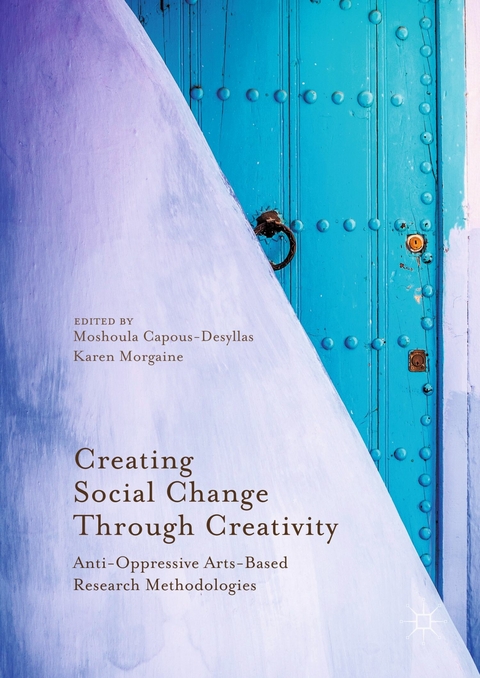
Creating Social Change Through Creativity (eBook)
XXXVII, 399 Seiten
Springer International Publishing (Verlag)
9783319521299 (ISBN)
Moshoula Capous-Desyllas is Associate Professor of Sociology at California State University, Northridge, USA. She teaches various courses related to anti-oppressive social work practice, diversity and social justice, and qualitative and arts-based research methods. Her passion lies in highlighting the voices of marginalized communities through the use of art as a form of activism, empowerment, and social change.Karen Morgaine is Associate Professor of Sociology at California State University, Northridge, USA. She teaches a variety of courses related to community organizing, anti-oppressive social work practice, and LGBTQQIP communities. Her research leans toward investigating social movement framing and power and privilege within social movements.
Preface 6
Contents 19
Editors and Contributors 23
List of Figures 32
Part I Co-construction of Knowledge & Positionality
Chapter 1 “To Speak in Our Own Ways About the World, Without Shame”: Reflections on Indigenous Resurgence in Anti-Oppressive Research 37
Introduction 37
Anti-oppressive Research and IndigenousPerspective 38
Reflection 1: Experiencing Oppression 38
Identity as an Epistemological Considerationin Anti-oppressive Research 40
Reflection 2: Listening with Wonder 40
First Nations in First Person: On Voice in Anti-Oppressive Research 43
Reflection 3: Learning Our Stories 43
Decolonization as a Conceptual Framework for Anti-oppressive Research 45
Reflection 4: Injustice in Prison 45
Indigenous Resurgence 47
Reflection 5: Practicing Our Culture 47
Resurgence in Sociopolitical Action 49
Reflection 6: A Pathway of Resurgence 49
Conclusion 50
Afterword 51
References 51
Chapter 2 Listening Through Performance: Identity, Embodiment, and Arts-Based Research 53
Moments of Rupture 57
Confronting the Critical Question 59
The War in Gaza 61
Arts-Based Research with Palestinians in Beit Jala 65
Conclusion 67
References 68
Chapter 3 The Role of Privilege and Oppression in Arts-Based Research: A Case Study of a Cisgender and Transgender Research Team 70
Introduction 70
Power, Difference, and the Research Relationship 72
Transgender Oppression and the Body 74
The Evolving Project 75
Conclusions 84
References 85
Part II Reflexivity and Listening 87
Chapter 4 Struggling to see Through the Eyes of Youth: On Failure and (Un)Certainty in a Photovoice Project 89
Case Study 91
On Impossible Dilemmas and the Possibilities of Failure 95
Resist Mastery 97
Privilege the Nonsensical 100
Suspect Memorialization 102
(In)Conclusion: Uncertainty and a Reflexivity of Discomfort 104
References 106
Chapter 5 Listen: The Defeat of Oppression by Expression 109
Narrative Change: Stories that Change Perceptions 111
Partnerships 112
Process 113
Presentation 116
Policy 118
Participatory Research 119
Impact 120
Challenges 123
References 124
Chapter 6 Conversations with Suzanna: Exploring Gender, Motherhood, and Research Practice 126
Beginnings 126
The Research 126
Suzanna’s Story 127
The Defended Researcher 132
Meeting Again 133
Final Interview 136
Reflecting on Research Practice (Lessons Learned) 139
References 140
Part III Methodological Processes 141
Chapter 7 Insistent Humanness in Data Collection and Analysis: What Cannot be Taken Away—The Families and Prisons Project 143
Background 143
Intro 144
Art and Participation in Public Health Research 145
Methods of Data Collection and Analysis 148
The Orange Meditation 148
Paper Sculptures 150
A Continuing Inventory 152
The Final Portraits 152
Learnings from Analysis 152
Analysis as Implicit Critique? 154
Data Collection, Representation, and Public Health—Insistent Humanness 155
Data Representation as a Political Act 155
Expanding Rigor 157
The Role of Dialogue 158
Limitations 159
Conclusion 159
References 161
Chapter 8 Hearing Embodied Narrative: Use of the Listening Guide with Juvenile Justice Involved LGBTQ Young People 164
Introduction 164
Poetry in Research 165
Methodological Background and Process 166
Community Advisory Board 167
Data Collection and Analysis 168
Researcher Field Notes, Reflexivity, and Somatic Processes 171
Three Participants and Their “I Poems” 172
Discussion 176
References 177
Chapter 9 Mapping Social and Gender Inequalities: An Analysis of Art and New Media Work Created by Adolescent Girls in a Juvenile Arbitration Program 179
Context: A Campus-Community Collaboration 180
Framework: Feminist Intersectionality 181
Feminist Intersectional Collaborative Analysis of Girls’ Art and New Media Work 183
Relationships 185
Body Image 190
Agency 193
Situating Feminist Intersectional Collaborative Artwork Analysis Within the Anti-oppressive Research Methodologies 195
References 197
Chapter 10 Smoking Cessation in Mental Health Communities: A Living Newspaper Applied Theatre Project 199
The Living Newspaper Theatre Form 200
Project Context 203
Mixed Messages: Our “Modern” Living Newspaper 204
Researcher Positionality 205
Anti-Oppressive Art-Based Data Collection 206
A Limitation of the Form 210
Conclusion 212
References 213
Part IV Politics of Methodology and Data Representation 215
Chapter 11 What’s in an Image?: Towards a Critical and Interdisciplinary Reading of Participatory Visual Methods 217
Introduction 217
Participatory Visual Methods: An Overview 219
Participatory Photo-Based Methods: A Case for Looking 220
Troubling the Field: Photography, Power and the “Rhetoric of Effects” 221
Photography and the “Truth Effect” 223
Photography, Representation and Visual Literacies 225
The Rhetoric of Participation 226
Implications for Practice 228
Conclusion 230
References 232
Chapter 12 From Visual Maps to Installation Art: Visualizing Client Pathways to Social Services in Los Angeles 236
Introduction 237
Locating Ourselves 238
Student Visual Maps as Data 239
Preparing and Analyzing the Visual Mappings 241
Representing the Analysis: From Visual Maps to Installation Art 242
From Process to Product: Embodied Ways of Knowing 246
Audience Engagement as Anti-Oppressive Research Practice 247
Concluding Thoughts 249
References 252
Chapter 13 FragmentsLayersJuxtaposition: Collage as a Data-Analysis Practice 254
Envision 255
Collect 257
Immerse 259
Sift 260
Choose 261
CutArrangeRearrange 262
GlueLayer 264
Step Back 265
Integrate 267
References 267
Part V Community Sharing for Social Change 269
Chapter 14 This is not a Lab Coat: Claiming Knowledge Production as Power 271
Need to Know Information: Background on Polling for Justice 274
“We Are All Bound up Together”—Frances Ellen Watkins Harper 275
Some Key Study Results 276
Devising Dr. Researchy 277
Scripting Distributed Expertise 279
On How Participatory Artistic Embodiment Worked 279
Theorizing Collectively via Developing an Artistic Language 280
The Data Performance Lab 281
On Play 282
On Building a Collective Across Generation and Difference 284
In Conclusion: Lab Coat as Theoretical Contribution and Political Provocation 285
References 288
Chapter 15 Making Research and Building Knowledge with Communities: Examining Three Participatory Visual and Narrative Projects with Migrants Who Sell Sex in South Africa 291
Setting the Scene: Migration and Sex Work in South Africa 291
Re-thinking Research: Opportunities and Challenges in Participatory Research Approaches 292
Method: Visual: Explore: Exploring Ways of Doing Research Differently 294
The Three Projects 295
Working the City 296
Volume 44 299
Izwi Lethu: Our Voices: A Newsletter for Sex Workers by Sex Workers 305
Concluding Thoughts and Reflections 308
References 310
Chapter 16 AEMP Handbook by The Anti-Eviction Mapping Project (AEMP) 314
Who We Are 314
A Timeline of the Project 315
The Work We Do 315
Radical Mapping in Action: Our Pledge Map 317
Art for Social Change: Our Clarion Alley Mural 317
Oral History Map: Narratives of Displacement and Resistance 318
The Anti-Eviction Mapping Project’s Zine 320
We Are Here 320
Mapping, Research, and Direct Action! 320
Fighting the Iantorno Ellis Act Evictions 320
Radical Mapping 323
Why an Oral History Project? 324
Field Guide to Oral History Interviewing 325
The Interview 325
The BiographicalStorytelling Approach 325
Follow-up Questions 326
Closed Questions 326
General Tips 327
Themes We Might Want to Touch on in These Interviews 327
Emotions, Talking About Loss, Being “With” Your Narrator 328
Appendix of Terms You Need to Know 329
Part VI Community Building and Engagement 334
Chapter 17 From the Inside Out: Using Arts-Based Research to Make Prison Art Public 336
Implementing Project PAINT 336
Potential of Anti-oppressive Arts-Based Research 339
Inductive Research 340
Theoretical Framework 342
Prisons 342
Prison Arts Programs 343
Arts-Based Research 344
Participatory Approach to Research 344
Working with an Incarcerated Population 345
Curating the Exhibitions 347
Audience Feedback at the Exhibitions 347
Dialogue with Prisoners About Their Art 348
Art as a Form of Pedagogy 350
Messages in Art 352
Impact on Public 353
References 353
Chapter 18 Envisioning Home: The Philadelphia Refugee Mental Health Photovoice Project as a Story of Effective Relationship Building 356
Prologue 358
Setting the Stage: Understanding Refugee Resettlement 358
ACT 1: Building the Foundations of Partnership and Research Planning 360
Identifying the Characters 362
ACT 2: Community Engagement and Research Implementation 363
ACT 3: Data Analysis 368
ACT 4: The Narrative of Outcomes—from Research to Action 370
The Final Act: The Work Continues 373
References 377
Part VII Pedagogical Approaches 378
Chapter 19 Spoken Word as Border Pedagogy with LGBTQ Youth 380
Sounds of Change: Details of the Workshop 384
Performance as Border Pedagogy 386
Disrupting the Grand Narrative 388
Recreating Space in Gay–Straight Alliances 389
Fragmentation and Hyperreality: Listening Across Sounds in Community 390
Mashup! Polyphonic Layers as Reflections on Community 393
Reflections on Quality 395
References 396
Chapter 20 Lessons in Dialogue, Ethics, and the Departure from Well-Laid Plans in the Cultivation of Citizen Artists 398
Dialogue as an Anti-Oppressive Theoretical Framework 400
Why Dialogic Artmaking? 402
The Design and Methodology: Two Woven Strands 402
Action Research and Arts-Based Educational Research 403
The Contact Zone and the CADDI Partnership 404
Don’t Talk With Strangers 405
Dialogic Art-Making and Letting Go of the Conversation: Analysis of the Project 407
Relevance and Relationships 408
Context, Power, and Privilege 409
Overall Findings and Closing Thoughts 411
References 412
Index 415
| Erscheint lt. Verlag | 7.11.2017 |
|---|---|
| Zusatzinfo | XXXVII, 399 p. 49 illus., 42 illus. in color. |
| Verlagsort | Cham |
| Sprache | englisch |
| Themenwelt | Sozialwissenschaften ► Pädagogik ► Sozialpädagogik |
| Sozialwissenschaften ► Soziologie | |
| Schlagworte | auto-ethnography • Community Building • Community Psychology • Identity • marginalization • marginalized communities • Oppressed communities • performing arts • social change • Social change work • social development • Social Work • Visual Research |
| ISBN-13 | 9783319521299 / 9783319521299 |
| Informationen gemäß Produktsicherheitsverordnung (GPSR) | |
| Haben Sie eine Frage zum Produkt? |
 PDF (Wasserzeichen)
DRM: Digitales Wasserzeichen
Dieses eBook enthält ein digitales Wasserzeichen und ist damit für Sie personalisiert. Bei einer missbräuchlichen Weitergabe des eBooks an Dritte ist eine Rückverfolgung an die Quelle möglich.
Dateiformat: PDF (Portable Document Format)
Mit einem festen Seitenlayout eignet sich die PDF besonders für Fachbücher mit Spalten, Tabellen und Abbildungen. Eine PDF kann auf fast allen Geräten angezeigt werden, ist aber für kleine Displays (Smartphone, eReader) nur eingeschränkt geeignet.
Systemvoraussetzungen:
PC/Mac: Mit einem PC oder Mac können Sie dieses eBook lesen. Sie benötigen dafür einen PDF-Viewer - z.B. den Adobe Reader oder Adobe Digital Editions.
eReader: Dieses eBook kann mit (fast) allen eBook-Readern gelesen werden. Mit dem amazon-Kindle ist es aber nicht kompatibel.
Smartphone/Tablet: Egal ob Apple oder Android, dieses eBook können Sie lesen. Sie benötigen dafür einen PDF-Viewer - z.B. die kostenlose Adobe Digital Editions-App.
Buying eBooks from abroad
For tax law reasons we can sell eBooks just within Germany and Switzerland. Regrettably we cannot fulfill eBook-orders from other countries.
aus dem Bereich