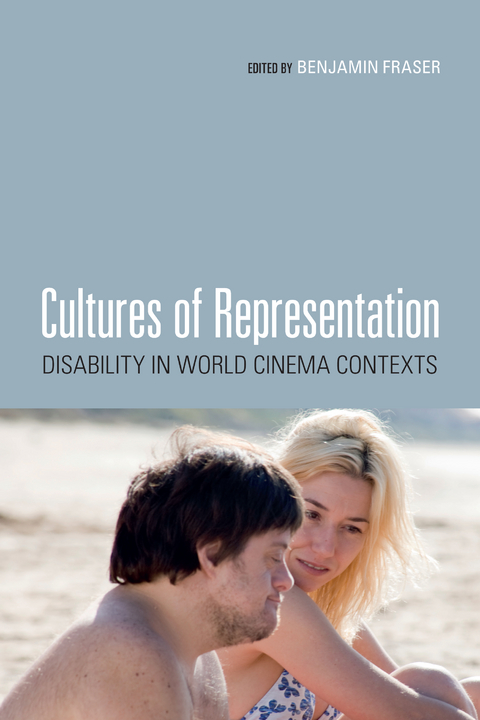
Cultures of Representation (eBook)
Columbia University Press (Verlag)
978-0-231-85096-4 (ISBN)
Benjamin Fraser is professor of Hispanic studies at East Carolina University. Among his book publications are Disability Studies and Spanish Culture: Films, Novels, the Comic, and the Public Exhibition and Deaf History and Culture in Spain: A Reader of Primary Documents. He is the executive editor of the Journal of Urban Cultural Studies, a senior editor at the Arizona Journal of Hispanic Cultural Studies, an associate editor at Hispania, and coeditor of the Hispanic Urban Studies book series.
AcknowledgmentsNotes on ContributorsIntroduction: Disability Studies, World Cinema and the Cognitive Code of Reality, by Benjamin FraserGlobal In(ter)dependent Disability Cinema: Targeting Ephemeral Domains of Belief and Cultivating Aficionados of the Body, by David T. Mitchell and Sharon L. Snyder 'Beyond Forgiveness'? Lee Chang-dong's Oasis (2002) and the Mobilisation of Disability Discourses in the Korean New Wave, by Paul PetrovicRefusing Chromosomal Pairing: Inclusion, Disabled Masculinity, Sexuality and Intimacy in Yo mama, también (2009), by Michael GillDunce! Duffer! Dimwit!: Dyslexia in Bollywood's Taare Zameen Par (2007), by Sanjukta GhoshLandscapes of Children: Picturing Disability in Buñuel's Los olvidados (1950), by Susan AntebiFearful Reflections: Representations of Disability in Postwar Dutch Cinema (1973–2011), by Mitzi Waltz 'People Endure': The Function of Autism in Anton's Right Here (2012), by José Alaniz Displaying Autism: The Thinking and Images of Temple Grandin (2010), by Katherine LashleyMore than the 'Other'? On Four Tendencies Regarding the Representation of Disability in Contemporary German Film (2005–2010), by Petra AndersThe Other Body: Psychiatric Disability and Pedro Almodóvar (1988–2011), by Candace Skibba On the Road to Normalcy: European Road Movies and Disability (2002–2011), by Anna Grebe Re-envisioning Italy's 'New Man' in Bella non piangere! (1955), by Jennifer Griffiths 'Get Your Legs Back': Avatar (2009) and the Re-booting of American Individualism, by Susan FlynnThrough the Disability Lens: Revisiting Ousmane Sembène's Xala (1975) and Camp de Thiaroye (1988), by Ken Junior Lipenga Homes Wretched and Wrecked: Disability as Social Dis-ease in Kurosawa's Dodes'ka-den (1970), by James A. WrenLeprosy and the Dialectical Body in Forugh Farrokhzad's The House is Black (1964), by Rosa Holman Index
| Erscheint lt. Verlag | 8.3.2016 |
|---|---|
| Verlagsort | New York |
| Sprache | englisch |
| Themenwelt | Kunst / Musik / Theater ► Film / TV |
| Kunst / Musik / Theater ► Theater / Ballett | |
| Sozialwissenschaften ► Kommunikation / Medien ► Medienwissenschaft | |
| Sozialwissenschaften ► Soziologie | |
| ISBN-10 | 0-231-85096-4 / 0231850964 |
| ISBN-13 | 978-0-231-85096-4 / 9780231850964 |
| Informationen gemäß Produktsicherheitsverordnung (GPSR) | |
| Haben Sie eine Frage zum Produkt? |
 EPUB (Adobe DRM)
Kopierschutz: Adobe-DRM
Adobe-DRM ist ein Kopierschutz, der das eBook vor Mißbrauch schützen soll. Dabei wird das eBook bereits beim Download auf Ihre persönliche Adobe-ID autorisiert. Lesen können Sie das eBook dann nur auf den Geräten, welche ebenfalls auf Ihre Adobe-ID registriert sind.
Details zum Adobe-DRM
Dateiformat: EPUB (Electronic Publication)
EPUB ist ein offener Standard für eBooks und eignet sich besonders zur Darstellung von Belletristik und Sachbüchern. Der Fließtext wird dynamisch an die Display- und Schriftgröße angepasst. Auch für mobile Lesegeräte ist EPUB daher gut geeignet.
Systemvoraussetzungen:
PC/Mac: Mit einem PC oder Mac können Sie dieses eBook lesen. Sie benötigen eine
eReader: Dieses eBook kann mit (fast) allen eBook-Readern gelesen werden. Mit dem amazon-Kindle ist es aber nicht kompatibel.
Smartphone/Tablet: Egal ob Apple oder Android, dieses eBook können Sie lesen. Sie benötigen eine
Geräteliste und zusätzliche Hinweise
Buying eBooks from abroad
For tax law reasons we can sell eBooks just within Germany and Switzerland. Regrettably we cannot fulfill eBook-orders from other countries.
aus dem Bereich