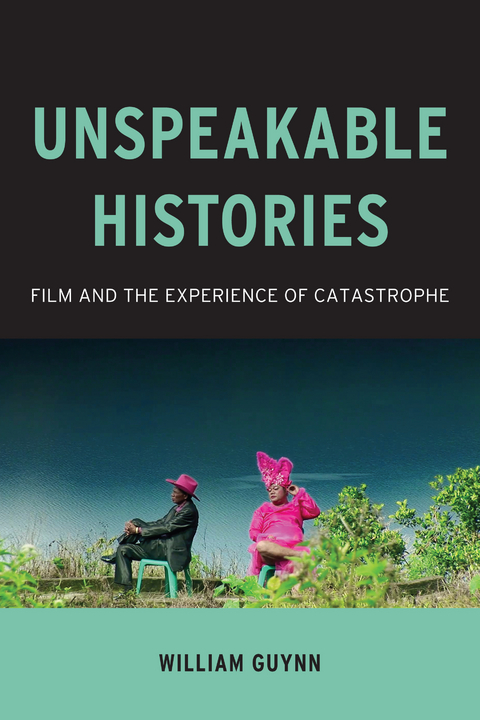
Unspeakable Histories (eBook)
Columbia University Press (Verlag)
978-0-231-54196-1 (ISBN)
In Unspeakable Histories, William Guynn focuses on the sensation of encountering past events through film. Film is capable, he argues, of triggering moments of heightened awareness in which the barrier between the past and the present can fall and the reality of the past we thought lost can be momentarily rediscovered in its material being. In his readings of seven exceptional works depicting twentieth century atrocities, Guynn explores the emotional resonance that still adheres to traumatic historical events. Guynn considers dimensions of experience that historiography leaves untouched. Yael Hersonski's A Film Unfinished (2010) deconstructs scenes from the Nazi propaganda film Das Ghetto through the testimony of ghetto survivors. Andrzej Wajda's Katyn (2007) revivifies the murder of the Polish officer corps (in which Wajda's father perished) by Stalin's security forces during the Second World War. Andrei Konchalovsky's Siberiade (1979) reimagines the turbulent history of the Soviet Union from the perspective of an isolated Siberian village. Larissa Shepitko's The Ascent (1977) evokes the existential drama Soviet partisans faced during the Nazi occupation. Patricio Guzman's Nostalgia for the Light (2011) examines the vestiges of human experience, including the scattered remains of Pinochet's victims, alive in the aridity of the Atacama Desert. Rithy Panh's S-21 (2003) reawakens events of the Cambodian genocide through dramatic confrontation with some of its executioners, and Joshua Oppenheimer's The Act of Killing (2012) films the perpetrators of the Indonesian genocide as they restage scenes of killings and torture. Inspired by the work of Walter Benjamin, Frank Ankersmit, Joseph Mali, and Simon Schama, Guynn argues that the film medium, more immediate than language, is capable of restoring the affective dimension of historical experience, rooted in the deepest reaches of our minds.
William Guynn is professor emeritus of art (cinema) at Sonoma State University. He is the author of Writing History in Film (2006) and the editor of The Routledge Companion to Film History (2010).
Introduction: Making Experience Speak1. Yaël Hersonski's A Film Unfinished2. Andrzej Wajda's Katyn3. Andrei Konchalovsky's Siberiade4. Larisa Shepitko's The Ascent5. Patricio Guzmán's Nostalgia for the Light6. Rithy Panh's S21: The Khmer Rouge Killing Machine7. Joshua Oppenheimer's The Act of KillingEpilogueNotesBibliographyIndex
| Erscheint lt. Verlag | 6.9.2016 |
|---|---|
| Reihe/Serie | Film and Culture Series | Film and Culture Series |
| Verlagsort | New York |
| Sprache | englisch |
| Themenwelt | Kunst / Musik / Theater ► Film / TV |
| Kunst / Musik / Theater ► Theater / Ballett | |
| Geisteswissenschaften ► Geschichte | |
| Sozialwissenschaften ► Kommunikation / Medien ► Medienwissenschaft | |
| ISBN-10 | 0-231-54196-1 / 0231541961 |
| ISBN-13 | 978-0-231-54196-1 / 9780231541961 |
| Informationen gemäß Produktsicherheitsverordnung (GPSR) | |
| Haben Sie eine Frage zum Produkt? |
 EPUB (Adobe DRM)
Kopierschutz: Adobe-DRM
Adobe-DRM ist ein Kopierschutz, der das eBook vor Mißbrauch schützen soll. Dabei wird das eBook bereits beim Download auf Ihre persönliche Adobe-ID autorisiert. Lesen können Sie das eBook dann nur auf den Geräten, welche ebenfalls auf Ihre Adobe-ID registriert sind.
Details zum Adobe-DRM
Dateiformat: EPUB (Electronic Publication)
EPUB ist ein offener Standard für eBooks und eignet sich besonders zur Darstellung von Belletristik und Sachbüchern. Der Fließtext wird dynamisch an die Display- und Schriftgröße angepasst. Auch für mobile Lesegeräte ist EPUB daher gut geeignet.
Systemvoraussetzungen:
PC/Mac: Mit einem PC oder Mac können Sie dieses eBook lesen. Sie benötigen eine
eReader: Dieses eBook kann mit (fast) allen eBook-Readern gelesen werden. Mit dem amazon-Kindle ist es aber nicht kompatibel.
Smartphone/Tablet: Egal ob Apple oder Android, dieses eBook können Sie lesen. Sie benötigen eine
Geräteliste und zusätzliche Hinweise
Buying eBooks from abroad
For tax law reasons we can sell eBooks just within Germany and Switzerland. Regrettably we cannot fulfill eBook-orders from other countries.
aus dem Bereich