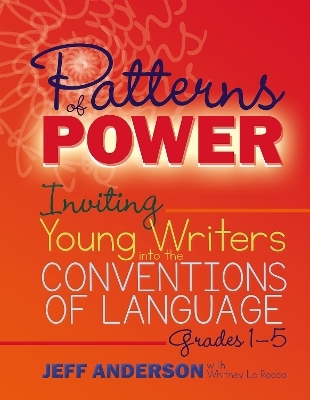
Patterns of Power
Stenhouse Publishers (Verlag)
978-1-62531-185-6 (ISBN)
The first part of the book introduces a vibrant approach to grammar instruction and sets up what you need to immerse yourself in the Patterns of Power process, inviting students to experiment and play with language. The second part of the book offers over seventy practical, ready-to-use lessons, including:
Extensive support materials
Over 100 mentor sentences, curated for grades 1-5
Student work samples
Tips and power notes to facilitate your own knowledge and learning
Examples for application
In Patterns of Power Jeff and Whitney suggest that taking just five minutes from your reading workshop and five minutes from your writing workshop to focus on how the conventions connect reading and writing will miraculously affect your students' understanding of how language works for readers and writers.
Jeff Anderson spends his days writing and sharing strategies from his books Mechanically Inclined, Everyday Editing, 10 Things Every Writer Needs to Know, Revision Decisions, and Patterns of Power with teachers across the U.S. His new joy is talking to students about his middle-grades fiction, including Zack Delacruz: Me and My Big Mouth, recently selected for Pennsylvania's Keystone Reading List. Whitney La Rocca, a K-5 literacy coach in Katy, Texas, connected with Jeff at one of his staff developments. They immediately began refining the invitation process for younger writers. Working in tandem for three years, they collaborated to create the work you hold in your hands.
Introduction; Part 1: Getting Started with the Patterns of Power Process; 1: Into Planning: What Do You Need to Do Before Teaching the Invitations?; 2: Into the Classroom: How Do You Teach Conventions with the Invitations Process?; 3: Into Application: How Do You Ensure Writers Apply What They Know?; Part 2: Into the Patterns of Power Lesson Sets; The Power of Sentences; 4: What Do Capital Letters Do?; 5: What Do Nouns Do?; 6: What Do Verbs Do?; 7: What Do Sentences Do?; 8: What Do End Marks Do?; The Power of Pairs; 9: What Do Apostrophes Do?; 10: What Do Pronouns Do?; 11: How Do Verbs and Nouns Agree?; 12: Which Punctuation Comes in Pairs?; The Power of Details; 13: What Do Adjectives Do?; 14: What Do Comparatives and Superlatives Do?; 15: What Do Adverbs Do?; 16: What Do Prepositions Do?; The Power of Combining; 17: What Do Conjunctions Do?; 18: Why Do Writers Use Compound Sentences?; 19: Why Do Writers Use the Serial Comma?; 20: Why Do Writers Use Complex Sentences?; Conclusion Look Up!
| Erscheinungsdatum | 01.02.2018 |
|---|---|
| Verlagsort | York, Maine |
| Sprache | englisch |
| Maße | 152 x 229 mm |
| Gewicht | 1280 g |
| Themenwelt | Sozialwissenschaften ► Pädagogik ► Schulpädagogik / Grundschule |
| Sozialwissenschaften ► Pädagogik ► Vorschulpädagogik | |
| ISBN-10 | 1-62531-185-0 / 1625311850 |
| ISBN-13 | 978-1-62531-185-6 / 9781625311856 |
| Zustand | Neuware |
| Informationen gemäß Produktsicherheitsverordnung (GPSR) | |
| Haben Sie eine Frage zum Produkt? |
aus dem Bereich