


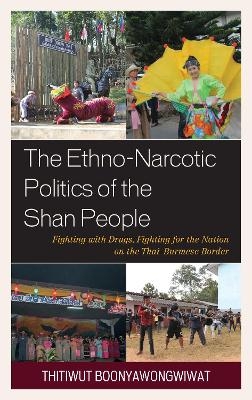
The Ethno-Narcotic Politics of the Shan People
Fighting with Drugs, Fighting for the Nation on the Thai–Burmese Border
Seiten
2017
Lexington Books (Verlag)
978-1-4985-2016-4 (ISBN)
Lexington Books (Verlag)
978-1-4985-2016-4 (ISBN)
This study examines the role of narcotics in the ethnic conflict along the Thai–Burmese border. The author analyzes the impact of the war on drugs on the Shan people, their relationship with the state, and their communal identity.
This book proposes the alternative explanation on the pattern of ethnic conflict, especially the on-going civil war in Myanmar. Previously, most scholars accepted that narcotics play the crucial role in conflict as the resource of revenues. However, this book dramatically changes what we have ever thought before. It investigated in both field and documentary research by examining the role of narcotics in the ideological formation process and ethnic identification process. Consequently, the so-called ethno-narcotic politics was found in the way that the role of narcotics was able to be used as the source of political mobilization in various ways. Furthermore, the borderland is the appropriated area where the process of anti-ethno-narcotics identification could be emerged and later used as the main identity for the ethnic groups who remain fighting against state’s power.
This book proposes the alternative explanation on the pattern of ethnic conflict, especially the on-going civil war in Myanmar. Previously, most scholars accepted that narcotics play the crucial role in conflict as the resource of revenues. However, this book dramatically changes what we have ever thought before. It investigated in both field and documentary research by examining the role of narcotics in the ideological formation process and ethnic identification process. Consequently, the so-called ethno-narcotic politics was found in the way that the role of narcotics was able to be used as the source of political mobilization in various ways. Furthermore, the borderland is the appropriated area where the process of anti-ethno-narcotics identification could be emerged and later used as the main identity for the ethnic groups who remain fighting against state’s power.
Thitiwut Boonyawongwiwat is lecturer at Chiang Mai University.
Chapter 1: Why (Anti-) Ethno-Narcotic Politics?
Chapter 2: The Shan People in the Unfinished Civil War
Chapter 3: The Anti-Narcotic Ideology of the Thai State on the Thai–Burmese Border
Chapter 4: The Anti-Ethno-Narcotic Nationalism in Ethnic Conflict
Chapter 5: Ethnic Identity and Community: Hin Taek Village as the Site of Reconstruction of Shan Identity
Conclusion: Trajectories of Anti-Ethno-Narcotic Politicization
| Erscheinungsdatum | 14.02.2018 |
|---|---|
| Zusatzinfo | 1 Graph, 5 Tables |
| Sprache | englisch |
| Maße | 159 x 239 mm |
| Gewicht | 413 g |
| Themenwelt | Sozialwissenschaften ► Ethnologie |
| Sozialwissenschaften ► Soziologie | |
| ISBN-10 | 1-4985-2016-2 / 1498520162 |
| ISBN-13 | 978-1-4985-2016-4 / 9781498520164 |
| Zustand | Neuware |
| Informationen gemäß Produktsicherheitsverordnung (GPSR) | |
| Haben Sie eine Frage zum Produkt? |
Mehr entdecken
aus dem Bereich


aus dem Bereich
ethnographische Texte
Buch | Hardcover (2025)
Konstanz University Press (Verlag)
CHF 36,40
Migration, Körper und Kämpfe ums Ankommen
Buch | Softcover (2025)
transcript (Verlag)
CHF 62,95
Prolegomena zu einer Geschichte der Magie
Buch | Hardcover (2025)
Matthes & Seitz Berlin (Verlag)
CHF 53,20


