The Gulag after Stalin (eBook)
280 Seiten
Cornell University Press (Verlag)
978-1-5017-0659-2 (ISBN)

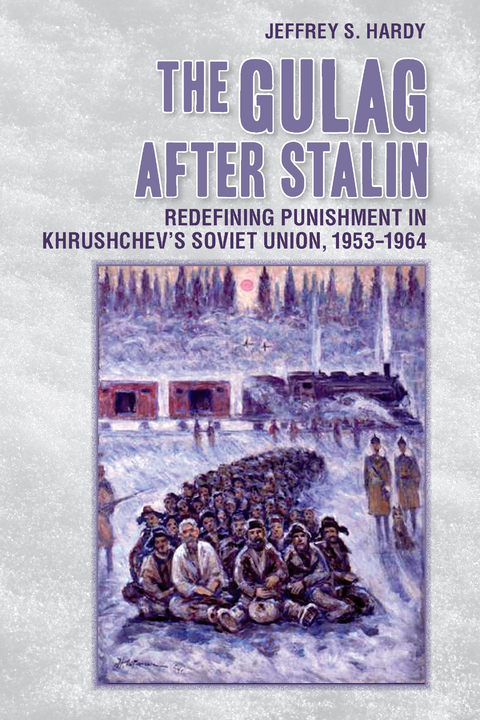
In The Gulag after Stalin, Jeffrey S. Hardy reveals how the vast Soviet penal system was reimagined and reformed in the wake of Stalin's death.
In The Gulag after Stalin, Jeffrey S. Hardy reveals how the vast Soviet penal system was reimagined and reformed in the wake of Stalin's death. Hardy argues that penal reform in the 1950s was a serious endeavor intended to transform the Gulag into a humane institution that reeducated criminals into honest Soviet citizens. Under the leadership of Minister of Internal Affairs Nikolai Dudorov, a Khrushchev appointee, this drive to change the Gulag into a "progressive" system where criminals were reformed through a combination of education, vocational training, leniency, sport, labor, cultural programs, and self-governance was both sincere and at least partially effective.
The new vision for the Gulag faced many obstacles. Reeducation proved difficult to quantify, a serious liability in a statistics-obsessed state. The entrenched habits of Gulag officials and the prisoner-guard power dynamic mitigated the effect of the post-Stalin reforms. And the Soviet public never fully accepted the new policies of leniency and the humane treatment of criminals. In the late 1950s, they joined with a coalition of party officials, criminologists, procurators, newspaper reporters, and some penal administrators to rally around the slogan "The camp is not a resort" and succeeded in reimposing harsher conditions for inmates. By the mid-1960s the Soviet Gulag had emerged as a hybrid system forged from the old Stalinist system, the vision promoted by Khrushchev and others in the mid-1950s, and the ensuing counterreform movement. This new penal equilibrium largely persisted until the fall of the Soviet Union.
In The Gulag after Stalin, Jeffrey S. Hardy reveals how the vast Soviet penal system was reimagined and reformed in the wake of Stalin's death. Hardy argues that penal reform in the 1950s was a serious endeavor intended to transform the Gulag into a humane institution that reeducated criminals into honest Soviet citizens. Under the leadership of Minister of Internal Affairs Nikolai Dudorov, a Khrushchev appointee, this drive to change the Gulag into a "progressive" system where criminals were reformed through a combination of education, vocational training, leniency, sport, labor, cultural programs, and self-governance was both sincere and at least partially effective.
The new vision for the Gulag faced many obstacles. Reeducation proved difficult to quantify, a serious liability in a statistics-obsessed state. The entrenched habits of Gulag officials and the prisoner-guard power dynamic mitigated the effect of the post-Stalin reforms. And the Soviet public never fully accepted the new policies of leniency and the humane treatment of criminals. In the late 1950s, they joined with a coalition of party officials, criminologists, procurators, newspaper reporters, and some penal administrators to rally around the slogan "The camp is not a resort" and succeeded in reimposing harsher conditions for inmates. By the mid-1960s the Soviet Gulag had emerged as a hybrid system forged from the old Stalinist system, the vision promoted by Khrushchev and others in the mid-1950s, and the ensuing counterreform movement. This new penal equilibrium largely persisted until the fall of the Soviet Union.
Jeffrey S. Hardy is Assistant Professor of History at Brigham Young University.
| Erscheint lt. Verlag | 3.11.2016 |
|---|---|
| Verlagsort | Ithaca |
| Sprache | englisch |
| Maße | 150 x 150 mm |
| Themenwelt | Geschichte ► Allgemeine Geschichte ► Neuzeit (bis 1918) |
| Geschichte ► Allgemeine Geschichte ► Zeitgeschichte | |
| Geisteswissenschaften ► Geschichte ► Regional- / Ländergeschichte | |
| Recht / Steuern ► Strafrecht ► Kriminologie | |
| Sozialwissenschaften ► Pädagogik | |
| Sozialwissenschaften ► Politik / Verwaltung ► Politische Systeme | |
| Sozialwissenschaften ► Politik / Verwaltung ► Politische Theorie | |
| ISBN-10 | 1-5017-0659-4 / 1501706594 |
| ISBN-13 | 978-1-5017-0659-2 / 9781501706592 |
| Informationen gemäß Produktsicherheitsverordnung (GPSR) | |
| Haben Sie eine Frage zum Produkt? |
 EPUB (Adobe DRM)
Kopierschutz: Adobe-DRM
Adobe-DRM ist ein Kopierschutz, der das eBook vor Mißbrauch schützen soll. Dabei wird das eBook bereits beim Download auf Ihre persönliche Adobe-ID autorisiert. Lesen können Sie das eBook dann nur auf den Geräten, welche ebenfalls auf Ihre Adobe-ID registriert sind.
Details zum Adobe-DRM
Dateiformat: EPUB (Electronic Publication)
EPUB ist ein offener Standard für eBooks und eignet sich besonders zur Darstellung von Belletristik und Sachbüchern. Der Fließtext wird dynamisch an die Display- und Schriftgröße angepasst. Auch für mobile Lesegeräte ist EPUB daher gut geeignet.
Systemvoraussetzungen:
PC/Mac: Mit einem PC oder Mac können Sie dieses eBook lesen. Sie benötigen eine
eReader: Dieses eBook kann mit (fast) allen eBook-Readern gelesen werden. Mit dem amazon-Kindle ist es aber nicht kompatibel.
Smartphone/Tablet: Egal ob Apple oder Android, dieses eBook können Sie lesen. Sie benötigen eine
Geräteliste und zusätzliche Hinweise
Buying eBooks from abroad
For tax law reasons we can sell eBooks just within Germany and Switzerland. Regrettably we cannot fulfill eBook-orders from other countries.
aus dem Bereich