Red Brethren (eBook)
296 Seiten
Cornell University Press (Verlag)
978-1-5017-0479-6 (ISBN)
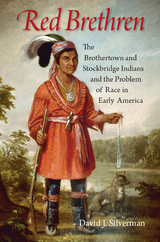
New England Indians created the multitribal Brothertown and Stockbridge communities during the eighteenth century with the intent of using Christianity and civilized reforms to cope with white expansion. Red Brethren considers their history and meaning.
New England Indians created the multitribal Brothertown and Stockbridge communities during the eighteenth century with the intent of using Christianity and civilized reforms to cope with white expansion. In Red Brethren, David J. Silverman considers the stories of these communities and argues that Indians in early America were racial thinkers in their own right and that indigenous people rallied together as Indians not only in the context of violent resistance but also in campaigns to adjust peacefully to white dominion. All too often, the Indians discovered that their many concessions to white demands earned them no relief.
In the era of the American Revolution, the pressure of white settlements forced the Brothertowns and Stockbridges from New England to Oneida country in upstate New York. During the early nineteenth century, whites forced these Indians from Oneida country, too, until they finally wound up in Wisconsin. Tired of moving, in the 1830s and 1840s, the Brothertowns and Stockbridges became some of the first Indians to accept U.S. citizenship, which they called "becoming white," in the hope that this status would enable them to remain as Indians in Wisconsin. Even then, whites would not leave them alone.
Red Brethren traces the evolution of Indian ideas about race under this relentless pressure. In the early seventeenth century, indigenous people did not conceive of themselves as Indian. They sharpened their sense of Indian identity as they realized that Christianity would not bridge their many differences with whites, and as they fought to keep blacks out of their communities. The stories of Brothertown and Stockbridge shed light on the dynamism of Indians' own racial history and the place of Indians in the racial history of early America.
New England Indians created the multitribal Brothertown and Stockbridge communities during the eighteenth century with the intent of using Christianity and civilized reforms to cope with white expansion. In Red Brethren, David J. Silverman considers the stories of these communities and argues that Indians in early America were racial thinkers in their own right and that indigenous people rallied together as Indians not only in the context of violent resistance but also in campaigns to adjust peacefully to white dominion. All too often, the Indians discovered that their many concessions to white demands earned them no relief.
In the era of the American Revolution, the pressure of white settlements forced the Brothertowns and Stockbridges from New England to Oneida country in upstate New York. During the early nineteenth century, whites forced these Indians from Oneida country, too, until they finally wound up in Wisconsin. Tired of moving, in the 1830s and 1840s, the Brothertowns and Stockbridges became some of the first Indians to accept U.S. citizenship, which they called "becoming white," in the hope that this status would enable them to remain as Indians in Wisconsin. Even then, whites would not leave them alone.
Red Brethren traces the evolution of Indian ideas about race under this relentless pressure. In the early seventeenth century, indigenous people did not conceive of themselves as Indian. They sharpened their sense of Indian identity as they realized that Christianity would not bridge their many differences with whites, and as they fought to keep blacks out of their communities. The stories of Brothertown and Stockbridge shed light on the dynamism of Indians' own racial history and the place of Indians in the racial history of early America.
David J. Silverman is Professor of History at George Washington University. He is the coauthor of Ninigret, Sachem of the Niantics and Narragansetts, also from Cornell, and author of Faith and Boundaries.
Prologue: That Overwhelming Tide of Fate
1. All One Indian
2. Converging Paths
3. Betrayals
4. Out from Under the Burdens
5. Exodus
6. Cursed
7. Red Brethren
8. More Than They Know How to Endure
9. Indians or Citizens, White Men or Red?
Epilogue: "Extinction" and a "Common Ancestor"
Notes
Index
| Erscheint lt. Verlag | 21.6.2016 |
|---|---|
| Zusatzinfo | 11 halftones, 3 maps |
| Verlagsort | Ithaca |
| Sprache | englisch |
| Maße | 160 x 160 mm |
| Themenwelt | Geschichte ► Allgemeine Geschichte ► Neuzeit (bis 1918) |
| Geisteswissenschaften ► Geschichte ► Regional- / Ländergeschichte | |
| Geschichte ► Teilgebiete der Geschichte ► Kulturgeschichte | |
| Geisteswissenschaften ► Religion / Theologie ► Weitere Religionen | |
| Sozialwissenschaften ► Ethnologie | |
| Sozialwissenschaften ► Soziologie | |
| Schlagworte | New England Indians, indigenous people, native Americans, violent resistance, Early America, white dominion, internal conflicts, Indians' racial history, Indian identity in America • Red Brethren, New England Indians, indigenous people, Brothertown, Stockbridge, violent resistance, Early America, race, racial identity, race formation, white dominion, internal conflicts, Indians' racial history, racial history of early America |
| ISBN-10 | 1-5017-0479-6 / 1501704796 |
| ISBN-13 | 978-1-5017-0479-6 / 9781501704796 |
| Informationen gemäß Produktsicherheitsverordnung (GPSR) | |
| Haben Sie eine Frage zum Produkt? |
 EPUB (Adobe DRM)
Kopierschutz: Adobe-DRM
Adobe-DRM ist ein Kopierschutz, der das eBook vor Mißbrauch schützen soll. Dabei wird das eBook bereits beim Download auf Ihre persönliche Adobe-ID autorisiert. Lesen können Sie das eBook dann nur auf den Geräten, welche ebenfalls auf Ihre Adobe-ID registriert sind.
Details zum Adobe-DRM
Dateiformat: EPUB (Electronic Publication)
EPUB ist ein offener Standard für eBooks und eignet sich besonders zur Darstellung von Belletristik und Sachbüchern. Der Fließtext wird dynamisch an die Display- und Schriftgröße angepasst. Auch für mobile Lesegeräte ist EPUB daher gut geeignet.
Systemvoraussetzungen:
PC/Mac: Mit einem PC oder Mac können Sie dieses eBook lesen. Sie benötigen eine
eReader: Dieses eBook kann mit (fast) allen eBook-Readern gelesen werden. Mit dem amazon-Kindle ist es aber nicht kompatibel.
Smartphone/Tablet: Egal ob Apple oder Android, dieses eBook können Sie lesen. Sie benötigen eine
Geräteliste und zusätzliche Hinweise
Buying eBooks from abroad
For tax law reasons we can sell eBooks just within Germany and Switzerland. Regrettably we cannot fulfill eBook-orders from other countries.
aus dem Bereich