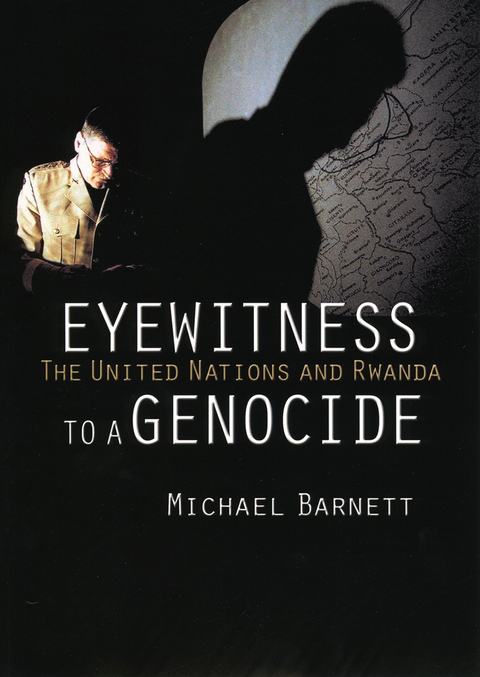
Eyewitness to a Genocide (eBook)
240 Seiten
Cornell University Press (Verlag)
978-0-8014-6512-3 (ISBN)
Barnett addresses the ways in which the Rwandan genocide raises a warning about this age of humanitarianism and concludes by asking whether it is possible to build moral institutions.
Why was the UN a bystander during the Rwandan genocide? Do its sins of omission leave it morally responsible for the hundreds of thousands of dead? Michael Barnett, who worked at the U.S. Mission to the United Nations from 1993 to 1994, covered Rwanda for much of the genocide. Based on his first-hand experiences, archival work, and interviews with many key participants, he reconstructs the history of the UN's involvement in Rwanda. In the weeks leading up to the genocide, the author documents, the UN was increasingly aware or had good reason to suspect that Rwanda was a site of crimes against humanity. Yet it failed to act. In Eyewitness to a Genocide, Barnett argues that its indifference was driven not by incompetence or cynicism but rather by reasoned choices cradled by moral considerations.
Employing a novel approach to ethics in practice and in relationship to international organizations, Barnett offers an unsettling possibility: the UN culture recast the ethical commitments of well-intentioned individuals, arresting any duty to aid at the outset of the genocide. Barnett argues that the UN bears some moral responsibility for the genocide. Particularly disturbing is his observation that not only did the UN violate its moral responsibilities, but also that many in New York believed that they were "doing the right thing" as they did so. Barnett addresses the ways in which the Rwandan genocide raises a warning about this age of humanitarianism and concludes by asking whether it is possible to build moral institutions.
Why was the UN a bystander during the Rwandan genocide? Do its sins of omission leave it morally responsible for the hundreds of thousands of dead? Michael Barnett, who worked at the U.S. Mission to the United Nations from 1993 to 1994, covered Rwanda for much of the genocide. Based on his first-hand experiences, archival work, and interviews with many key participants, he reconstructs the history of the UN's involvement in Rwanda.
In the weeks leading up to the genocide, the author documents, the UN was increasingly aware or had good reason to suspect that Rwanda was a site of crimes against humanity. Yet it failed to act. Barnett argues that its indifference was driven not by incompetence or cynicism but rather by reasoned choices cradled by moral considerations. Employing a novel approach to ethics in practice and in relationship to international organizations, Barnett offers an unsettling possibility: the UN culture recast the ethical commitments of well-intentioned individuals, arresting any duty to aid at the outset of the genocide.
Barnett argues that the UN bears some moral responsibility for the genocide. Particularly disturbing is his observation that not only did the UN violate its moral responsibilities, but also that many in New York believed that they were "doing the right thing" as they did so. Barnett addresses the ways in which the Rwandan genocide raises a warning about this age of humanitarianism and concludes by asking whether it is possible to build moral institutions.
Michael Barnett is Harold Stassen Chair at the Hubert H. Humphrey School and Adjunct Professor of Political Science at the University of Minnesota. He is coeditor most recently of Rules for the World: International Organizations in Global Politics, from Cornell, and Power and Global Governance.
Introduction: Depraved Indifference
1. It Was a Very Good Year
2. Rwanda Through Rose-Colored Glasses
3. "If This Is an Easy Operation..."
4. The Fog of Genocide
5. Diplomatic Games
6. The Hunt for Moral ResponsibilityBrief Chronology of Rwandan Conflict
Selected Chronology of United Nations' Security AgendaAcknowledgments
Notes
Index
| Erscheint lt. Verlag | 3.5.2012 |
|---|---|
| Verlagsort | Ithaca |
| Sprache | englisch |
| Maße | 150 x 150 mm |
| Gewicht | 28 g |
| Themenwelt | Geschichte ► Allgemeine Geschichte ► Zeitgeschichte |
| Geisteswissenschaften ► Geschichte ► Regional- / Ländergeschichte | |
| Sozialwissenschaften ► Politik / Verwaltung ► Europäische / Internationale Politik | |
| Schlagworte | united nations, war crimes, rwandan genocide, african history, UN and rwanda, international relations and war |
| ISBN-10 | 0-8014-6512-5 / 0801465125 |
| ISBN-13 | 978-0-8014-6512-3 / 9780801465123 |
| Informationen gemäß Produktsicherheitsverordnung (GPSR) | |
| Haben Sie eine Frage zum Produkt? |
 EPUB (Adobe DRM)
Kopierschutz: Adobe-DRM
Adobe-DRM ist ein Kopierschutz, der das eBook vor Mißbrauch schützen soll. Dabei wird das eBook bereits beim Download auf Ihre persönliche Adobe-ID autorisiert. Lesen können Sie das eBook dann nur auf den Geräten, welche ebenfalls auf Ihre Adobe-ID registriert sind.
Details zum Adobe-DRM
Dateiformat: EPUB (Electronic Publication)
EPUB ist ein offener Standard für eBooks und eignet sich besonders zur Darstellung von Belletristik und Sachbüchern. Der Fließtext wird dynamisch an die Display- und Schriftgröße angepasst. Auch für mobile Lesegeräte ist EPUB daher gut geeignet.
Systemvoraussetzungen:
PC/Mac: Mit einem PC oder Mac können Sie dieses eBook lesen. Sie benötigen eine
eReader: Dieses eBook kann mit (fast) allen eBook-Readern gelesen werden. Mit dem amazon-Kindle ist es aber nicht kompatibel.
Smartphone/Tablet: Egal ob Apple oder Android, dieses eBook können Sie lesen. Sie benötigen eine
Geräteliste und zusätzliche Hinweise
Buying eBooks from abroad
For tax law reasons we can sell eBooks just within Germany and Switzerland. Regrettably we cannot fulfill eBook-orders from other countries.
aus dem Bereich