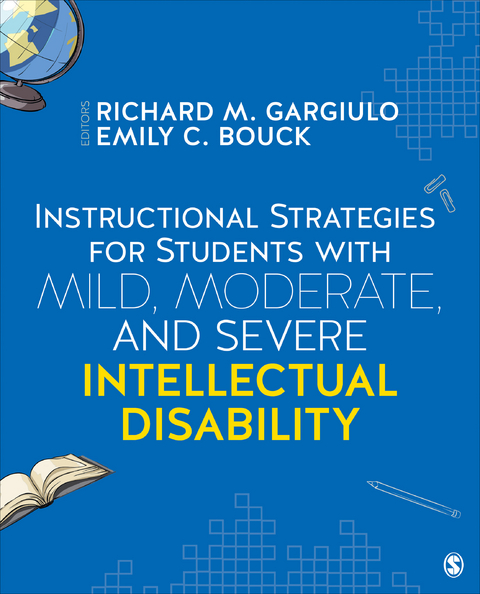
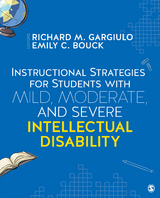
Instructional Strategies for Students With Mild, Moderate, and Severe Intellectual Disability (eBook)
520 Seiten
Sage Publications, Inc (Verlag)
9781506306681 (ISBN)
Part I. Perspectives on Intellectual Disability
Chapter 1: Understanding Intellectual Disability - Richard M. Gargiulo, Emily C. Bouck
Historical Perspectives on Intellectual Disability
Identification and Assessment of Intellectual Disability
Evolving Definitions of Intellectual Disability
Classification of Individuals with Intellectual Disability
Prevalence of Intellectual Disability
Chapter 2: Foundational Concepts: Etiology of Intellectual Disability and Characteristics of Students with Intellectual Disability - Richard M. Gargiulo, Emily C. Bouck
Prenatal Causes of Intellectual Disability
Perinatal Causes of Intellectual Disability
Postnatal Causes of Intellectual Disability
Learning Characteristics of Students with Intellectual Disability
Social and Behavioral Characteristics of Students with Intellectual Disability
Chapter 3: Educational Issues Affecting Students with Intellectual Disability - Emily C. Bouck, Richard M. Gargiulo
Legislation Affecting Students with Intellectual Disability
Individualized Education Programs
Contemporary Educational Issues
What to Teach Students with Intellectual Disability
Where to Teach Students with Intellectual Disability
Part II. Educational Concerns Across the School Years for Students with Intellectual Disability
Chapter 4: Assessing and Evaluating Students with Intellectual Disability - Ginevra R. Courtade, Robert C. Pennington
What is Assessment?
Norm Referenced Tests
Criterion-Referenced Tests
Formative and Summative Assessments
Curriculum-Based Evaluations
Ecological Assessment
Assessment of Student Preferences
Assessment for Effective Instruction
Participation in Accountability Systems
Alternate Assessment
Chapter 5 Behavioral Interventions for Students with Intellectual Disability - E. Amanda Boutot, Kylan Turner, Samuel A. DiGangi
Overview of Behavior Challenges and Approaches for Students with Intellectual Disabilities: Preschool Through Secondary
Applied Behavior Analysis
Functional Behavior Assessment
Antecedent Interventions
Addressing Challenging Behaviors in the Classroom
Chapter 6: Assistive Technology for Students with Intellectual Disability - Emily C. Bouck, Richard M. Gargiulo
Understanding Assistive Technology
Assistive Technology to Support Academics Across the Life Span
Assistive Technology to Support Life Skills Across the Life Span
Assistive Technology to Support Behavior Across the Life Span
Part III. Preschool Students with Intellectual Disability
Chapter 7 Teaching Academic Skills to Preschool Students with Intellectual Disability - David F. Cihak, Joan Grim
Overview of Academic Skills for Preschool Students with Intellectual Disability
General Instructional Strategies
Academic Instruction
Chapter 8 Life Skills for Preschool Students with Intellectual Disability - Megan Purcell, Teresa Taber Doughty
Overview of Life Skills for Preschool Students
Determining What and Where to Teach
General Instructional Approaches
Components of a Life Skills Curriculum for Preschool Students
Part IV. Elementary Age Students with Intellectual Disability
Chapter 9 Teaching Academic Skills to Elementary Age Students with Intellectual Disability - David F. Cihak, Cate C. Smith
Overview of Academic Skills for Elementary Age Students
General Instructional Strategies
Academic Instruction
Chapter 10 Life Skills for Elementary Age Students with Intellectual Disability - Teresa Taber Doughty
Overview of Life Skills for Elementary Age Students
Determining What and Where to Teach
General Instructional Approaches
Components of a Life Skills Curriculum for Elementary Age Students
Part V. Adolescents and Young Adults with Intellectual Disability
Chapter 11 Teaching Academic Skills to Secondary Students with Intellectual Disability - Jordan Shurr, Teresa Taber Doughty
Overview of Academic Skills for Secondary Students
General Instructional Strategies
Academic Instruction
Chapter 12 Life Skills for Secondary Students with Intellectual Disability - Teresa Taber Doughty, Jordan Shurr
Overview of Life Skills for Secondary Students
Determining What and Where to Teach
General Instructional Approaches
Components of a Life Skills Curriculum for Secondary Students
Chapter 13 Transition Planning for Secondary Students with Intellectual Disability - Michael L. Wehmeyer, Karrie A. Shogren
Transition Defined
An Overview of Transition Planning
Transition from Early Childhood Special Education
Transition from Elementary to Secondary Education
Transition from High School
Post School Outcomes and Services
| Erscheint lt. Verlag | 20.1.2017 |
|---|---|
| Verlagsort | Thousand Oaks |
| Sprache | englisch |
| Themenwelt | Sozialwissenschaften ► Pädagogik ► Sonder-, Heil- und Förderpädagogik |
| ISBN-13 | 9781506306681 / 9781506306681 |
| Informationen gemäß Produktsicherheitsverordnung (GPSR) | |
| Haben Sie eine Frage zum Produkt? |
 EPUB (Adobe DRM)
Kopierschutz: Adobe-DRM
Adobe-DRM ist ein Kopierschutz, der das eBook vor Mißbrauch schützen soll. Dabei wird das eBook bereits beim Download auf Ihre persönliche Adobe-ID autorisiert. Lesen können Sie das eBook dann nur auf den Geräten, welche ebenfalls auf Ihre Adobe-ID registriert sind.
Details zum Adobe-DRM
Dateiformat: EPUB (Electronic Publication)
EPUB ist ein offener Standard für eBooks und eignet sich besonders zur Darstellung von Belletristik und Sachbüchern. Der Fließtext wird dynamisch an die Display- und Schriftgröße angepasst. Auch für mobile Lesegeräte ist EPUB daher gut geeignet.
Systemvoraussetzungen:
PC/Mac: Mit einem PC oder Mac können Sie dieses eBook lesen. Sie benötigen eine
eReader: Dieses eBook kann mit (fast) allen eBook-Readern gelesen werden. Mit dem amazon-Kindle ist es aber nicht kompatibel.
Smartphone/Tablet: Egal ob Apple oder Android, dieses eBook können Sie lesen. Sie benötigen eine
Geräteliste und zusätzliche Hinweise
Buying eBooks from abroad
For tax law reasons we can sell eBooks just within Germany and Switzerland. Regrettably we cannot fulfill eBook-orders from other countries.
aus dem Bereich