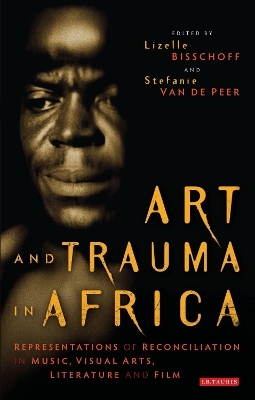
Art and Trauma in Africa
I.B. Tauris (Verlag)
978-1-78831-077-2 (ISBN)
Lizelle Bisschoff is a Lord Kelvin Adam Smith Research Fellow in Film and Television Studies at the University of Glasgow, conducting a three-year research project into digital African arts. She is the Founder and previous Director of the Africa in Motion (AiM) Film Festival in Scotland, now in its eighth year. She holds a PhD in African Cinema from the University of Stirling, in Scotland, for which she researched the role of women in Southern and West African cinema. She has previously conducted a two-year postdoctoral research project into the emerging East African film industries, while based in the Centre of African Studies at the University of Edinburgh. Lizelle has published several articles on sub-Saharan African cinema and regularly attends film festivals in Africa as jury member and speaker. Stefanie Van de Peer is a Research Co-ordinator at the University of St Andrews, Scotland. She received her PhD from the University of Stirling in Scotland. Her research focuses on women's filmmaking in the Middle East and North Africa. Until 2011 she was Co-Director of the Africa in Motion (AiM) Film Festival. She was Research Fellow at the Five Colleges Women's Studies Research Center in Massachusetts, where she also worked on women in cinema. She has published on Tunisian, Egyptian, Moroccan, Syrian and Lebanese women's films and programmed films for the Middle Eastern Film Festival in Edinburgh, the REEL Festival in Damascus and Beirut and the Boston Palestine Film Festival.
Contents
Foreword
Introduction
Representing the Unrepresentable
Part One: Music
Chapter One: Hip Hop Lyrics as Tool for Conflict Resolution in the Niger Delta
Chapter Two: Grooving on Broken: Dancing War Trauma in Angolan Kuduro
Chapter Three: Local Arts versus Global Terrorism: The Manifestations of Trauma and Modes of Reconciliation in Moroccan Music Festivals
Part Two: Visual Arts
Chapter Four: Transforming Arms into Ploughshares: Weapons that Destroy and Heal in Mozambican Urban Art
Chapter Five: Unlocking the Doors of Number Four Prison: Curating the Violent Past in Contemporary South Africa
Chapter Six: Imaging Life after Death: Photography and the 1994 Genocide in Rwanda
Part Three: Literature
Chapter Seven: ‘It was a terrible time to be alive’: Narrative Reconciliation in Contemporary West African Fiction
Chapter Eight: Truth Will Set You Free: Implications of a Creative Narrative for the ‘Official’ Discourse of the South African Truth and Reconciliation Commission
Chapter Nine: Re-fathoming the Dark of Heartness: Contrapuntal Representations of the Rwandan Genocide
Part Four: Film
Chapter Ten: Reconciling the African Nation: Fanta Regina Nacro's La Nuit de la Vérité
Chapter Eleven: Closed Windows onto Morocco’s Past: Leila Kilani’s Our Forbidden Places
Chapter Twelve: Beyond ‘Victimology’: Generating Agency through Film in Eastern Democratic Republic of the Congo
Chapter Thirteen: Truth, Reconciliation and Cinema: Reflections on South Africa’s Recent Past in Ubuntu’s Wounds and Homecoming
| Erscheinungsdatum | 06.07.2017 |
|---|---|
| Zusatzinfo | 22 bw integrated |
| Sprache | englisch |
| Maße | 138 x 216 mm |
| Gewicht | 466 g |
| Themenwelt | Kunst / Musik / Theater ► Kunstgeschichte / Kunststile |
| Geisteswissenschaften ► Geschichte ► Regional- / Ländergeschichte | |
| Sozialwissenschaften ► Kommunikation / Medien | |
| Sozialwissenschaften ► Politik / Verwaltung | |
| ISBN-10 | 1-78831-077-2 / 1788310772 |
| ISBN-13 | 978-1-78831-077-2 / 9781788310772 |
| Zustand | Neuware |
| Informationen gemäß Produktsicherheitsverordnung (GPSR) | |
| Haben Sie eine Frage zum Produkt? |
aus dem Bereich