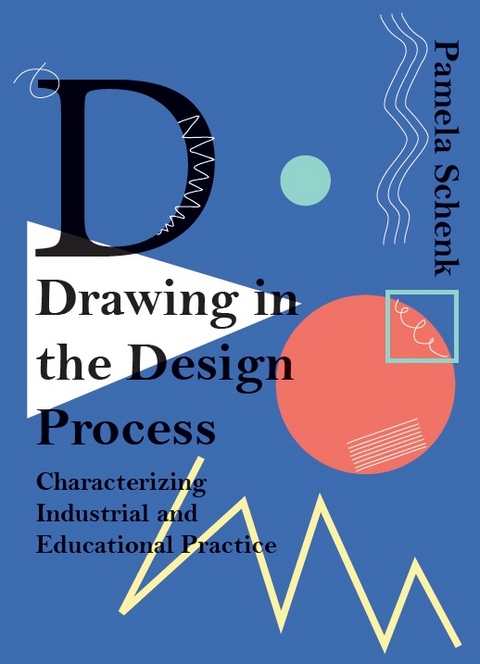
Drawing in the Design Process (eBook)
Intellect Books (Verlag)
978-1-78320-681-0 (ISBN)
In the early days of the digital revolution in graphic design, many designers and teachers of design were convinced that the era of drawing on paper was over – that there would soon no longer be a place for craft-based drawing at any stage of the design process. It soon became apparent, however, that technological progress had not obviated the inherent value of drawing, and that, in fact, it opened up new avenues for convergent and hybrid drawing practices. This book traces the evolution of design-based drawing through analysis of a series of research projects from the 1980s to recent years that have sought to characterize the changing practices of design within various industries. Built on more than three hundred interviews with designers, academics and design students, and an exhaustive analysis of thousands of drawings, it aims to generate discussion around historical and contemporary models of the design process.
In the early days of the digital revolution in graphic design, many designers and teachers of design were convinced that the era of drawing on paper was over - that there would soon no longer be a place for craft-based drawing at any stage of the design process. It soon became apparent, however, that technological progress had not obviated the inherent value of drawing, and that, in fact, it opened up new avenues for convergent and hybrid drawing practices. This book traces the evolution of design-based drawing through analysis of a series of research projects from the 1980s to recent years that have sought to characterize the changing practices of design within various industries. Built on more than three hundred interviews with designers, academics and design students, and an exhaustive analysis of thousands of drawings, it aims to generate discussion around historical and contemporary models of the design process.
lt;p>Professor Pam Schenk has been involved in the investigation of the role of drawing in design since the mid-1980s and has monitored the changes due to technolgical developments, with her many publications culminating in an Intellect book entitled, Drawing in the Design Process:Characterizing Industrial and Educational Practice.
She has also taught at all levels in higher education in Art and Design, concentrating in recent years on postgraduate studies and research in design, and has been a senior academic at the Manchester Metropolitan University, Glasgow School of Art, the Birmingham Institute of Art and Design (University of Central England), Duncan of Jordanstone College (Dundee University) and the School of Art, Design and Media, Nanyang Technological University, Singapore. She is currently a research professor at the School of Textiles and Design, Heriot-Watt University.
List of Figures and Tables
Acknowledgements
Introduction
Part I – Context and Conduct of the Long-Term Study
Chapter One: Context of the Long-Term Study – Theoretical Framework
Introduction to the long-term study
The design process
Drawing for creative thinking
Drawing, memory and visual literacy
Drawing for ideation and communication
Drawing in the digital age 28 Drawing in design education
Chapter Two: Conduct of the Long-Term Study – Investigative Framework
Overview
Respondents
Variables and topics investigated
Part II – Phases of the Long-Term Study
Phase 1
Chapter Three: Drawing in the Graphic Design Industry in the Mid-1980s
Introduction to Project One
Preparation and inspiration
Briefing and ideation
Development and synthesis
Presentation and evaluation
Commissioning and specification
The importance of drawing in graphic design
Chapter Four: Developing Drawing Competence in the Mid-1980s
Introduction to Project Two
Developing drawing competence in industry and education
Curriculum planning and drawing tuition
Professional practice or artistic expression
Phase 2
Chapter Five: The Impact of Digital Technology on Drawing for Graphic Design in the 1990s
Introduction to Project Three
New uses of drawing
Individual drawing practices
Drawing in the design process following the introduction of the new technology
Preparation and inspiration
Briefing and ideation
Development and synthesis
Presentation and evaluation
Commissioning and specification
The impact of the new technology on drawing for graphic design
Phase 3
Chapter Six: Drawing in Contemporary Design Education
Introduction to Project Four
Developing drawing competence for professional practice
Drawing on the curriculum in the digital age
Curriculum planning and drawing tuition
Discipline-based diversity
Chapter Seven: Drawing in Contemporary Design Practice
Introduction to Project Five
Individual drawing practices
Drawing in the contemporary design process
Preparation and inspiration
Briefing and ideation
Development and synthesis
Presentation and evaluation
Commissioning and specification
Relative advantages of paper and screen
Part III – Characterization and Generalization
Chapter Eight: A Taxonomy of Drawing in Design
Systematic classification
The development of the taxonomy
Structure of the taxonomy of drawing in design
Categorization and characterization – Task, use and type of drawing
Categorization and characterization – Task and drawing competence
Applications of the taxonomy
Chapter Nine: Models of Drawing in Design and in Education
Introduction
The three environments of drawing in design
The three environments of teaching and learning
The student experience
Chapter Ten: Drawing Conclusions
Patterns of change in drawing practice and drawing tuition
The importance of drawing in design practice
Developing drawing competence
References
Appendices
Appendix I: Respondents in Phase 1: 1984–1989
Appendix II: Respondents in Phase 2: 1990–1999
Appendix III: Respondents in Phase 3: 2004–2015
Appendix IV: Student Respondents in the Three Phases 1984–2015
Appendix V: Advisors for the Long-Term Study – 1984–2015
Index
| Erscheint lt. Verlag | 4.4.2017 |
|---|---|
| Verlagsort | Bristol |
| Sprache | englisch |
| Themenwelt | Kunst / Musik / Theater ► Design / Innenarchitektur / Mode |
| Kunst / Musik / Theater ► Malerei / Plastik | |
| Sachbuch/Ratgeber ► Freizeit / Hobby ► Kreatives Gestalten | |
| Sozialwissenschaften ► Pädagogik | |
| Schlagworte | craft-based drawing • design industries • design process • Digital Revolution • drawing • Graphic Design • hybrid drawing practices • Research Projects |
| ISBN-10 | 1-78320-681-0 / 1783206810 |
| ISBN-13 | 978-1-78320-681-0 / 9781783206810 |
| Informationen gemäß Produktsicherheitsverordnung (GPSR) | |
| Haben Sie eine Frage zum Produkt? |
 EPUB (Adobe DRM)
Kopierschutz: Adobe-DRM
Adobe-DRM ist ein Kopierschutz, der das eBook vor Mißbrauch schützen soll. Dabei wird das eBook bereits beim Download auf Ihre persönliche Adobe-ID autorisiert. Lesen können Sie das eBook dann nur auf den Geräten, welche ebenfalls auf Ihre Adobe-ID registriert sind.
Details zum Adobe-DRM
Dateiformat: EPUB (Electronic Publication)
EPUB ist ein offener Standard für eBooks und eignet sich besonders zur Darstellung von Belletristik und Sachbüchern. Der Fließtext wird dynamisch an die Display- und Schriftgröße angepasst. Auch für mobile Lesegeräte ist EPUB daher gut geeignet.
Systemvoraussetzungen:
PC/Mac: Mit einem PC oder Mac können Sie dieses eBook lesen. Sie benötigen eine
eReader: Dieses eBook kann mit (fast) allen eBook-Readern gelesen werden. Mit dem amazon-Kindle ist es aber nicht kompatibel.
Smartphone/Tablet: Egal ob Apple oder Android, dieses eBook können Sie lesen. Sie benötigen eine
Geräteliste und zusätzliche Hinweise
Buying eBooks from abroad
For tax law reasons we can sell eBooks just within Germany and Switzerland. Regrettably we cannot fulfill eBook-orders from other countries.
aus dem Bereich